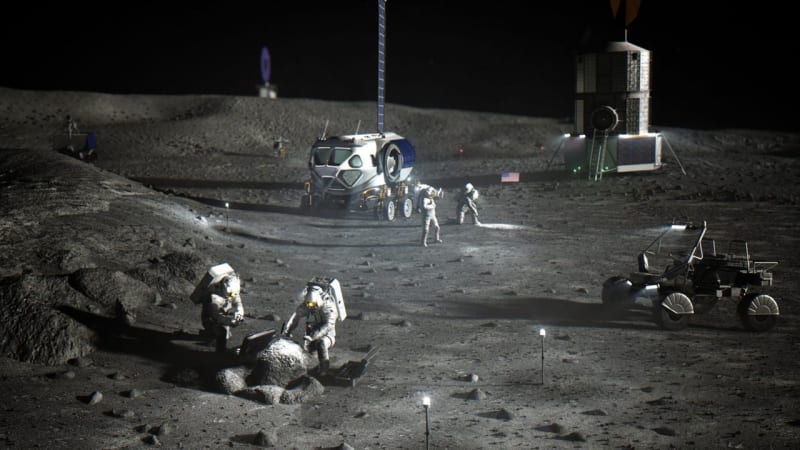
NASA's Innovative Tech Paves the Way for Human Mars Exploration
Scientists are developing groundbreaking tools to support future lunar and Martian missions. Advanced technologies will help astronauts safely navigate radiation risks and challenging extraterrestrial environments.
The dream of human exploration beyond Earth is moving closer to reality, with NASA scientists developing sophisticated technologies to overcome the immense challenges of space travel.
As the United States sets ambitious goals for lunar and Martian missions, researchers are leveraging cutting-edge tools and comprehensive datasets to prepare for sustained human presence off-planet. On December 18th, an executive order signed by President Donald Trump directed NASA to return astronauts to the moon by 2028 and establish initial elements of a permanent lunar base by 2030.
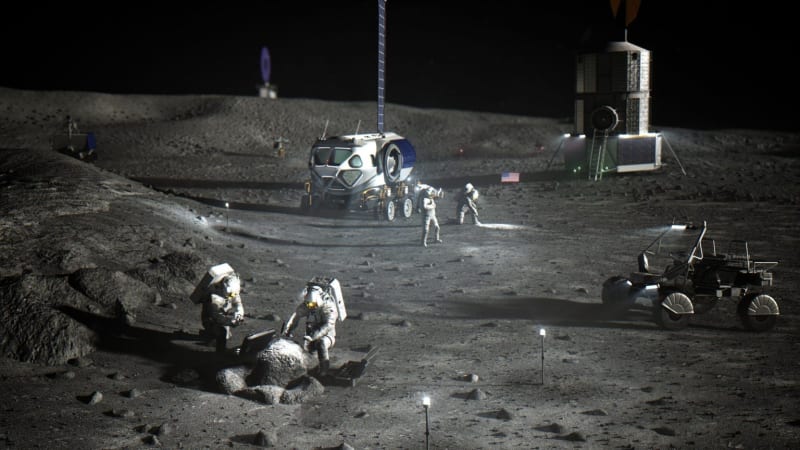
One of the most critical advancements is a revolutionary decision-support tool designed by NASA heliophysicist Gina DiBraccio. This innovative dashboard integrates data from multiple Mars missions, including the MAVEN orbiter, Curiosity, and Perseverance rovers, enabling astronauts to assess radiation risks in near real-time from the Martian surface.
Shannon Curry, MAVEN's principal investigator from UC Boulder, has contributed a comprehensive catalog of Martian space weather events spanning a full solar cycle from 2014 through 2025. This groundbreaking resource allows scientists to quantify radiation levels in orbit, providing crucial insights into potential risks for future human missions.
Water resource identification remains another significant challenge, particularly near the lunar south pole where NASA plans to land astronauts. Bethany Ehlmann, director of the Laboratory for Atmospheric and Space Physics, candidly acknowledged the current uncertainties, comparing water location detection to finding water 'somewhere in New Orleans'.
To address this challenge, NASA has selected a new imaging spectrometer designed to act as 'enhanced eyes' for astronauts and scientists. This instrument will map water and minerals, and help identify scientifically promising sites for sample collection.
Scientists are also focusing on mitigating lunar dust challenges that plagued previous missions. During the Apollo era, fine abrasive particles damaged spacesuits and equipment, even causing the first recorded case of extraterrestrial hay fever experienced by astronaut Harrison 'Jack' Schmitt.
These ongoing research efforts demonstrate humanity's incredible capacity for innovation and our unwavering commitment to exploring the unknown. As technology advances, the dream of human presence on Mars moves from science fiction to a tangible, achievable goal.
Based on reporting by Space.com
This story was written by BrightWire based on verified news reports.
Spread the positivity! 🌟
Share this good news with someone who needs it
More Good News
 🚀 Innovation
Cosmic Celebration: NASA Reveals Dazzling 'Champagne Cluster' in Spectacular New Image
 🚀 Innovation
Lego Unveils Stunning Space Shuttle Carrier Set: A 10-Hour Journey Through Aerospace History
 🚀 Innovation