NASA's Mars Helicopter Rotors Break Sound Barrier in Tests
Engineers at NASA just pushed next-generation Mars helicopter blades past the speed of sound without breaking them, unlocking 30% more lift for future missions. Three new helicopters carrying real science gear are now headed for a 2028 launch.
📺 Watch the full story above
NASA engineers just proved that flying faster than sound on Mars isn't science fiction anymore.
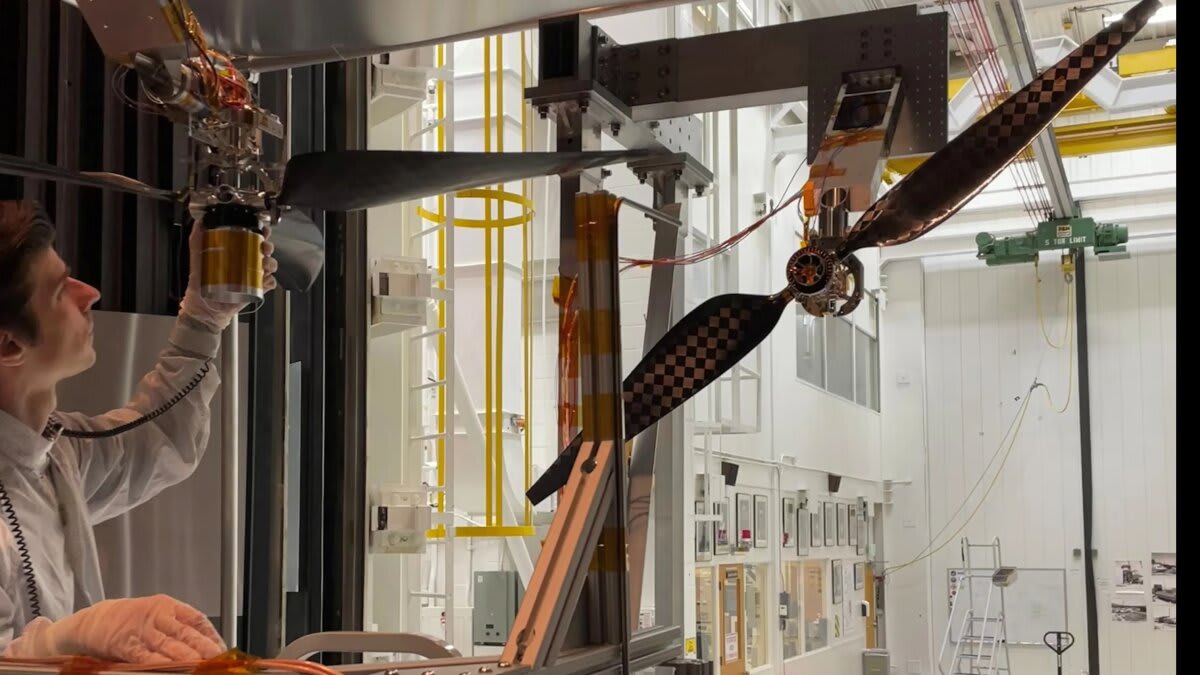
Inside a massive test chamber at the Jet Propulsion Laboratory in California, a three-bladed rotor spun so fast it broke the sound barrier under Martian conditions. The blades didn't crack, didn't shatter, and didn't slow down. Instead, they kept spinning at Mach 1.08, generating 30% more lift than previous designs.
Making anything fly on Mars means fighting physics. The red planet's atmosphere is roughly 1% as dense as Earth's, turning every flight into a battle against near-vacuum conditions. To generate enough lift, rotor blades must spin faster or grow longer, and both approaches push them toward the speed of sound, where shock waves can tear machinery apart.
The speed of sound on Mars sits around 869 km/h (540 mph), much slower than on Earth because of the thin, cold carbon dioxide atmosphere. Crossing that threshold means entering unpredictable territory where aerodynamics gets messy fast.
That's why Ingenuity, the tiny helicopter that became the first aircraft to fly on another world in April 2021, never pushed past Mach 0.7 across its 72 flights. NASA deliberately played it safe, keeping blade tips well below supersonic speeds to avoid catastrophic failure.
But playing it safe has limits. "We want more performance from our next-gen Mars aircraft," said Jaakko Karras, who led the rotor testing. "We needed to know that our rotors could go faster safely."
So the team lined the test chamber walls with steel sheeting in case the blades exploded. They pumped out the air, filled the space with low-density carbon dioxide, and cranked up the speed while blasting the rotors with simulated wind gusts. After 137 test runs, the steel shielding sat unused.
The Bright Side
These aren't just faster rotors. They're the foundation for a whole new generation of Martian exploration.
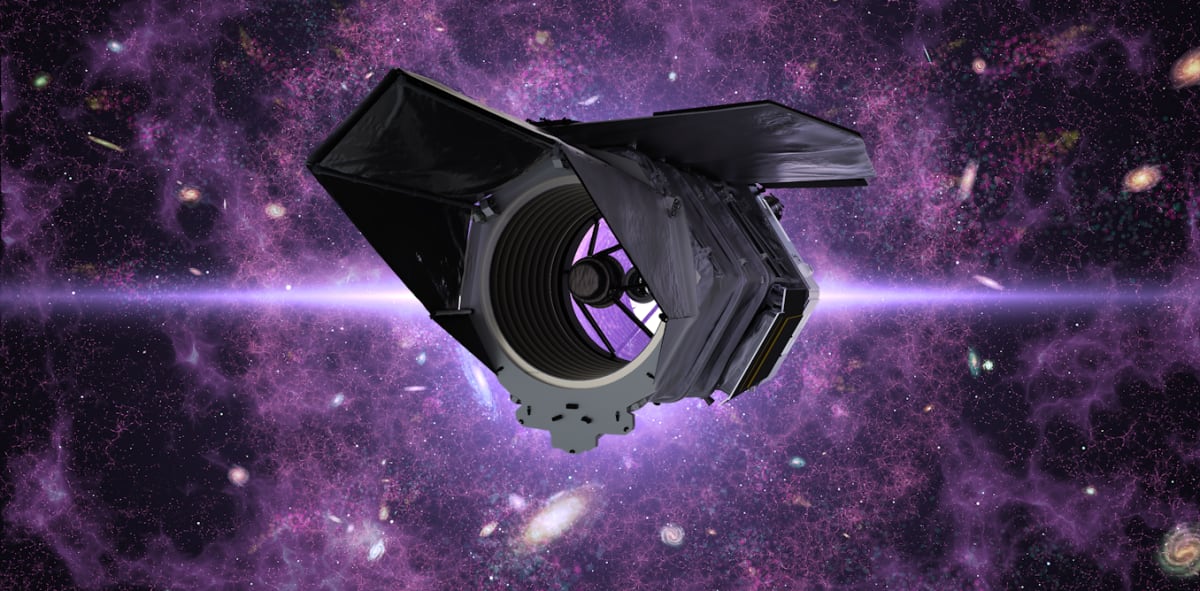
Unlike Ingenuity, which carried no scientific instruments, the SkyFall-generation helicopters coming in 2028 will haul actual payloads: sensors, science equipment, and larger batteries for extended missions. They'll scout terrain ahead of rovers, reach places wheeled vehicles can't access, and support both robotic missions and future human explorers.
AeroVironment in Simi Valley, California, built the rotors using lessons learned from Ingenuity's pioneering flights. The team tested two configurations: a three-bladed design and a slightly longer two-bladed version that approached supersonic speeds at 3,570 rpm.
"We thought we'd be lucky to hit Mach 1.05, and we reached Mach 1.08 on our last runs," said Shannah Withrow-Maser, an aerodynamicist at NASA's Ames Research Center. "There may be even more thrust on the table."
Three next-generation Mars helicopters are currently slated for a December 2028 launch, each one capable of pushing boundaries that seemed impossible just five years ago.
More Images


Based on reporting by New Atlas
This story was written by BrightWire based on verified news reports.
Spread the positivity!
Share this good news with someone who needs it