NASA's Moon Mission Tests Personalized Medicine in Space
Artemis II astronauts are carrying their own bone marrow cells to the moon on tiny organ chips that could revolutionize space medicine. The experiment will reveal exactly how deep space affects human bodies and help create custom medical kits for future explorers.
Four astronauts traveling around the moon right now are carrying something remarkable: living versions of their own organs, each about the size of a flash drive.
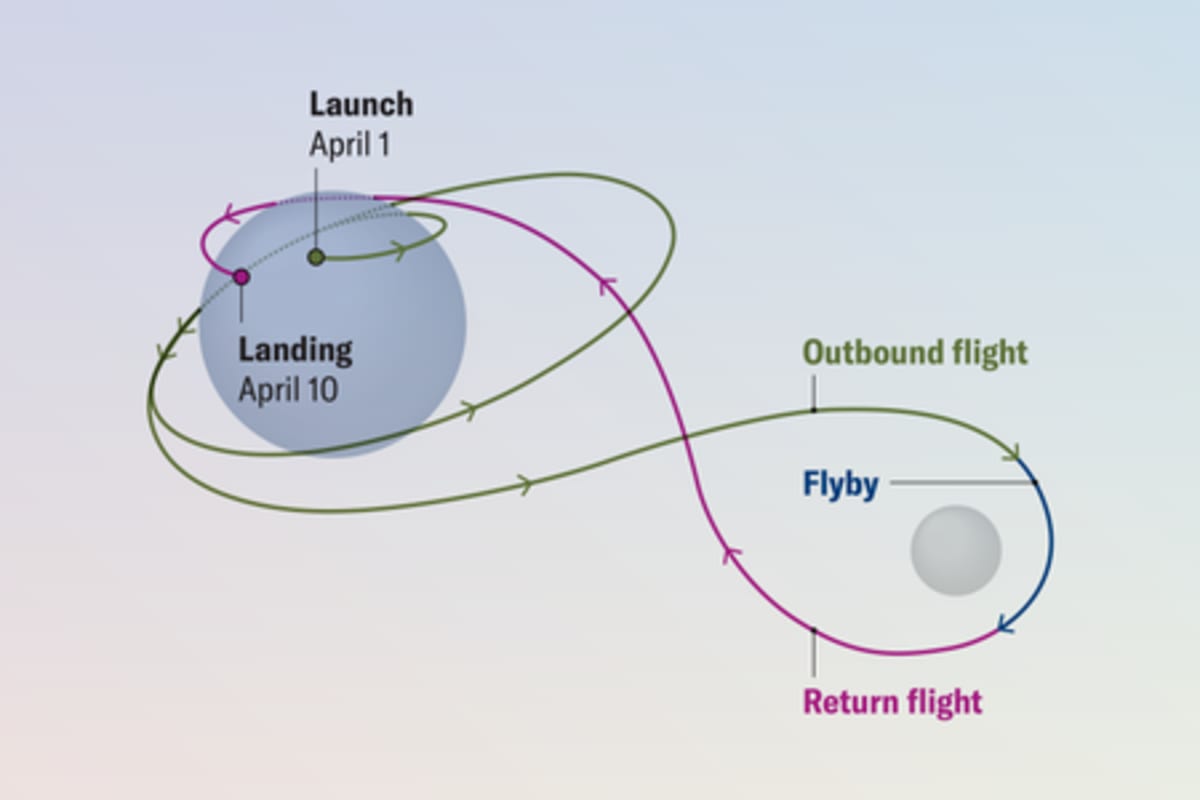
The Artemis II mission isn't just making history by returning humans to the moon's orbit. It's testing a breakthrough experiment called AVATAR that could transform how we protect astronauts on future missions to Mars and beyond.
The experiment uses organs-on-a-chip, tiny devices filled with fluid and lined with real human cells. Scientists grew bone marrow cells from each of the four Artemis II astronauts on these chips, creating miniature working models of their actual organs.
These chips have been studied on Earth since 2010 and tested on the International Space Station. But Artemis II is venturing much farther into space, where radiation levels are higher and the environment is harsher.
When the astronauts return home, researchers will compare the space-traveled chips with identical ones left on Earth. Using advanced genetic sequencing, they'll measure changes at the cellular level to understand exactly how deep space affects different organs.
The technology opens exciting possibilities for the future of space exploration. Because the chips are so small, future missions could pack hundreds of experiments into the same space that holds just a few today.
Donald Ingber created the first organs-on-a-chip at Harvard University over a decade ago. "As someone who grew up watching all the NASA flights starting in the early 1960s, it felt great to see the technology go up to space," he says.
The practical benefits could be lifesaving. Right now, astronauts carry general medical supplies because scientists can't predict every health issue that might arise in space.
The Ripple Effect
The AVATAR experiment points toward a future where astronauts carry personalized medical kits tailored to their individual biology. NASA could know exactly which medications each crew member needs before problems even arise.
"Mass is always a critical commodity," says Anthony Colaprete, acting director of NASA's Science Directorate at Ames Research Center. "We can't bring all the medicine there is, so having this ability to know exactly what you need to bring is hugely important."
Future missions might instrument the chips for real-time monitoring during flight. Astronauts could get instant feedback about how their bodies are responding to space conditions.
The technology also promises to improve medical research back on Earth. Organs-on-a-chip let scientists test new medications and study diseases using real human cells instead of relying solely on animal testing.
As NASA plans longer missions to the moon's surface and eventually Mars, understanding how space affects human biology becomes critical. The AVATAR experiment is helping pave the way for humans to safely explore farther than ever before.
More Images


Based on reporting by Scientific American
This story was written by BrightWire based on verified news reports.
Spread the positivity!
Share this good news with someone who needs it