NASA's New Electric Thruster Breaks U.S. Power Record
NASA just tested an electric propulsion engine that shattered U.S. power records and could cut fuel use by 90 percent on future Mars missions. The breakthrough brings crewed trips to the Red Planet closer to reality.
📺 Watch the full story above
NASA engineers just fired up an engine that could transform how humans reach Mars, and the results blew past their most ambitious targets.
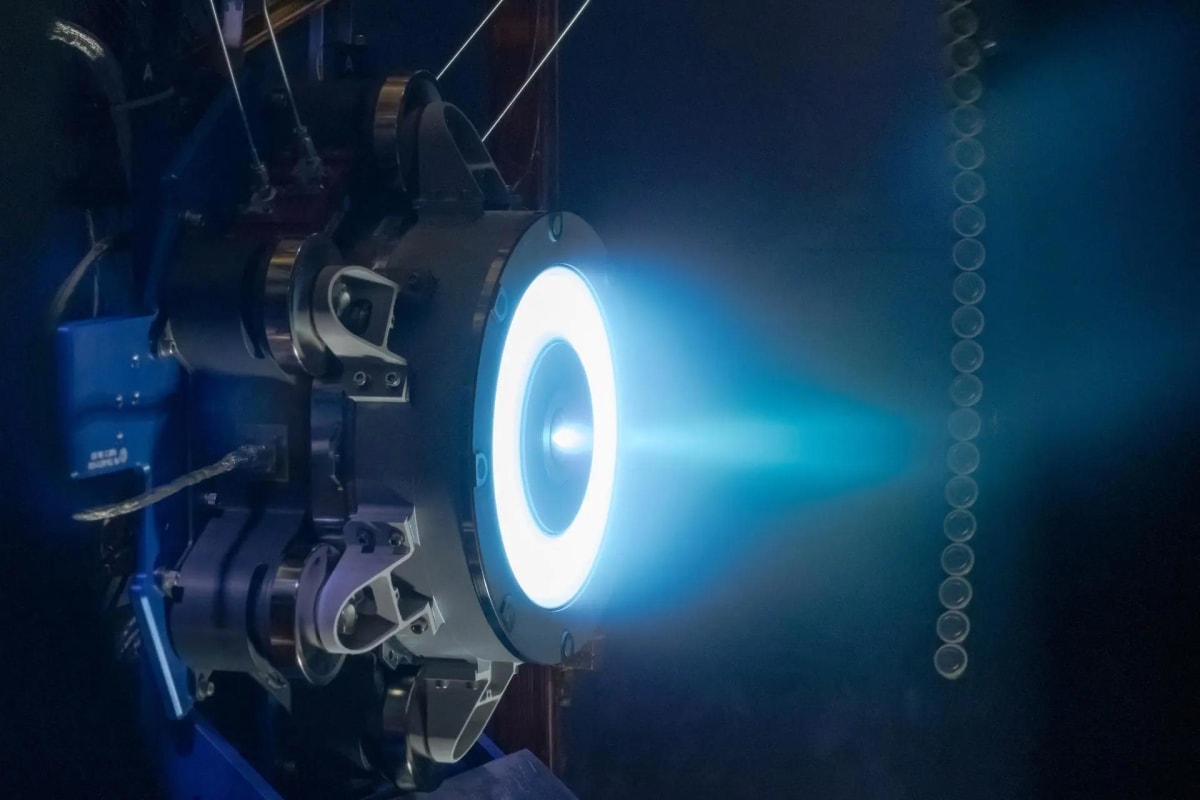
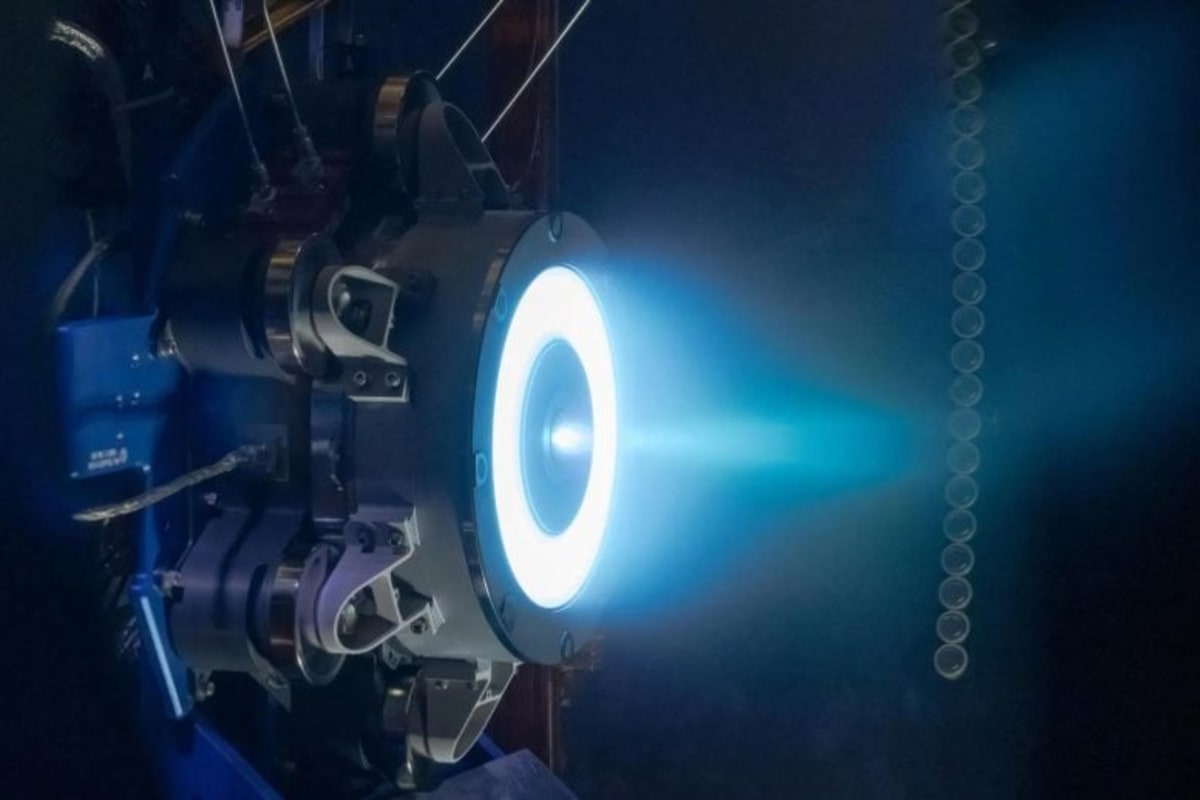
The space agency's new electric propulsion thruster hit 120 kilowatts during testing, setting a U.S. power record. That's 25 times more powerful than the thrusters currently pushing NASA's Psyche spacecraft toward a distant asteroid.
Here's what makes this exciting. Electric thrusters work completely differently than traditional chemical rockets. Instead of explosive bursts of power, they provide steady, continuous acceleration that builds speed over time.
The result is stunning efficiency. These systems use up to 90 percent less fuel than conventional rockets while eventually reaching incredible speeds. After just one week of constant acceleration, a spacecraft could be traveling at more than 250,000 miles per hour.
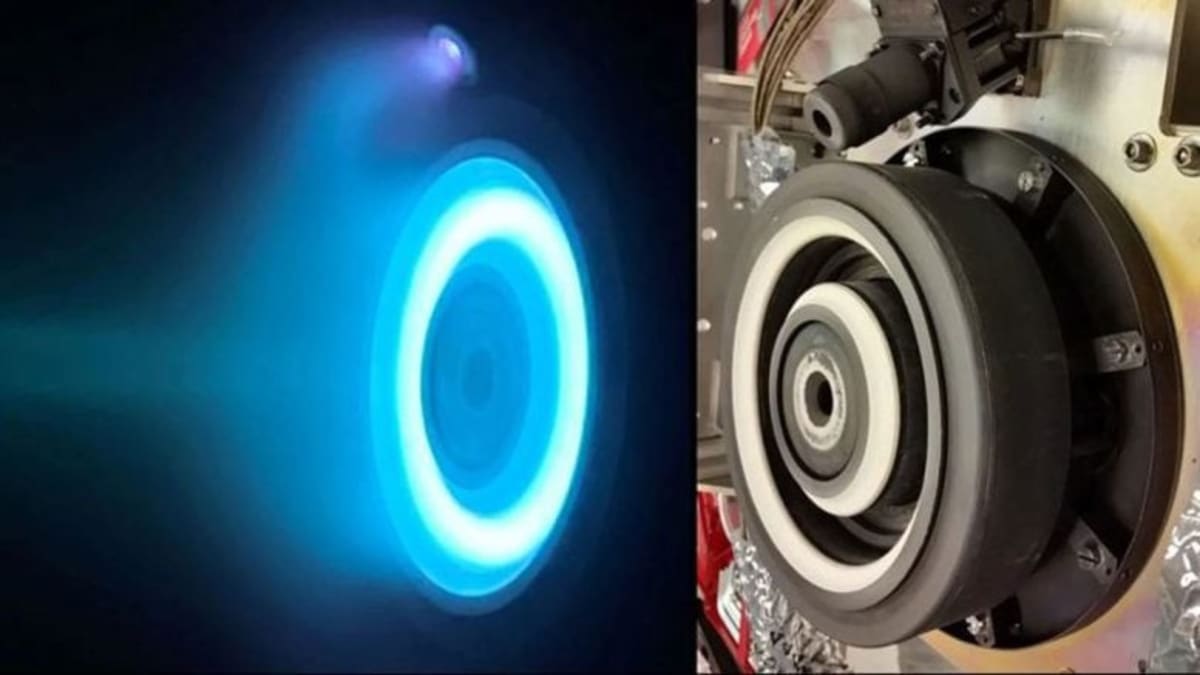
The new design uses lithium metal vapor as fuel instead of the xenon gas in current ion engines. During tests at NASA's Jet Propulsion Laboratory, the thrusters withstood temperatures exceeding 5,000 degrees Fahrenheit while maintaining stable operation.
"It's a huge moment for us because we not only showed the thruster works, but we also hit the power levels we were targeting," said James Polk, a senior research scientist at JPL.
The Ripple Effect
This breakthrough could reshape space exploration far beyond Mars. The dramatic fuel savings mean spacecraft can carry more scientific equipment, supplies for astronauts, or both. Missions that once seemed impossibly expensive suddenly become feasible.
A crewed Mars mission would need multiple thrusters running for roughly 2.6 years straight. That includes six to nine months traveling to Mars, about 18 months on the surface waiting for the launch window back to Earth, then another six to nine months returning home.
NASA estimates the full system would need 2 to 4 megawatts of total power. The team already proved their design can handle the extreme temperatures and duration required. Now they're scaling up the technology to reach those higher power levels.
Robotic spacecraft will likely benefit first. Deep space probes could explore farther into the solar system with smaller, lighter fuel loads. That means more missions to mysterious moons, distant asteroids, and the outer planets.
For human missions, the efficiency gains solve one of spaceflight's biggest challenges: carrying enough propellant without making the spacecraft impossibly heavy. Less fuel weight means more room for everything astronauts need to survive the journey and conduct meaningful research.
The technology is still at least a decade away from carrying people to Mars, but NASA is methodically checking off the engineering milestones needed to make it real.
More Images
Based on reporting by Google News - Science
This story was written by BrightWire based on verified news reports.
Spread the positivity!
Share this good news with someone who needs it