NASA's New Telescope Launches Early and Under Budget
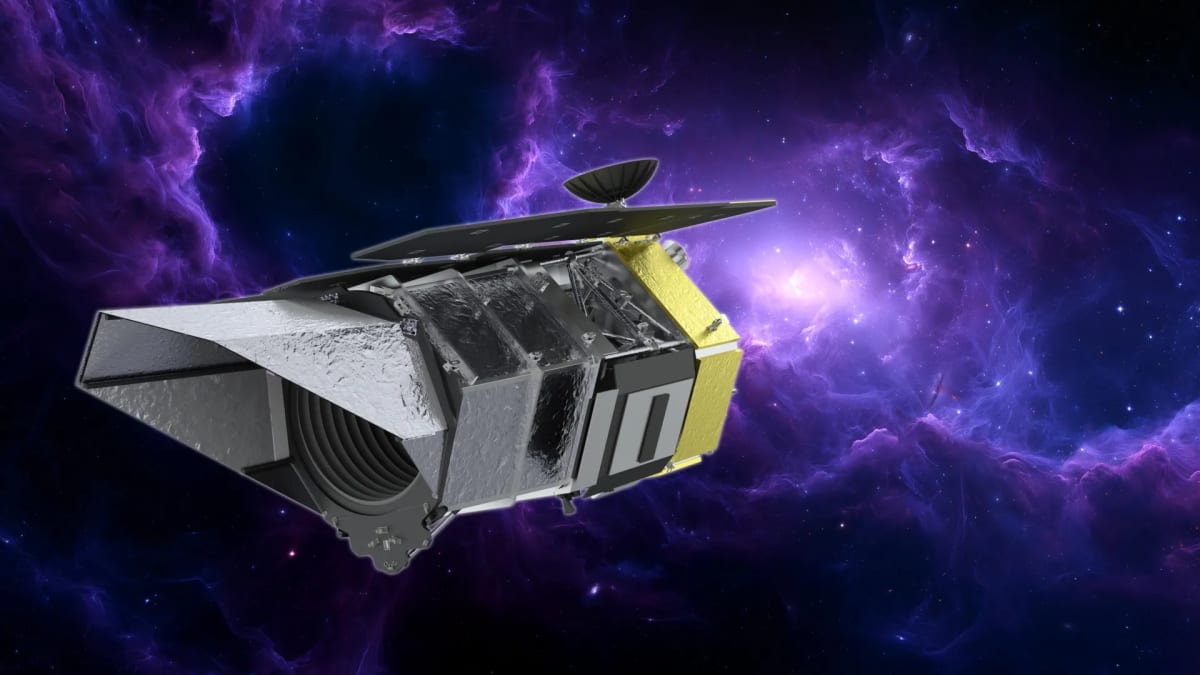
NASA just finished building the Nancy Grace Roman Space Telescope months ahead of schedule and under budget, words the space agency rarely gets to say. Launching in September 2026, this powerful observatory will discover billions of new galaxies and change our understanding of the universe.
NASA just pulled off something almost as impressive as the telescope itself: finishing a major space project early and under budget.
The Nancy Grace Roman Space Telescope completed construction this month and will launch aboard a SpaceX Falcon Heavy in September 2026, eight months ahead of its original May 2027 deadline. Named after NASA's first chief astronomer, this next-generation observatory represents a major leap forward in space exploration.
Roman's primary mirror matches the Hubble telescope's 7.9-foot diameter but weighs only a quarter as much. The real game changer is what it can do with that mirror.
The telescope carries a 300-megapixel camera called the Wide Field Instrument and the Roman Coronagraph, the first space-based system that can actively dim starlight to reveal planets orbiting distant stars. Think of it as the most powerful polarized sunglasses ever made, automatically adjusting to whatever star it's observing.
While the James Webb Space Telescope takes stunning close-up photos of things we already know about, Roman will scan the skies discovering entirely new objects. It's the difference between examining something under a microscope versus exploring a new landscape.
The numbers are staggering. Roman can survey 1,000 times faster than Hubble, observe 200 times more sky in a single image, and process data 2,000 times faster. What took Hubble 30 years to collect in data, Roman will gather in just six months.
Scientists expect the telescope to discover billions of new galaxies, which means tens of billions of new stars. But the most exciting possibilities are the things scientists don't even know to look for yet.
The Ripple Effect
Roman will join the Webb telescope at Lagrange Point 2, nearly a billion miles from Earth on the opposite side from the Sun. This special spot requires minimal fuel to maintain position and offers darkness perfect for deep space observation.
The telescope's five-year mission will generate 2,500 terabytes of data, giving astronomers an unprecedented view of our universe. Every discovery Roman makes could answer fundamental questions about dark energy, exoplanets, and the universe's structure.
This achievement also shows NASA can deliver cutting-edge science on time and on budget, setting a new standard for future missions. The success comes just four years after Webb's deployment, proving the space agency is hitting its stride.
Our understanding of the cosmos is about to expand in ways we can barely imagine, and it's happening ahead of schedule.
More Images


Based on reporting by Google News - Science
This story was written by BrightWire based on verified news reports.
Spread the positivity!
Share this good news with someone who needs it