NASA's SPHEREx Telescope Delivers Stunning Gift: 102 New Maps of Our Universe
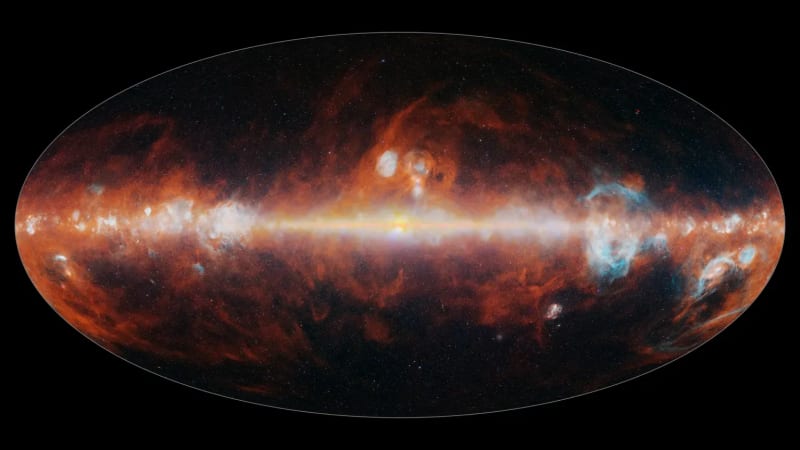
NASA's innovative SPHEREx spacecraft has created its first breathtaking all-sky map just six months after launch, combining 102 different infrared views that promise to unlock cosmic mysteries and inspire discoveries for astronomers worldwide. This remarkable achievement represents a new era of understanding our universe's origins and our place within it.
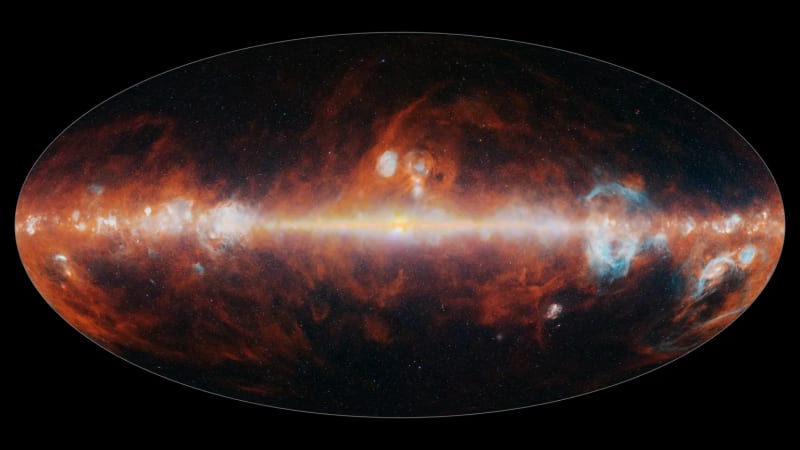
In a triumphant milestone for space exploration, NASA's SPHEREx telescope has delivered an extraordinary holiday gift to humanity: a spectacular composite map of the entire universe, weaving together 102 distinct infrared colors invisible to the naked eye. This achievement, accomplished in just six months, marks the beginning of an exciting journey to answer some of our most profound cosmic questions.
"It's incredible how much information SPHEREx has collected in just six months," enthused Shawn Domagal-Goldman, acting director of NASA's Astrophysics Division. His excitement is contagious as he predicts that every astronomer will discover something valuable in this treasure trove of data, helping us understand how the universe created "a home for us in it."
Despite its modest size and cost of $488 million, SPHEREx—which stands for Spectro-Photometer for the History of the Universe, Epoch of Reionization, and Ices Explorer—is tackling astronomy's grandest mysteries with remarkable efficiency. The spacecraft's superpower lies in its panoramic vision, scanning the entire sky every six months and capturing approximately 3,600 images daily.
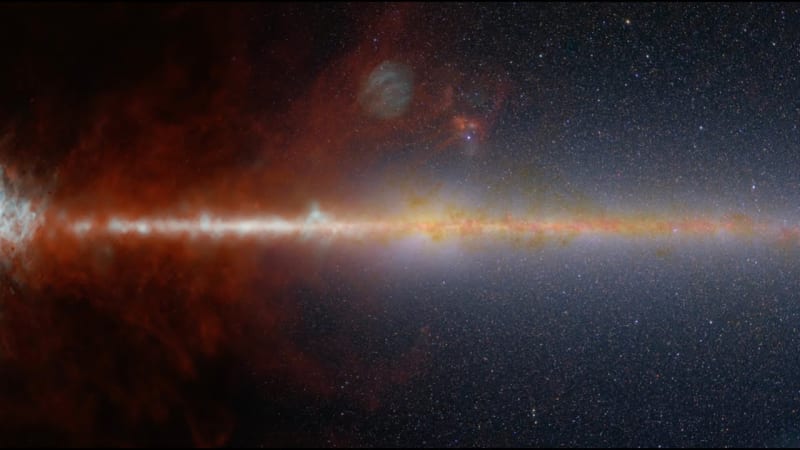
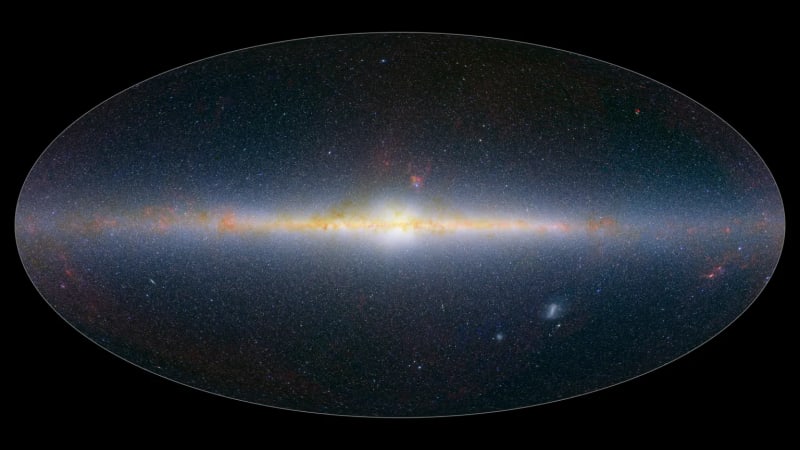
The telescope's innovative approach splits incoming light into 102 distinct infrared wavelengths, essentially creating 102 unique maps of the cosmos. Each wavelength reveals different secrets about galaxies, stars, dust, and other celestial wonders. "We essentially have 102 new maps of the entire sky," Domagal-Goldman explained, "each one containing unique information about the objects it sees."
Launched on March 12, 2025, SPHEREx wasted no time proving its worth. Within a month, it opened its eyes to the universe and captured its debut image containing over 100,000 galaxies and stars, confirming that the spacecraft was performing beautifully. Over its two-year mission, this celestial cartographer will collect data from more than 450 million galaxies.
Deputy project manager Beth Fabinsky beautifully compared SPHEREx to a mantis shrimp, known for having one of nature's most sophisticated visual systems. "We have an amazing multicolor visual detection system and we can also see a very wide swath of our surroundings," she said with pride.
The telescope's scientific goals are nothing short of inspiring. SPHEREx will study cosmic inflation—the theorized rapid expansion that occurred moments after the Big Bang 14 billion years ago. By mapping the universe in unprecedented three-dimensional detail, scientists hope to understand the mysterious physics that powered our universe's explosive birth.
Closer to home, SPHEREx will serve as a cosmic detective within the Milky Way, searching vast clouds of gas and dust for frozen water, carbon dioxide, and other icy compounds. These cosmic ingredients may have seeded planets and potentially sparked the emergence of life itself—a reminder of our deep connection to the stars.
This collaboration of cutting-edge technology and human curiosity represents the best of scientific exploration. As SPHEREx continues its celestial survey, layering each six-month pass to reveal ever-fainter cosmic details, it promises to illuminate our understanding of where we came from and our remarkable place in this vast, beautiful universe.
More Images

Based on reporting by Live Science
This story was written by BrightWire based on verified news reports.
Spread the positivity! 🌟
Share this good news with someone who needs it
More Good News
 🚀 Innovation
Scientists Discover Galaxy Cluster Blazing 12 Billion Years Ago Defies Predictions
 🚀 Innovation
NASA's 25-Year Timelapse Reveals 400-Year-Old Supernova Still Dazzling Scientists
 🚀 Innovation
Philanthropists Fund Hubble-Beating Space Telescope in Just 3 Years for Fraction of Cost
Joke of the Day
Why don't scientists trust atoms?
Explore Categories
Quote of the Day
"The only way to do great work is to love what you do."
— Steve Jobs