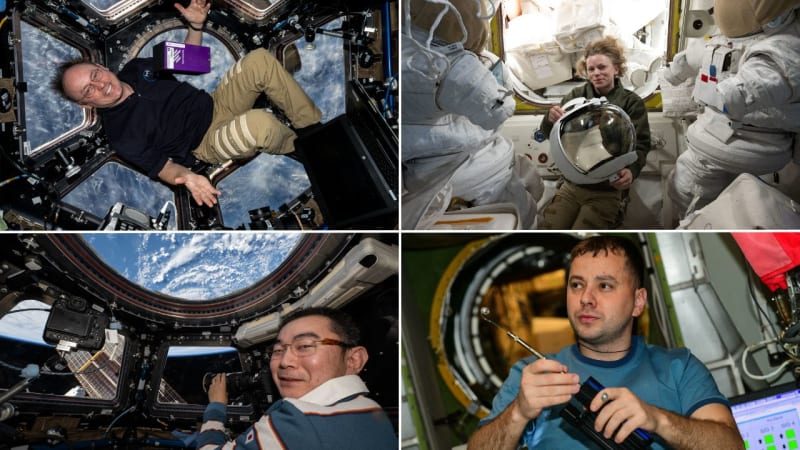
NASA's Swift Response Brings ISS Crew-11 Astronauts Home Safely After Medical Issue
In a historic first showcasing decades of preparation and international cooperation, NASA is successfully bringing four astronauts home early from the International Space Station after a medical concern arose. The crew member is stable, and the agency's quick, calm response demonstrates how well space medicine has advanced.
Space exploration just got a little safer, thanks to NASA's impressive response to an unprecedented situation aboard the International Space Station.
For the first time in the orbiting laboratory's 25-year history of continuous human habitation, a crew will return to Earth ahead of schedule due to a medical issue. But here's the good news: everything is going exactly according to plan, the affected astronaut is stable, and this moment actually represents a triumph of preparation and international cooperation.
NASA Administrator Jared Isaacman reassured the public during a press conference that this is "not an emergency de-orbit," emphasizing that the decision was made out of an abundance of caution and the desire to provide the best possible care. "We're always going to do the right thing for our astronauts," Isaacman said, reflecting the agency's unwavering commitment to crew safety.
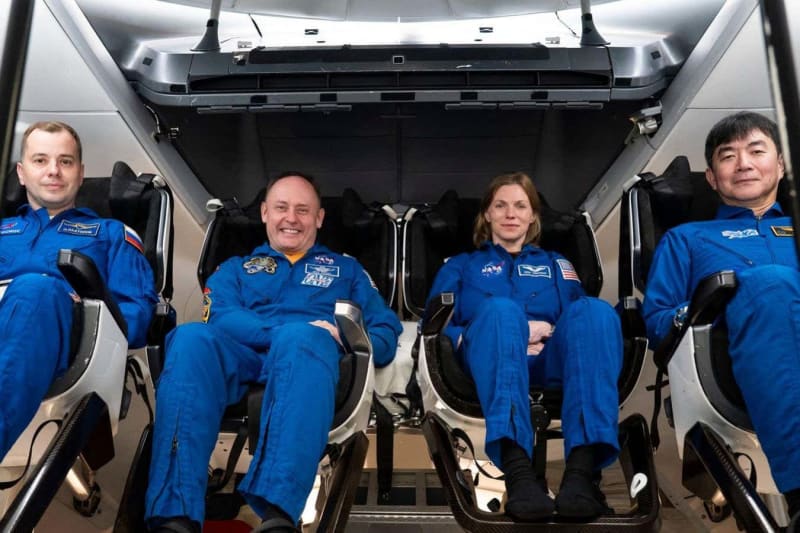
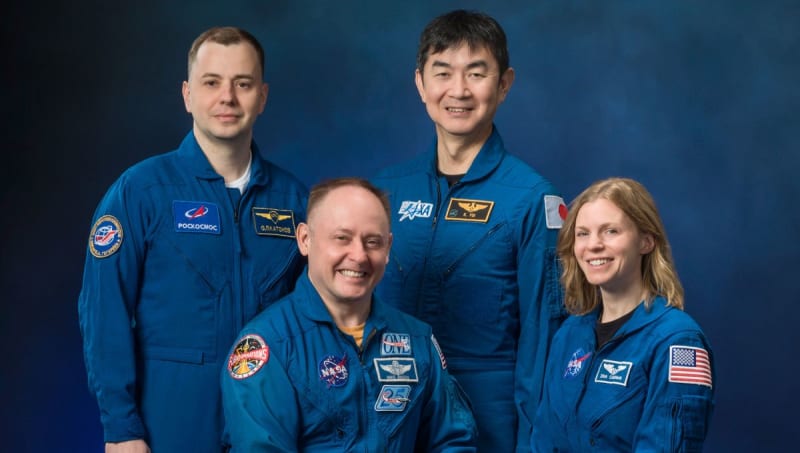
The four-person Crew-11 mission includes NASA astronauts Zena Cardman and Michael Fincke, Japan's Kimiya Yui, and Russia's Oleg Platonov. They launched aboard SpaceX's Crew Dragon Endeavour on August 1, 2025, and have nearly completed their six-month mission, accomplishing almost all their objectives in orbit.
What makes this situation particularly manageable is the timing. Crew-11 was already approaching the end of their planned stay, and their successors on Crew-12 are scheduled to launch in mid-February. This fortunate timing made the decision to bring them home slightly early much easier.
Dr. James Polk, NASA's chief health and medical officer, provided fascinating context: statistical models actually predicted a medical evacuation should occur about every three years. In that sense, the ISS has had an remarkably safe run. "This was not an injury that occurred in the pursuit of operations," Polk explained, noting it's simply a medical issue that requires Earth-based diagnostic equipment not available on the station.
The response showcases how far space medicine has come. NASA and its international partners routinely train for exactly these scenarios, maintaining the capability to safely return crews whenever needed. The fact that this can be done calmly and methodically, rather than as a crisis, speaks volumes about the maturity of human spaceflight operations.
While the ISS will temporarily operate with a reduced crew of three—NASA's Christopher Williams and cosmonauts Sergey Kud-Sverchkov and Sergei Mikayev—officials expressed complete confidence in the arrangement. "Chris is trained to do every task that we would ask him to do on the vehicle," said NASA Associate Administrator Amit Kshatriya, adding that Williams will have "thousands of people looking over his shoulder" from mission control centers around the world.
Why It Matters: This historic moment demonstrates that space exploration has matured to the point where medical concerns can be handled with the same professionalism and calm as they would be on Earth. It shows that NASA's decades of planning, training, and international cooperation are working exactly as intended. The agency's transparency and measured response also reflect a commitment to astronaut welfare that should give us all confidence in humanity's continued journey to the stars.
The crew will return home soon, receive excellent medical care, and this chapter will be remembered not as a crisis, but as proof that we're getting better at keeping explorers safe among the cosmos.
More Images


Based on reporting by Space.com
This story was written by BrightWire based on verified news reports.
Spread the positivity! 🌟
Share this good news with someone who needs it
More Good News
 Community Heroes
ISS Astronauts Return Safely After Historic Medical Mission Success
 Community Heroes
Utah Boy's Dream Takes Him to NASA: Leading Artemis II Moon Mission Boosters
 Community Heroes
NASA's Swift Response Brings ISS Crew-11 Home Safely After Medical Alert
DAILY MORALE
What did the thermometer say to the graduated cylinder?
EXPLORE INTEL
DAILY INSPIRATION
Hope is the thing with feathers that perches in the soul and sings the tune without the words and never stops at all.
Emily Dickinson