NASA's Webb and Hubble Team Up for Best Saturn Views Yet
Two of NASA's most powerful telescopes joined forces to capture the most detailed portrait of Saturn ever created, revealing hidden layers of the ringed planet's atmosphere. The combined images show Saturn like we've never seen it before.
Saturn just got its most stunning close-up ever, thanks to a cosmic team-up between NASA's two most powerful space telescopes.
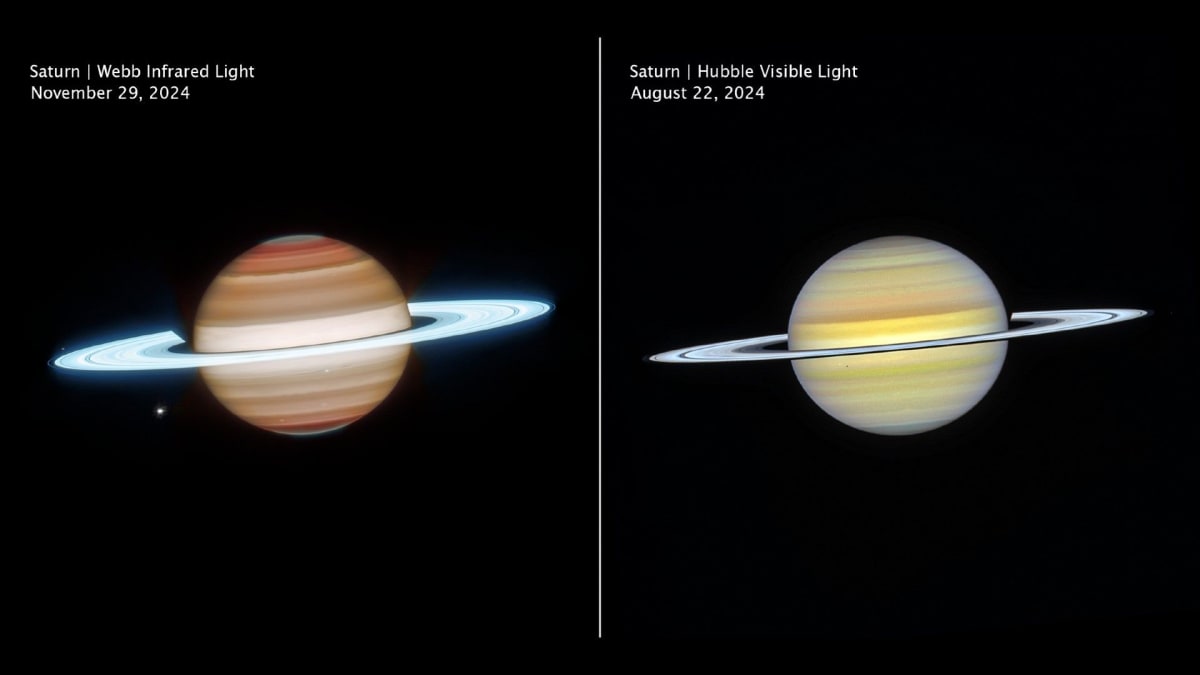
The James Webb Space Telescope and Hubble Space Telescope worked together to create the most comprehensive view of the ringed planet to date. By combining observations from both observatories, scientists captured Saturn in infrared, visible, and ultraviolet light all at once.
Think of it like peeling back the layers of an onion. Each telescope reveals different parts of Saturn's story, helping researchers understand how the planet's atmosphere works as a connected, three-dimensional system.
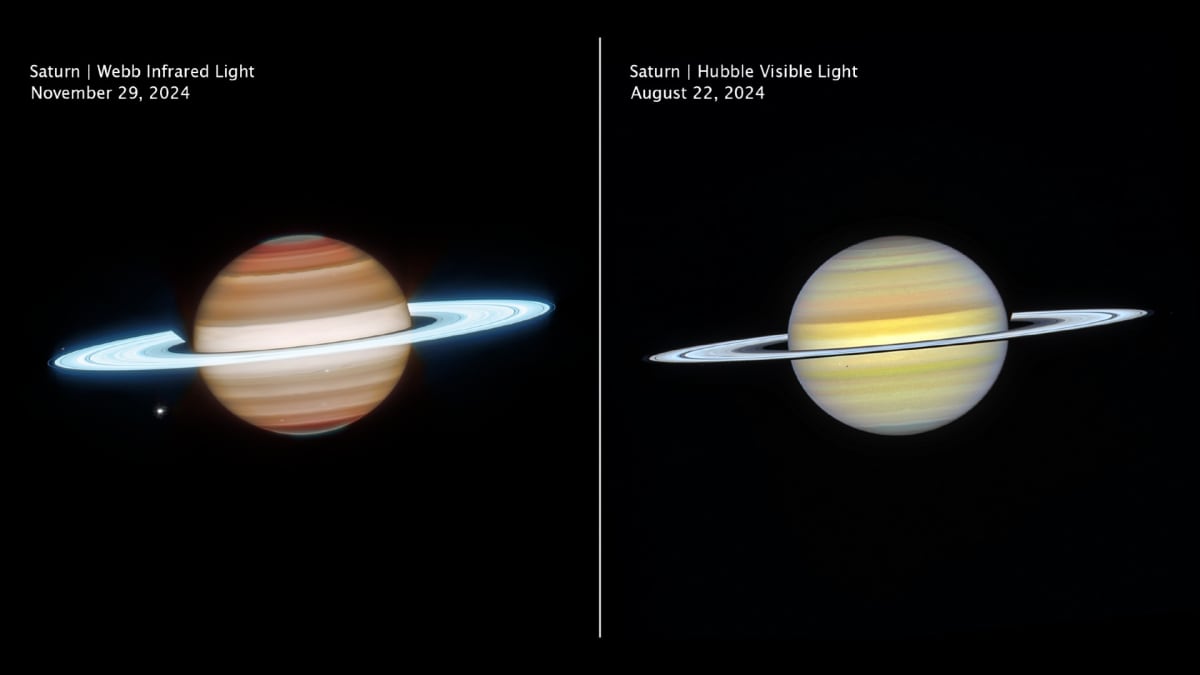
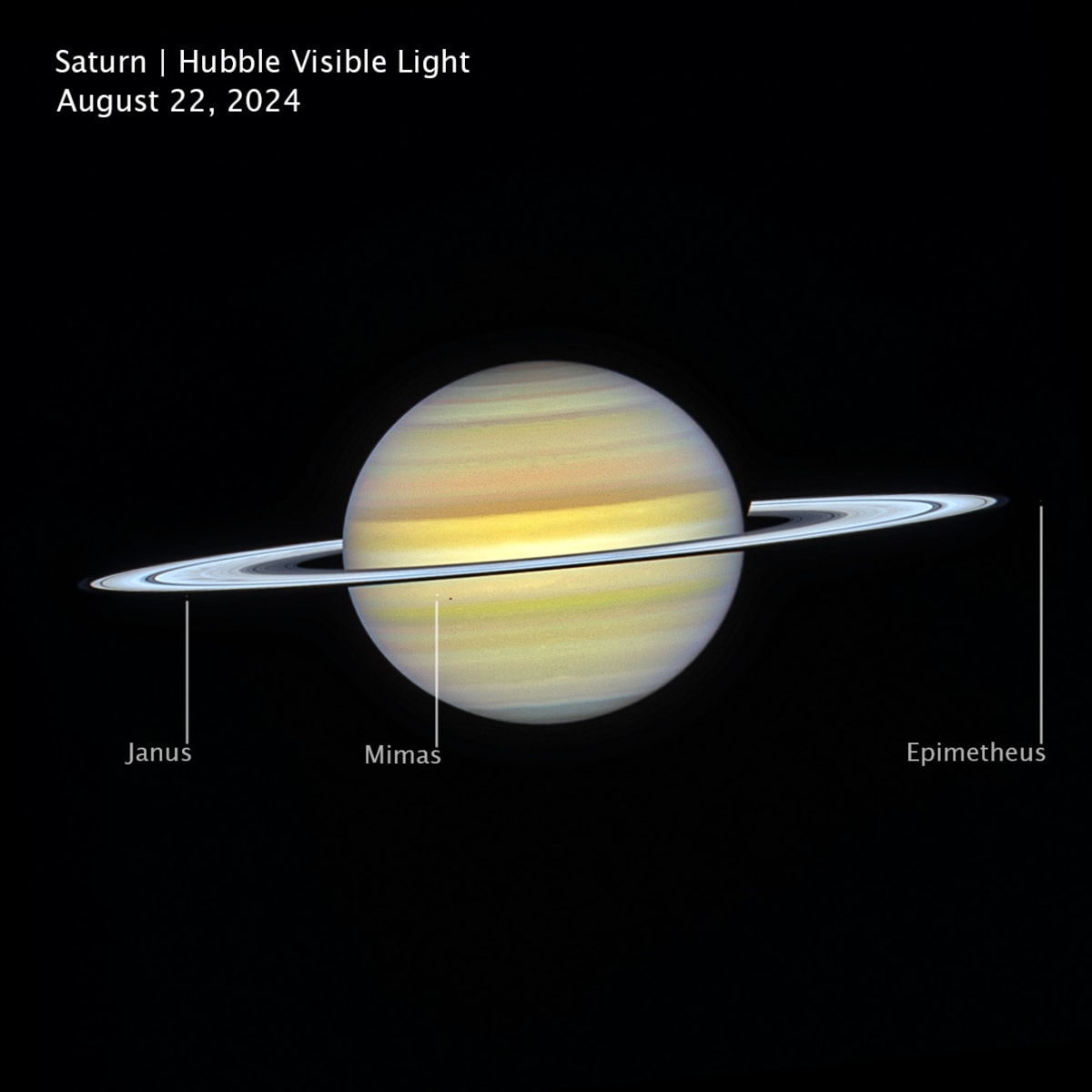
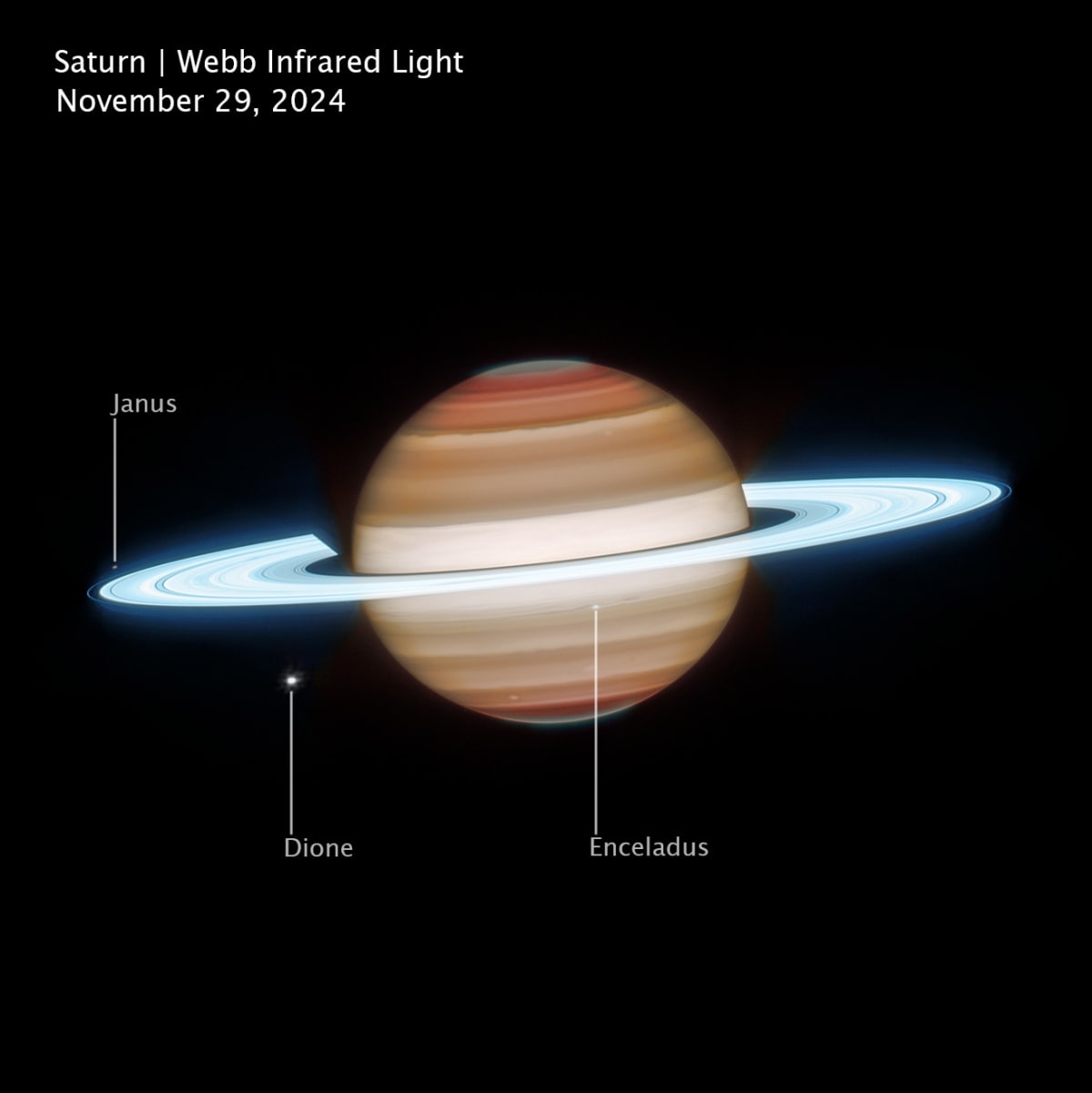
Hubble captured crisp visible-light images in August 2024, showing Saturn's softly banded clouds and bright ring system. About 14 weeks later, Webb followed up with infrared observations that peer deeper into the planet's atmosphere, revealing heat patterns and structures completely hidden beneath the upper clouds.
The timing couldn't be better. Saturn is shifting from northern summer toward its 2025 equinox, and these long seasonal cycles (each lasting about seven Earth years) give scientists crucial context for tracking atmospheric changes over time.
Webb's infrared view uncovered fascinating details invisible to the naked eye. The images reveal a meandering jet stream in the northern mid-latitudes, possible auroral activity near the poles, and several storms scattered across the southern hemisphere.
The Ripple Effect
This telescope partnership demonstrates something bigger than just pretty pictures of Saturn. By combining Webb's cutting-edge infrared sensitivity with Hubble's decade-long tracking record, scientists can now build a far more complete understanding of how giant planets behave than either telescope could achieve alone.
The rings themselves tell two different stories depending on which telescope is looking. In Hubble's view, the water ice rings appear bright in reflected sunlight with clearly defined structure. Webb's infrared perspective makes them shine even more brilliantly against the dark background of space, revealing additional detail including mysterious spoke features and variations in the thick central region.
Scientists have been tracking Saturn through Hubble's Outer Planet Atmospheres Legacy program for over a decade. These new Webb observations add an entirely new dimension to that dataset, creating opportunities to monitor storm systems, track atmospheric evolution, and refine climate models for years to come.
Saturn isn't just a distant gas giant anymore—it's a dynamic world whose hidden layers are finally coming into focus, one wavelength at a time.
More Images

Based on reporting by Google News - Science
This story was written by BrightWire based on verified news reports.
Spread the positivity!
Share this good news with someone who needs it