NC Counties Get $5M for Storm-Proof Solar Microgrids
When Hurricane Helene knocked out power across Western North Carolina, volunteers scrambled to install temporary solar systems at emergency shelters and food banks. Now that disaster response has turned into a $5 million project to give 24 community hubs permanent backup power that never runs out.
Western North Carolina communities that became islands during Hurricane Helene are getting a permanent lifeline powered by the sun.
When the storm tore through the region in September 2024, it knocked out power, internet, and roads across six counties. Churches became supply hubs, fire stations turned into lifelines, and volunteers worked around the clock to restore even small amounts of electricity to help stranded residents.
Ian Baillie, an economic development specialist with the Land of Sky Regional Council, used the battery in his electric vehicle to keep his internet running so he could relay messages between isolated families. His team quickly connected with the Footprint Project, a nonprofit that deploys clean energy systems after disasters.
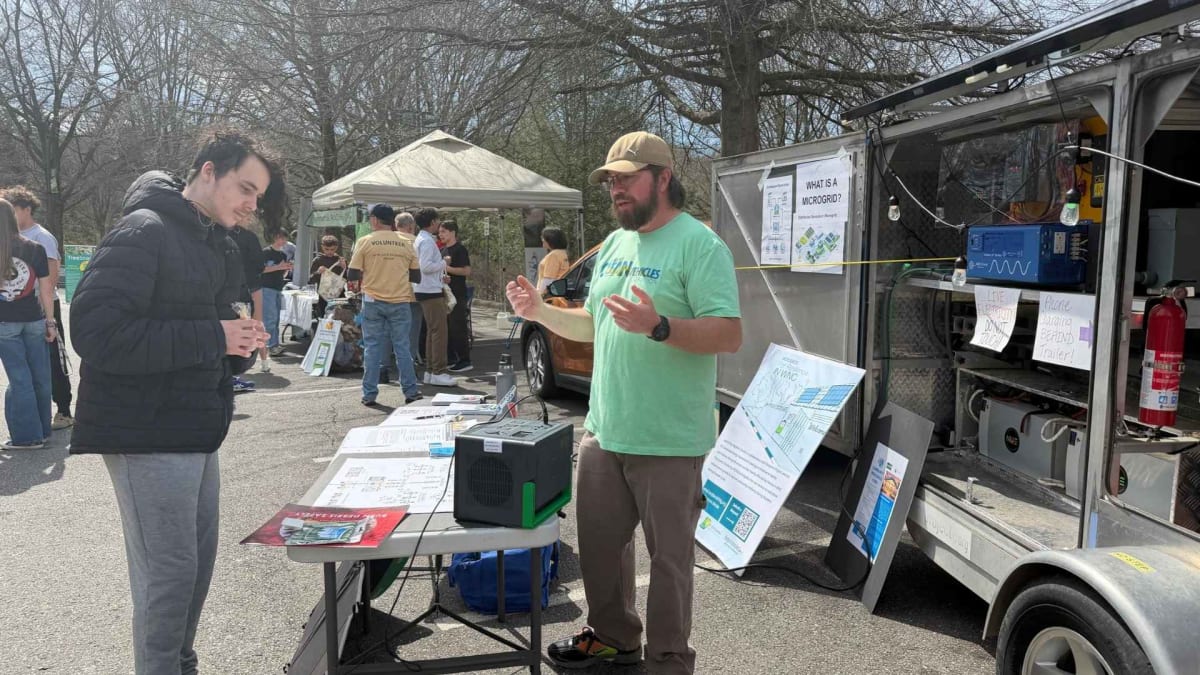
Volunteers arrived expecting a routine deployment but found themselves managing one of the biggest disaster responses they'd ever seen. For weeks, they installed temporary solar panels and battery systems at food distribution centers and emergency facilities across the region.
Companies responded by donating pallets of equipment. Schneider Electric alone shipped dozens of pallets, including prototype portable power systems not yet released to the public.
Those chaotic weeks proved something important: communities can keep critical services running during disasters without relying on distant power plants or fuel deliveries.
The Ripple Effect
Now those emergency lessons are becoming permanent infrastructure. The North Carolina Department of Environmental Quality just awarded $5 million to install solar-plus-battery microgrids at 24 community hubs across Buncombe, Madison, Rutherford, Yancey, Mitchell, and Avery counties.
Each system will go to organizations that already stepped up during Helene, like food banks, churches, and fire stations. The installations are completely funded, meaning these community centers won't need to provide matching money.
Unlike traditional backup generators that need constant fuel deliveries, these microgrids run on renewable energy and can operate independently when the main grid fails. They'll generate power locally and keep it local, making outages smaller and easier to fix.
The project also includes two mobile "Beehive" units that can deploy anywhere in North Carolina when disaster strikes. Matt Abele, Executive Director of the NC Sustainable Energy Association, explained how the vision shifted from immediate response to long-term preparation for future storms.
Baillie had pitched resilience hubs before the hurricane, but federal grant reviewers rejected the idea because Western North Carolina was considered a "climate haven" safe from disasters. Helene proved that assumption catastrophically wrong.
The new systems will help ensure that when the next storm hits, community centers won't go dark, food banks can keep refrigerators running, and families will know where to find help.
More Images

Based on reporting by Google News - Clean Energy
This story was written by BrightWire based on verified news reports.
Spread the positivity!
Share this good news with someone who needs it