New AI Cuts Battery Testing Time by 98%
Scientists just cracked the code on predicting battery lifespan in days instead of years, saving time and energy while speeding up clean energy innovation. This breakthrough could fast-track electric vehicles and renewable energy storage.
Testing a new battery design to see how long it lasts has always been painfully slow, taking months or even years of constant cycling. That bottleneck just got smashed by a team of researchers who taught artificial intelligence to predict battery lifespan after just 50 charge cycles.
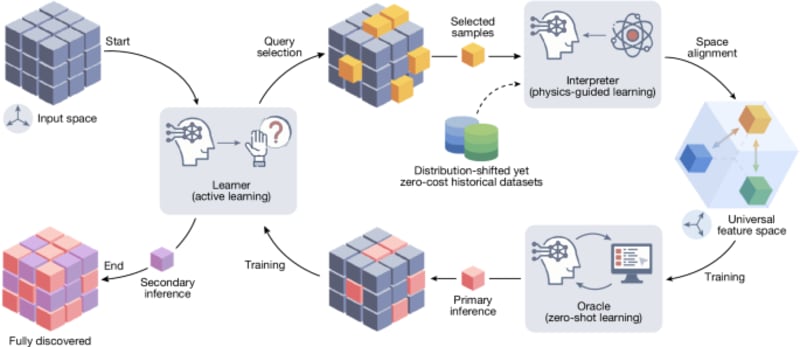
The breakthrough, called Discovery Learning, works like a student learning from textbooks before tackling homework. The AI studies data from old battery designs, identifies patterns in how batteries age, and then applies that knowledge to predict how new batteries will perform over their entire lifetime.
Researchers tested their approach on 123 industrial-grade lithium-ion pouch cells, the kind used in electric vehicles and energy storage. These weren't simple lab batteries but real-world designs with different materials and charging protocols.
The results were stunning. Discovery Learning achieved 7.2% prediction error while testing only half the battery prototypes and using data from just the first 50 cycles instead of running batteries until they died.
Under normal testing conditions, companies spend months cycling batteries thousands of times to measure degradation. This new method delivers reliable predictions in days, saving 98% of the time and 95% of the energy compared to traditional approaches.
The Ripple Effect
Faster battery testing means faster innovation across the entire clean energy sector. Electric vehicle manufacturers can test new battery chemistries in weeks instead of months, bringing better, cheaper EVs to market sooner.
The same speed boost applies to grid-scale energy storage, the technology needed to make solar and wind power reliable around the clock. Right now, developing better batteries for storing renewable energy crawls forward because every design tweak requires exhaustive testing.
Discovery Learning changes that equation completely. Engineers can now experiment with more materials, test more configurations, and identify winning designs without burning through time and resources on dead ends.
The researchers made their data and code publicly available, meaning battery developers worldwide can start using this tool immediately. Teams at universities, startups, and major manufacturers now have access to the same predictive power.
Beyond batteries, this human-inspired AI approach could accelerate progress in other fields where testing takes too long. Materials science, drug development, and renewable energy technologies all face similar bottlenecks that Discovery Learning could help break.
The race to build better batteries just shifted into high gear, and cleaner energy is closer than ever.
More Images



Based on reporting by Google: scientific discovery
This story was written by BrightWire based on verified news reports.
Spread the positivity!
Share this good news with someone who needs it


%2Ffile%2Fattachments%2Forphans%2FbmAIAfrica1_676099.jpg)