New AI Helps Self-Driving Cars Remember Roads Like Humans
Scientists created an AI system that lets self-driving cars recall past road situations to make safer decisions in traffic. The breakthrough could make autonomous vehicles smarter in complex, unpredictable situations.
Self-driving cars just got a lot smarter about handling tricky traffic, thanks to an AI system that works more like human memory.
Researchers at Tongji University developed KEPT, a system that helps autonomous vehicles remember similar driving situations from the past and use those memories to plan safer paths. Instead of treating every moment on the road as brand new, the AI now recalls how similar scenes played out before.
"Short-horizon trajectory prediction is where many autonomous driving systems still struggle, especially in complex, busy scenes," said lead researcher Yujin Wang. The team wanted to give AI drivers something closer to real experience.
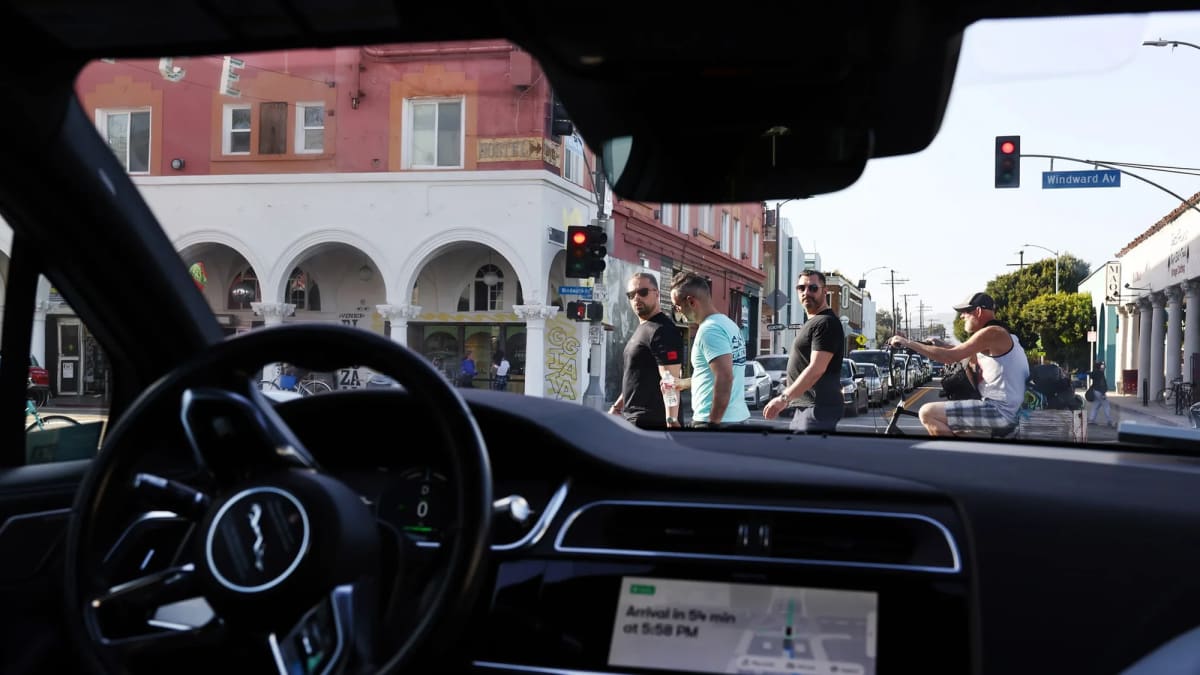
Here's how it works. When the car encounters a situation like a bus blocking part of the road or a vehicle merging from the side, KEPT searches through a library of past driving clips to find similar moments. It pulls up those examples and uses the successful responses as guidance for planning the next three seconds of motion.
The system analyzes video from the car's front camera and matches it against thousands of earlier driving clips. It then feeds those relevant examples into the planning system alongside safety constraints and collision avoidance rules.
Professor Bingzhao Gao, who led the research, explained why this matters. "Vision-language models are powerful reasoners, but in driving they can easily hallucinate or ignore physical constraints if we just ask them to 'draw a path.'" Grounding the AI in real past experiences makes it much more reliable.
The results speak for themselves. In tests on the nuScenes benchmark, a standard evaluation used across the industry, KEPT reduced prediction errors and lowered collision rates compared to existing planning methods. The system achieved an average error of just 0.70 meters and a collision rate of 0.21%, beating previous approaches.
The Ripple Effect
This breakthrough addresses one of the biggest challenges in autonomous driving: handling messy, uncommon situations that don't fit neat patterns. Rain reflections, partially blocked intersections, and unpredictable merging vehicles have long stumped self-driving systems.
By giving AI something closer to driving experience, KEPT makes autonomous vehicles safer in exactly the moments that matter most. The system works fast too, searching its memory database in just 0.014 milliseconds per query.
The research team designed a special video encoder that captures both the layout of a scene and how things are moving. This helps the system recognize not just what's there, but what's about to happen, much like an experienced human driver would.
The technology could accelerate the path toward truly reliable self-driving cars, making roads safer for everyone. When AI can learn from experience instead of just reacting to sensors, it takes a major step toward the kind of judgment humans use every day behind the wheel.
More Images

Based on reporting by Google News - AI Breakthrough
This story was written by BrightWire based on verified news reports.
Spread the positivity!
Share this good news with someone who needs it