New AI Tool DNAreader Beats 14 Older Models
Scientists have developed an artificial intelligence tool called DNAreader that reveals how proteins interact with our genetic code faster and more accurately than ever before. Made completely free for researchers worldwide, this open-source breakthrough outperformed 14 existing models to accelerate global medical research.
Understanding the delicate dance of human life just became dramatically easier for scientists searching for the next medical cure. An international team of researchers has developed DNAreader, a powerful artificial intelligence system that maps the vital connections between proteins and genetic code with unmatched precision.
Published in the journal Nucleic Acids Research, this breakthrough solves one of the trickiest puzzles in molecular biology. By predicting how proteins bind to DNA, researchers can better understand how our bodies repair damaged genes, replicate cells, and fend off disease.
The international collaboration united scientists from Virginia Commonwealth University, Xinyang Normal University, Hebei University of Technology, and BITS Pilani in India. Together, they tackled a blind spot that has frustrated computational biologists for years.
Proteins are not always rigid, orderly structures. Many crucial proteins contain floppy, flexible sections called intrinsically disordered regions that constantly shift shape.
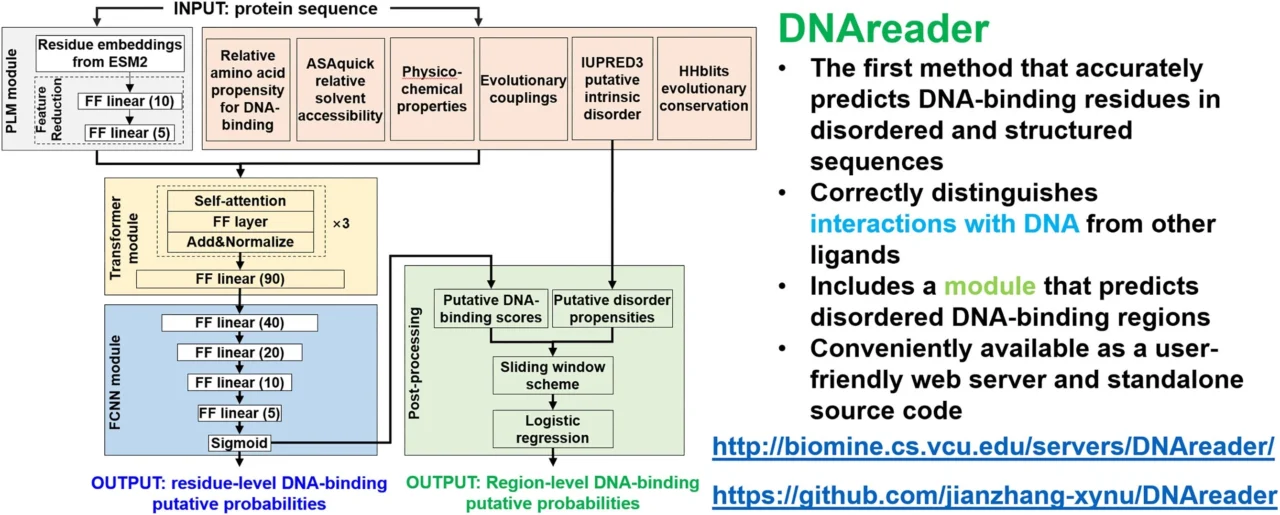
Previous computer models struggled to read these shape-shifting areas, often generating false alarms or missing binding points entirely. DNAreader changes the game by using a smart contrastive learning framework that handles both stiff and flexible regions in a single unified system.
When put to the test against 14 existing prediction platforms, DNAreader outperformed every single one. It registered an accuracy benchmark score up to 0.89, leaving previous leading tools far behind in the dust.
Dr. Sushmita Basu, an assistant professor at BITS Pilani and study co-author, noted that this AI innovation seamlessly bridges the gap between chaos and order in cellular research. By filtering out confusing molecular signals, the system gives scientists a crystal-clear look at real DNA interactions.
The Ripple Effect
Rather than patenting the software behind expensive paywalls, the research team made DNAreader completely free and open to everyone on Earth. Biologists anywhere can simply upload a protein sequence to a web platform and receive instant, precise data.
The team also released the full source code and underlying datasets so global researchers can build upon their findings. This generous spirit of open science means labs with modest budgets can now access world-class computational power.
From accelerating cancer research to designing life-saving gene therapies, this collective intelligence is tearing down barriers across modern medicine.
By handing the keys of cutting-edge discovery to every scientist on the planet, this team is turning the complex code of life into an open book for healing humanity.
More Images



Based on reporting by Google News - AI Breakthrough
This story was written by BrightWire based on verified news reports.
Building Something New? Try the BrightWire Tech Stack Advisor
Compare modern frameworks, cloud hosting, and AI tools tailored to your project budget and scale.
Spread the positivity!
Share this good news with someone who needs it