New AI Uses 100x Less Energy With Better Accuracy
Researchers just solved AI's massive energy problem with a system that uses 100 times less power while actually performing better. The breakthrough combines neural networks with human-like reasoning to help robots think smarter, not harder.
Artificial intelligence has an energy problem that's about to get a whole lot better.
Right now, AI systems gulp down over 10% of all electricity in the United States. That's more power than entire states consume, and it's projected to double by 2030. But researchers at Tufts University just unveiled a smarter approach that slashes energy use by up to 100 times while improving accuracy.
The secret? Teaching AI to think more like humans do.
Professor Matthias Scheutz and his team created what they call neuro-symbolic AI. Instead of relying purely on brute-force trial and error, their system combines traditional neural networks with symbolic reasoning. Think of it as the difference between memorizing every possible math problem versus learning the rules of math itself.
The team focused on robots that need to see, understand, and act in the real world. Current systems struggle with tasks as simple as stacking blocks because they can't truly understand concepts like balance or shape. A shadow might confuse them, or they'll topple their own work through preventable mistakes.
The new approach teaches robots to plan using rules and abstract concepts. When tested on the Tower of Hanoi puzzle, a classic brain teaser requiring careful strategy, the results were stunning. The neuro-symbolic system succeeded 95% of the time compared to just 34% for traditional AI.
Even more impressive, when researchers threw the system a curveball with a puzzle version it had never seen before, it still succeeded 78% of the time. Standard models failed every single attempt.
Training time dropped from over a day and a half to just 34 minutes. The energy savings during training? A jaw-dropping 99%. During actual operation, the system uses only 5% of the energy conventional AI requires.
The Ripple Effect
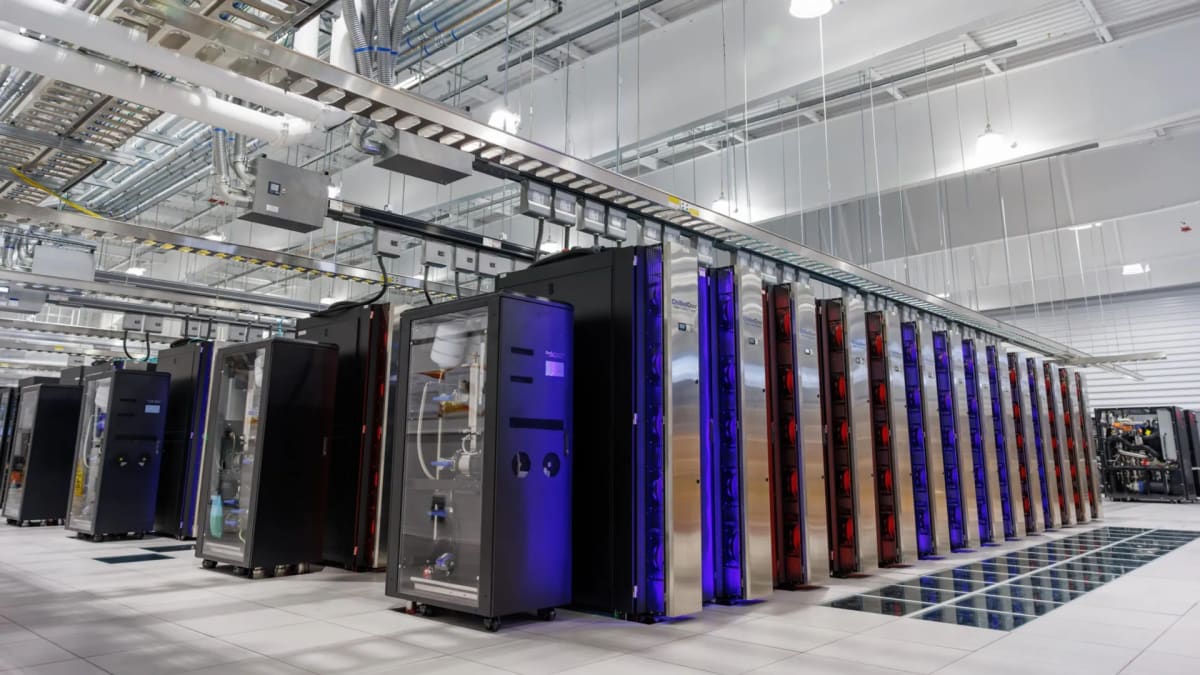
These numbers matter beyond lab experiments. Every time you see an AI-generated summary at the top of a Google search, it consumes up to 100 times more energy than the regular website listings below it. Companies are building data centers that require hundreds of megawatts of electricity, more than some small cities use.
As AI expands into healthcare, manufacturing, transportation, and everyday devices, this exponential energy growth threatens both power grids and climate goals. A system that delivers better results while using a fraction of the power could transform that equation entirely.
The research will be presented at the International Conference of Robotics and Automation in Vienna this May. While current AI approaches have proven powerful, Scheutz's team is showing there's a smarter path forward, one that works with our infrastructure instead of overwhelming it.
Sometimes the best breakthroughs don't come from building bigger systems, but from teaching existing ones to think a little more like we do.
Based on reporting by Science Daily
This story was written by BrightWire based on verified news reports.
Spread the positivity!
Share this good news with someone who needs it