New Book Reveals Hidden History of Urban Gardens Worldwide
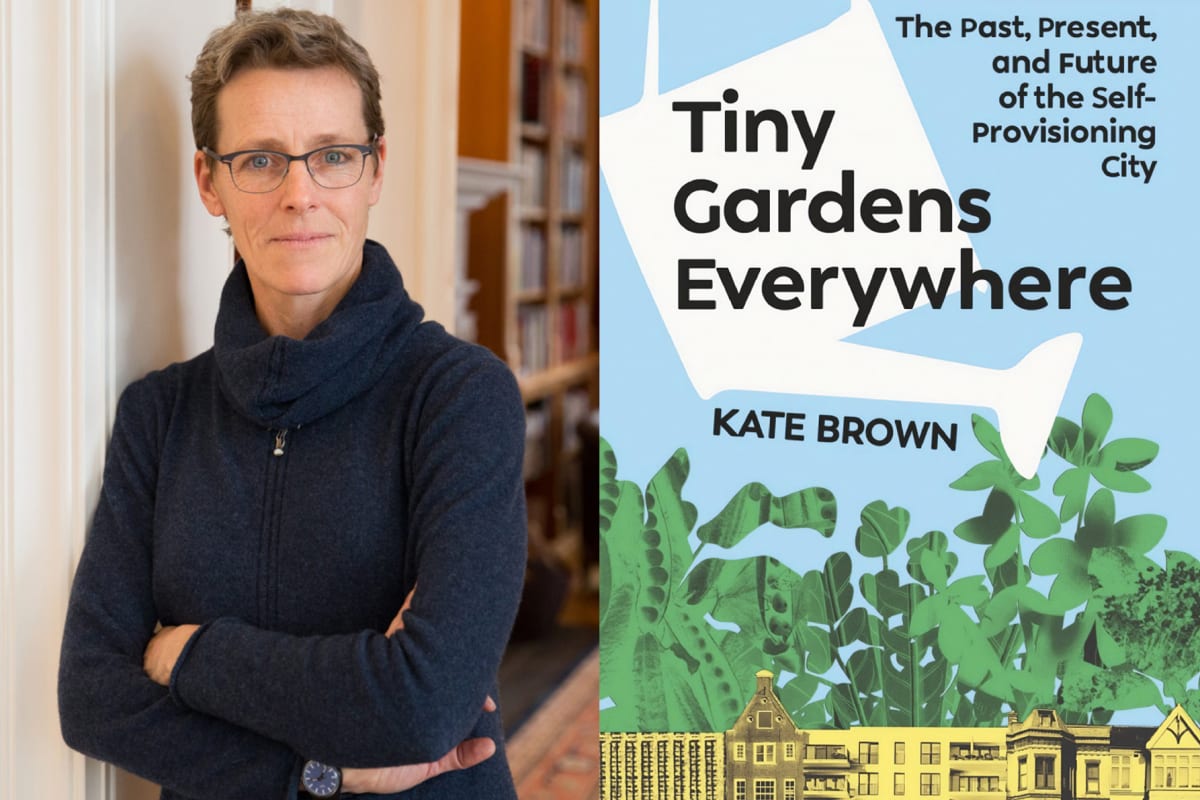
MIT historian Kate Brown's new book uncovers how city dwellers have grown their own food for centuries, building stronger communities in the process. From Berlin to Washington, tiny gardens have fed millions while creating unexpected social connections.
In 1870s Berlin, tourists flocked to see something unusual: not museums or palaces, but a working-class neighborhood where people grew their own food and built tight-knit communities outside government control.
That neighborhood, called Barackia, didn't last long before authorities cleared it out. But the idea took root anyway, and by 1900, about 50,000 Berlin households were growing food in small urban plots.
Today, Germany legally protects the right to garden, and these tiny plots remain wildly popular in cities across the country. MIT Professor Kate Brown wanted to know why urban gardening keeps coming back, no matter how many times it gets pushed aside.
Her new book, "Tiny Gardens Everywhere," reveals a surprising global history of city farming that most people never learned about. Brown spent years digging through archives from Estonia to Amsterdam to Washington, uncovering stories of communities that fed themselves on common land.
"In a little space, you can grow a lot of produce," Brown says. "Once you set things up, it need not take too much of your time."
The book shows how urban gardening was especially vital during the Great Migration in America. When African Americans moved north to cities like Washington, they brought deep agricultural knowledge with them and established thriving garden communities east of the Anacostia River.
These weren't just hobby gardens. Families grew significant portions of their own food while creating worker cooperatives and solving neighborhood problems together.
But there's always been tension around who controls the land. In 18th-century England, wealthy landowners began "enclosing" common land that peasants had farmed for generations, forcing them into factory work instead.
"Really what they were doing when they were enclosing land was trying to control labor, as much as controlling land," Brown explains. Similar conflicts between communal gardening and property interests have popped up repeatedly across different countries and eras.
The Ripple Effect
What makes urban gardening powerful goes beyond fresh vegetables. Brown found that when people come together to grow food, they start solving other community challenges too.
The health benefits are real, the environmental impact is positive, and neighborhoods get stronger. Berlin's success story proves the model works: the city's protected garden allotments remain beloved gathering places generations later.
Brown's research suggests that giving people space to grow food creates something deeper than self-sufficiency: it builds the kind of connected communities where people look out for each other.
Based on reporting by MIT News
This story was written by BrightWire based on verified news reports.
Spread the positivity!
Share this good news with someone who needs it