New Brain Device Helps Parkinson's Patients Stay Active
A customizable brain implant is giving people with Parkinson's disease their active lives back, automatically adjusting throughout the day to control tremors and improve movement. Pennsylvania triathlete Brandan Mehaffie is already back on his bike after getting the treatment.
📺 Watch the full story above
When Brandan Mehaffie couldn't finish a triathlon at age 40, he knew something was wrong. He felt like he was dragging the entire left side of his body.
Tests revealed Parkinson's disease, a condition affecting 1.1 million Americans. But today, Mehaffie is teaching spin classes, boxing, walking his dog, and planning a 100-mile bike ride through the Finger Lakes.
His secret? A newly approved brain device that's changing what's possible for Parkinson's patients.
The FDA recently approved adaptive deep brain stimulation, a smarter version of technology that's been helping Parkinson's patients for decades. Unlike older models that deliver constant electrical pulses, this system reads brain signals throughout the day and adjusts automatically.
"The system can identify when you need a little boost and then provide it," said Dr. James McInerney, a neurosurgeon at Penn State Health. Think of it like a thermostat for the brain, responding to what the body needs moment by moment.
Penn State Health became Pennsylvania's first hospital to offer the technology in March 2025. The treatment involves implanting thin electrodes into the brain connected to a small device in the chest that sends targeted electrical impulses to override faulty signals causing tremors and stiffness.
The new adaptive version offers better symptom control and longer battery life than previous models. For patients, that means fewer adjustments and more time doing what they love.
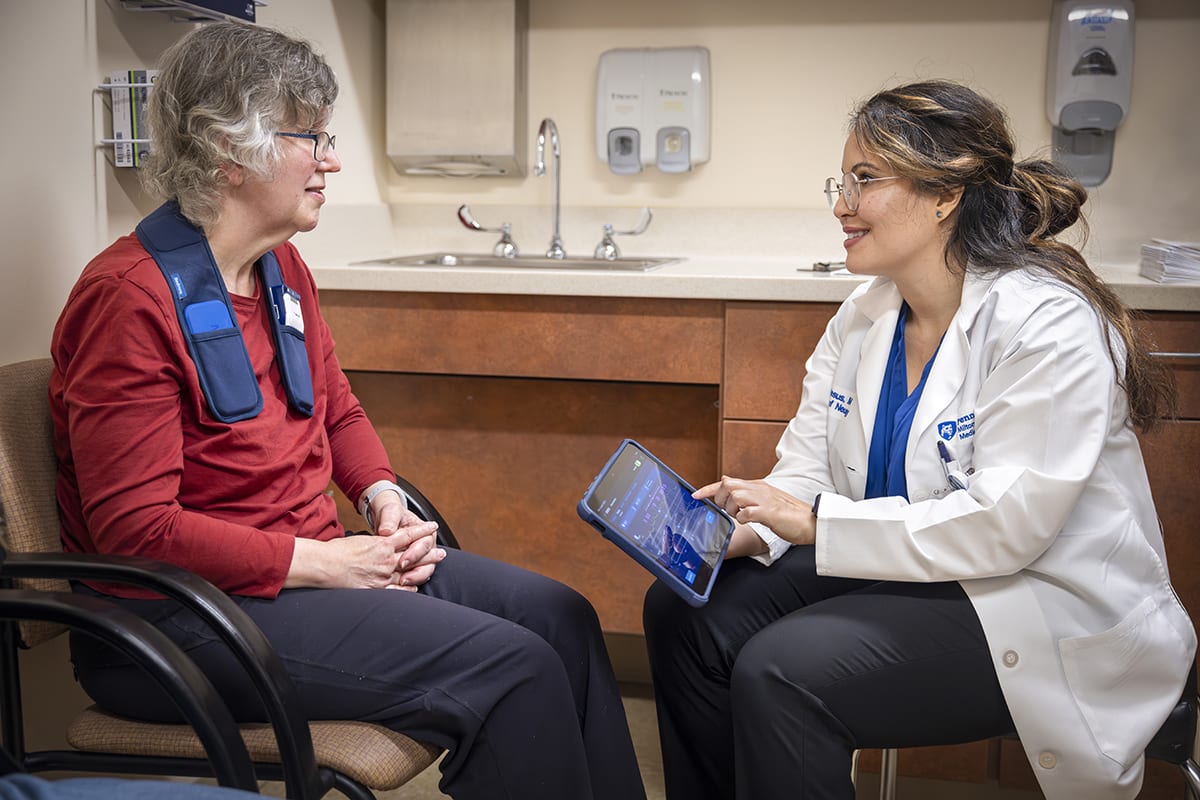
Dr. Sol De Jesus, a neurologist at Penn State Neuroscience Institute, emphasizes that movement matters. "With the right team and the right plan, people with Parkinson's can have independent, high-functioning lives," he said.
Exercise stands as one of the most important treatments, with doctors recommending 30 minutes daily. When symptoms interfere with daily life, medications that replace lost dopamine can help, though they sometimes cause side effects over time.
For Mehaffie, the deep brain stimulation device controls his tremors well enough that he's back in the saddle. Last summer marked his return to cycling after his diagnosis threatened to end his athletic pursuits forever.
The Ripple Effect
The technology represents hope for millions living with Parkinson's and their families. About 10% of patients are diagnosed before age 50, making treatments that preserve active lifestyles especially valuable.
Meanwhile, researchers worldwide are developing stem cell and gene therapies that could one day regenerate the dopamine-producing brain cells that die in Parkinson's disease. While a cure remains out of reach, each advancement brings patients closer to reclaiming more of their lives.
Mehaffie now teaches others with Parkinson's in specialized boxing classes while planning his biggest ride yet. He calls his decision to get the implant the right choice, proving that even a progressive disease doesn't have to stop forward momentum.
More Images

Based on reporting by Google News - Disease Cure
This story was written by BrightWire based on verified news reports.
Spread the positivity!
Share this good news with someone who needs it