New Building Material Captures CO2 Instead of Emitting It
Engineers created a construction material that removes carbon from the air while curing in hours, not weeks. It could replace concrete and slash 8% of global emissions.
Concrete might finally have a cleaner competitor that actually fights climate change while building our future.
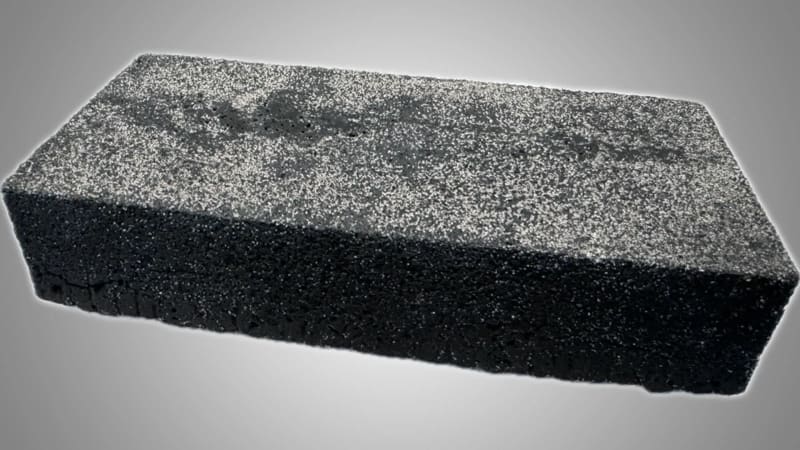
Engineers at Worcester Polytechnic Institute have created a construction material that pulls carbon dioxide from the air instead of releasing it. Called enzymatic structural material (ESM), it sequesters more than 6 kilograms of CO2 per cubic meter produced, while traditional concrete emits 330 kilograms for the same amount.
The breakthrough centers on a special enzyme that converts carbon dioxide into solid mineral particles. These particles bond together and cure under gentle conditions, forming structural components in just hours instead of the weeks concrete requires.
Professor Nima Rahbar, who led the research team, points out that concrete accounts for nearly 8% of all global carbon emissions. "What our team has developed is a practical, scalable alternative that doesn't just reduce emissions. It actually captures carbon," he said.
The material isn't just environmentally friendly. ESM is strong, durable, and fully recyclable, making it practical for real construction projects like roof decks, wall panels, and modular building systems.
Unlike concrete, ESM can be repaired rather than replaced. That quality could lower long-term construction costs and keep massive amounts of waste out of landfills.
The manufacturing process uses far less energy than traditional concrete production, which requires extremely high temperatures. ESM forms quickly at much lower energy levels using renewable biological inputs.
The Ripple Effect
If even a small fraction of global construction switches to carbon-negative materials like ESM, the environmental impact could be transformative. The construction industry represents one of the largest sources of carbon emissions worldwide, making alternatives critically important.
Beyond standard building projects, ESM shows promise for affordable housing and climate-resilient infrastructure. Its lightweight components can be produced quickly, potentially speeding up disaster recovery efforts after extreme weather events.
The material supports broader goals around carbon-neutral infrastructure and circular manufacturing systems. Because it's fully recyclable, ESM could help shift construction toward a more sustainable cycle where materials get reused instead of discarded.
The research team published their findings in the journal Matter, marking a significant step toward making carbon-negative construction materials available for widespread use.
Building a better world just got a little more literal.
Based on reporting by Science Daily
This story was written by BrightWire based on verified news reports.
Spread the positivity!
Share this good news with someone who needs it