New Camera Sensor Sees Hidden Objects 1,000x Better
Scientists created a camera sensor inspired by human eyes that can spot nearly invisible objects with 1,000 times better clarity than current technology. The breakthrough could transform everything from self-driving cars to security systems.
Imagine a camera that sees like your eyes do, adjusting on the fly to spot things that normally disappear into the background. Chinese researchers just made that happen, and it's a game changer for machines that need to see clearly.
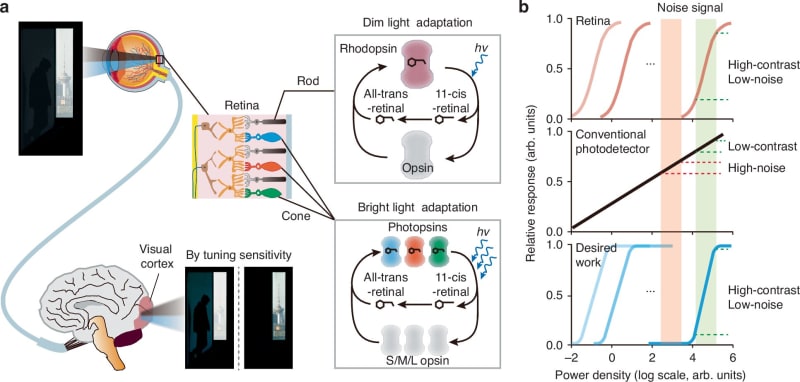
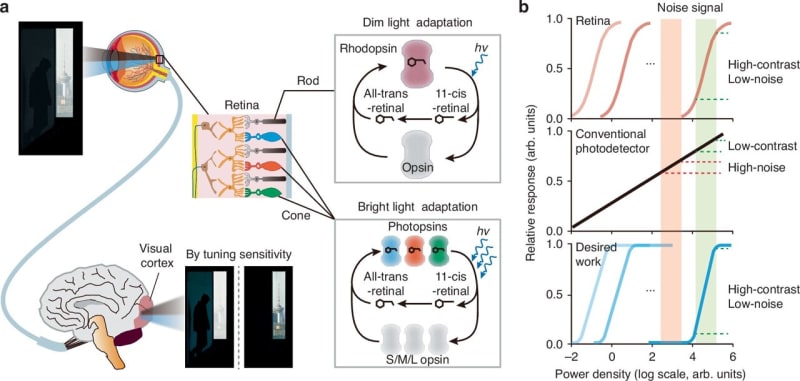
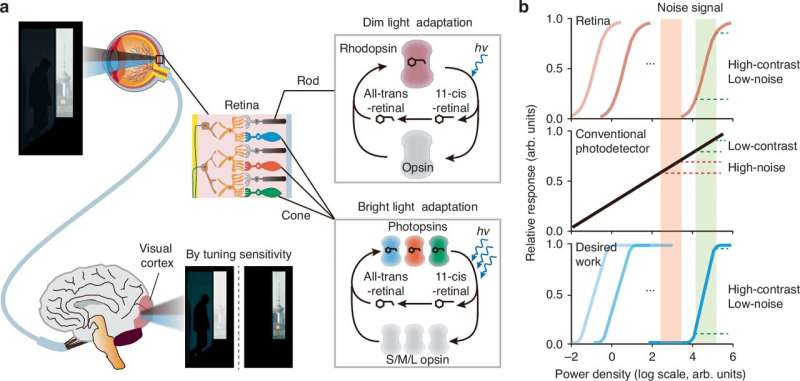
Scientists at the Chinese Academy of Sciences built a new type of camera sensor that mimics how human eyes adapt to different lighting conditions. Just like your retina automatically adjusts when you walk from bright sunlight into a dim room, this tiny device tunes itself to focus on specific light levels.
The secret lies in a specially designed transistor made from molybdenum disulfide, a material just atoms thick. The team treated part of the material with oxygen plasma, creating a structure that behaves like the light-sensitive proteins in your eyes. When light hits it, the sensor's electrical properties change, allowing it to zoom in on subtle differences that conventional cameras miss completely.
The results are stunning. This bioinspired sensor detects faint light variations 1,000 times better than traditional photodetectors. It can pick out patterns with barely any contrast against their backgrounds, the kind of targets that current technology simply cannot see.
The research team, led by Professors Sun Dongming, Liu Chi, and Academician Cheng Huiming, published their findings in Light: Science & Applications. They demonstrated the technology by building it into an imaging array that clearly identified objects conventional sensors couldn't detect.
Why This Inspires
This breakthrough solves a problem that has stumped engineers for years. Conventional cameras struggle with low-contrast targets because they can't generate strong enough signals from tiny light differences. Background noise drowns out the subtle details. It's like trying to spot a gray cat on a slightly darker gray couch.
The human eye handles this beautifully by adjusting sensitivity on demand, but recreating that talent in compact electronics has proven incredibly difficult. Until now.
The applications stretch across dozens of fields. Self-driving cars could spot pedestrians in fog or at dusk more reliably. Security systems could identify threats in challenging lighting. Medical imaging could catch diseases earlier. Manufacturing quality control could detect microscopic defects.
What makes this especially exciting is its practicality. The sensor uses readily available materials and proven manufacturing techniques, meaning it could reach commercial products relatively quickly. The researchers designed it to work as a compact, integrated device rather than requiring bulky external systems.
Sometimes the best innovations come from looking at nature's solutions and asking, "How can we build that?" These scientists did exactly that, and created technology that helps machines see what they've been missing all along.
More Images


Based on reporting by Phys.org
This story was written by BrightWire based on verified news reports.
Spread the positivity!
Share this good news with someone who needs it