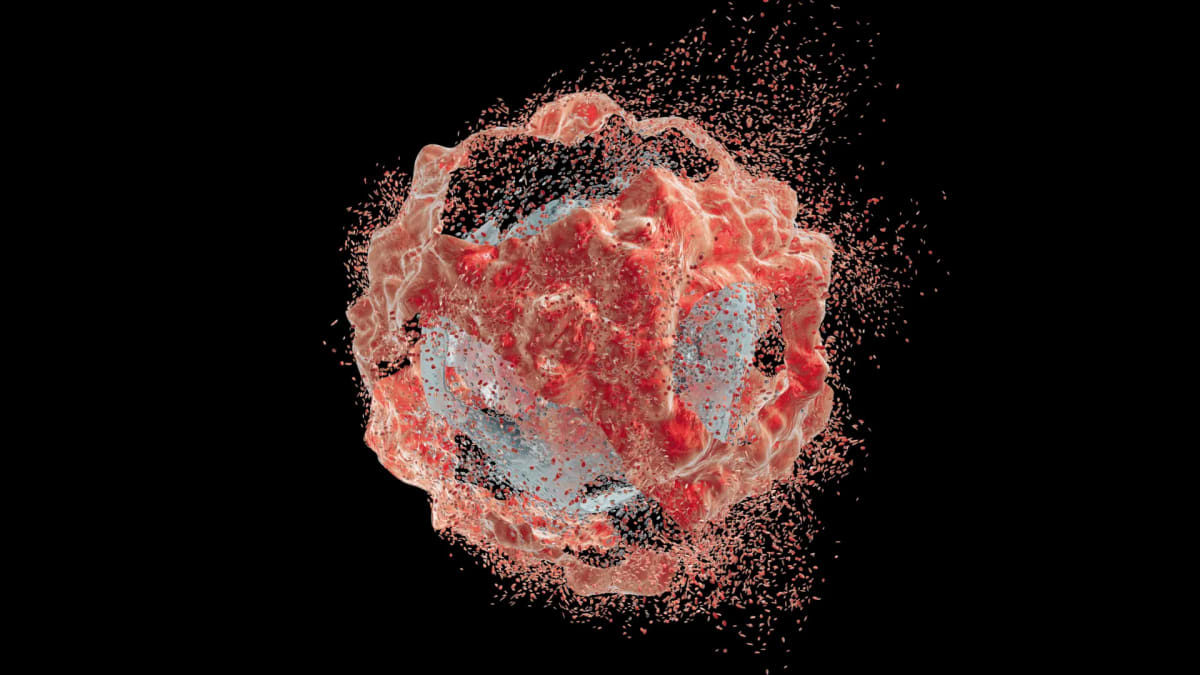
New Drug Forces Pancreatic Cancer Cells to Self-Destruct
Scientists at Florida A&M University discovered an experimental compound that makes deadly pancreatic cancer cells essentially kill themselves. The treatment blocked over 90% of cancer cell movement, offering new hope for one of the most lethal cancers.
Researchers just found a surprising way to fight one of the deadliest cancers by turning its own growth signals against it.
Scientists at Florida A&M University tested experimental compounds called PCAIs on pancreatic cancer cells and discovered something remarkable. Instead of trying to shut down the cancer's growth pathways, the treatment overloaded them until the cells self-destructed.
Pancreatic ductal adenocarcinoma kills more patients than almost any other cancer, partly because most tumors carry KRAS mutations that make them extremely hard to treat. Current therapies only work for specific KRAS mutations, leaving many patients without effective options.
The research team, led by Kweku Ofosu-Asante and Dr. Nazarius Lamango, focused on a leading compound called NSL-YHJ-2-27. At extremely low concentrations, it blocked more than 90% of cancer cell migration, which could help stop tumors from spreading to other organs.
The compound worked in an unexpected way. Two major signaling pathways, MAPK and PI3K/AKT, normally help cancer cells grow and survive. But when the PCAIs hyperactivated these pathways, the excessive activity destabilized the cells and triggered their death.
Treated cancer cells showed clear signs of dying. They produced damaging reactive oxygen species, activated enzymes that trigger cell death, and underwent widespread apoptosis. The cells also became rounded and lost their ability to move and invade nearby tissue.
The researchers tested the compounds in three-dimensional tumor models that closely resemble real tumors. The treatment caused these mini-tumors to break apart, stopped them from invading surrounding tissue, and increased the number of dying cancer cells.
Gene activity studies revealed even more good news. Tumor-suppressing genes became more active after treatment, while genes linked to cancer spread became less active. These changes suggest the compound attacks cancer on multiple fronts at once.
Why This Inspires
Unlike current KRAS-targeted drugs that only work for one specific mutation, PCAIs appear effective against several different KRAS mutations. This broader reach could help far more patients who currently have limited treatment choices.
The findings, published in Oncotarget, represent years of creative thinking about how to outsmart cancer cells. Rather than blocking what makes cancer grow, the researchers found a way to give it too much of what it wants until it collapses under the excess.
The study opens a promising new path for treating not just pancreatic cancer but potentially other cancers driven by KRAS mutations. While more research is needed before human trials, the powerful effects seen in laboratory models give researchers genuine reason for hope in the fight against one of medicine's toughest opponents.
Based on reporting by Health Daily
This story was written by BrightWire based on verified news reports.
Spread the positivity!
Share this good news with someone who needs it