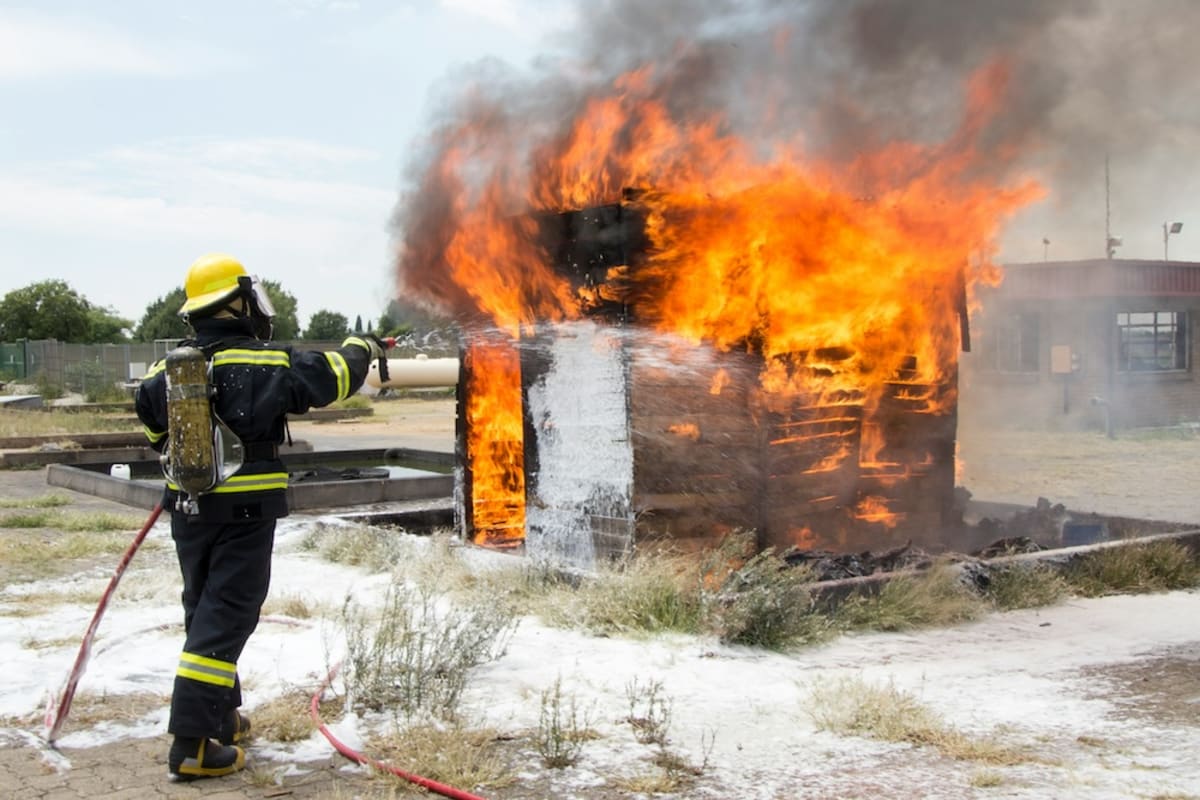
New Foam Stops Battery Fires from Spreading in Tests
Chinese researchers created a breakthrough material that stopped a dangerous battery fire from spreading to neighboring cells. The thin foam could make large-scale battery storage systems dramatically safer.
A new safety breakthrough could finally solve one of the biggest dangers facing the massive batteries that store renewable energy for our power grids.
Researchers in China developed a special foam that successfully stopped a battery fire from spreading in lab tests. When one battery cell caught fire and reached temperatures over 2,000 degrees Fahrenheit, the foam kept neighboring cells safe and cool.
The problem this solves is huge. When lithium-ion batteries fail, they can trigger a dangerous chain reaction called thermal runaway. One failing cell shoots out superheated gas jets at speeds exceeding 400 miles per hour, igniting every battery around it within seconds. Current safety materials either melt from the heat or get shredded by the violent gas bursts.
Scientists at China University of Petroleum-Beijing created a foam that acts like a firefighter with two skills. Under normal conditions, it stays flexible and squishy, working perfectly in temperatures from negative 40 to 300 degrees Fahrenheit. But when exposed to extreme heat, it transforms into a tough ceramic shield.
The secret is in the ingredients. The foam contains special fillers that activate when temperatures spike. Some release gases that smother flames while others create protective char. Above 1,100 degrees, certain materials melt together to form a dense ceramic barrier that blocks heat and flames.
In their tests, the researchers set up three battery cells in a row. Without protection, all three caught fire within seconds. With regular foam, the fire still spread but took longer. With the new ceramic foam just 3 millimeters thick, the fire stayed trapped in the first cell. The neighboring cell's surface only reached 167 degrees, nowhere near the danger zone.
The foam also dramatically cut down the smoke and heat released during the fire. Compared to regular silicone foam, it reduced total heat by 54% and smoke production by 88%. In one test, a blowtorch hitting 2,000 degrees kept the foam's back surface at a safe 97 degrees for over 30 minutes.
The Ripple Effect
This breakthrough matters beyond just battery safety specs. As the world races to store renewable energy from solar and wind farms, we need massive battery installations near homes and communities. Safety concerns have slowed adoption in some areas.
The new foam is only 3 millimeters thin, so it doesn't take up valuable space or reduce how much energy batteries can store. Better yet, manufacturers can produce it using existing industrial equipment, meaning it could reach the market relatively quickly and affordably.
The research team published their findings in Nano-Micro Letters and tested their foam against commercial alternatives. It matched or beat every competing product while maintaining flexibility and durability through 1,000 compression cycles.
Clean energy storage just got a whole lot safer.
More Images


Based on reporting by PV Magazine
This story was written by BrightWire based on verified news reports.
Spread the positivity!
Share this good news with someone who needs it


