New Gene Tool Targets Cancer Cells Without Harming Healthy Ones
Scientists created a breakthrough gene-editing tool that can seek out and eliminate only diseased cells, including cancer, while leaving healthy cells untouched. The technology could transform how doctors treat diseases caused by specific genetic mutations.
Scientists just solved one of medicine's biggest challenges: eliminating diseased cells without harming healthy ones.
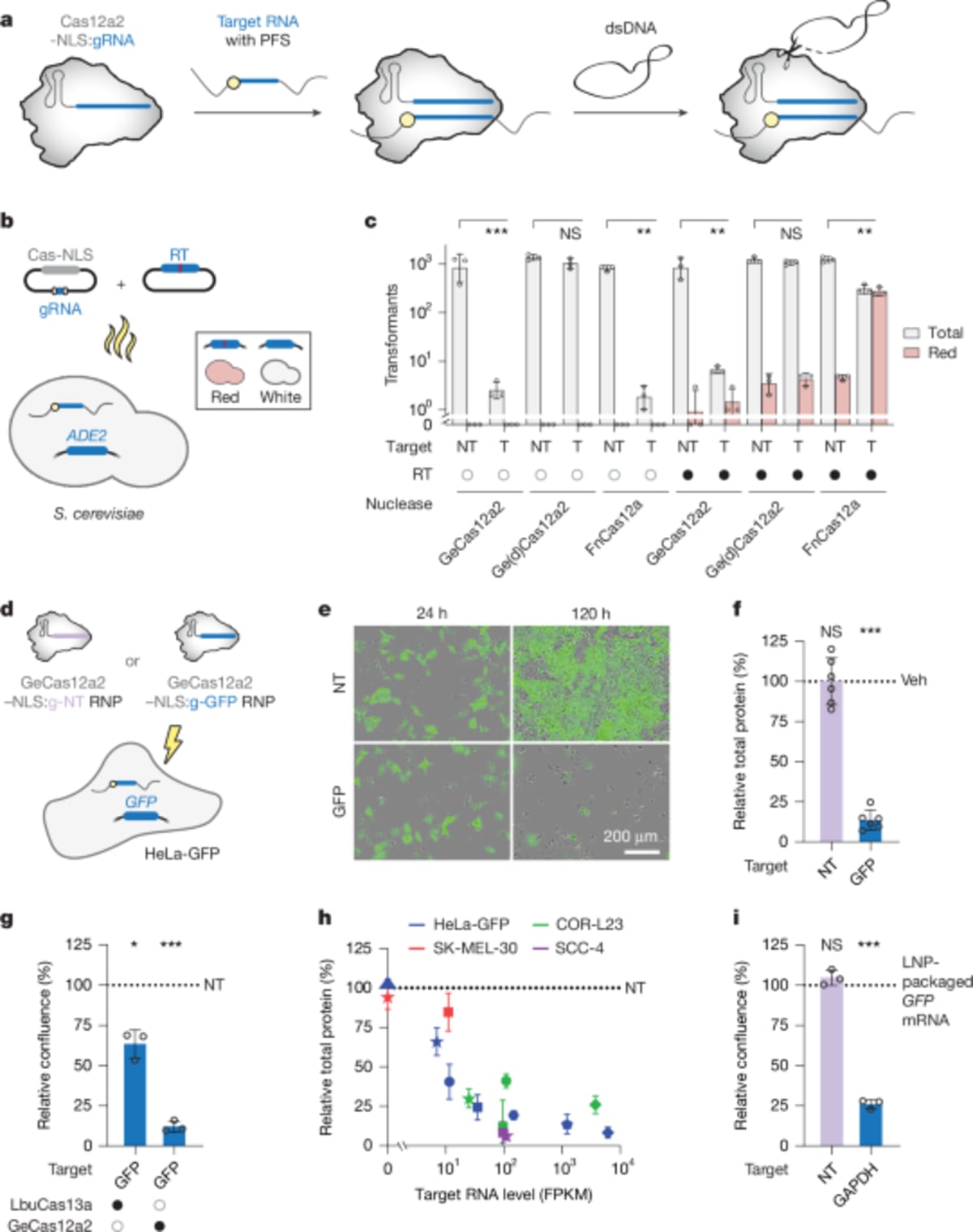
Researchers discovered that a gene-editing tool called Cas12a2 can identify and destroy specific cells based on their genetic makeup. Unlike existing treatments that often damage healthy tissue alongside diseased cells, this new approach acts like a precision-guided missile that only targets its intended destination.
The tool works by detecting specific genetic messages inside cells. When it finds a match to its programmed target, it triggers a reaction that safely eliminates only that cell. Think of it as a security system that only responds to one specific alarm code.
In laboratory tests, the technology successfully eliminated three different types of problematic cells. It destroyed cells infected with human papillomavirus, removed cells that resisted gene therapy, and targeted cells containing a common cancer-causing mutation in the KRAS gene. Each time, healthy cells remained completely unharmed.
Previous gene-editing tools struggled in human cells because our bodies are too good at repairing the damage they caused. Cells would fix themselves before the treatment could work. Cas12a2 overcomes this problem by creating so much targeted damage that diseased cells cannot recover, while healthy cells never experience any damage at all.
The research team tested the system in both yeast and human cells with consistent success. The tool never accidentally activated against the wrong targets, demonstrating remarkable precision across different cell types and conditions.
Why This Inspires
This breakthrough represents a fundamental shift in how we might treat disease at the cellular level. For decades, treatments like chemotherapy have struggled with the challenge of killing cancer cells without severely impacting healthy tissue.
This new approach could eventually allow doctors to program treatments for individual patients based on their unique genetic profiles. A patient with a specific cancer mutation could receive a customized therapy that hunts down only those mutated cells.
The technology also opens doors beyond cancer treatment. Researchers could potentially use it to eliminate cells causing genetic disorders, remove infected cells during viral outbreaks, or even improve organ transplants by removing incompatible cells.
What makes this discovery particularly exciting is its versatility. The same basic tool can be reprogrammed to target different genetic sequences, making it adaptable to countless medical conditions. It's like having one device that can be reset to solve many different problems.
The research appears in Nature, one of science's most prestigious journals, and represents years of collaborative work understanding how natural immune systems in bacteria could be adapted for human medicine.
While clinical applications remain years away, this proof of concept demonstrates that truly selective cell elimination is possible, bringing hope to millions affected by genetic diseases and cancer.
More Images

Based on reporting by Google News - Health
This story was written by BrightWire based on verified news reports.
Spread the positivity!
Share this good news with someone who needs it