New Hologram Tech Uses Light to Create Unhackable Passwords
Scientists in South Korea developed a security system that uses light color and distance as physical passwords, making hacking virtually impossible. The breakthrough could protect everything from passports to military secrets without relying on digital codes.
Imagine a password that exists in the physical world, not in computer code, and can't be hacked no matter how sophisticated the attack.
Researchers at Pohang University of Science and Technology just made that a reality. Professor Junsuk Rho's team created a hologram security system that locks information using something surprisingly simple: the color of light and the distance between ultra-thin optical surfaces.
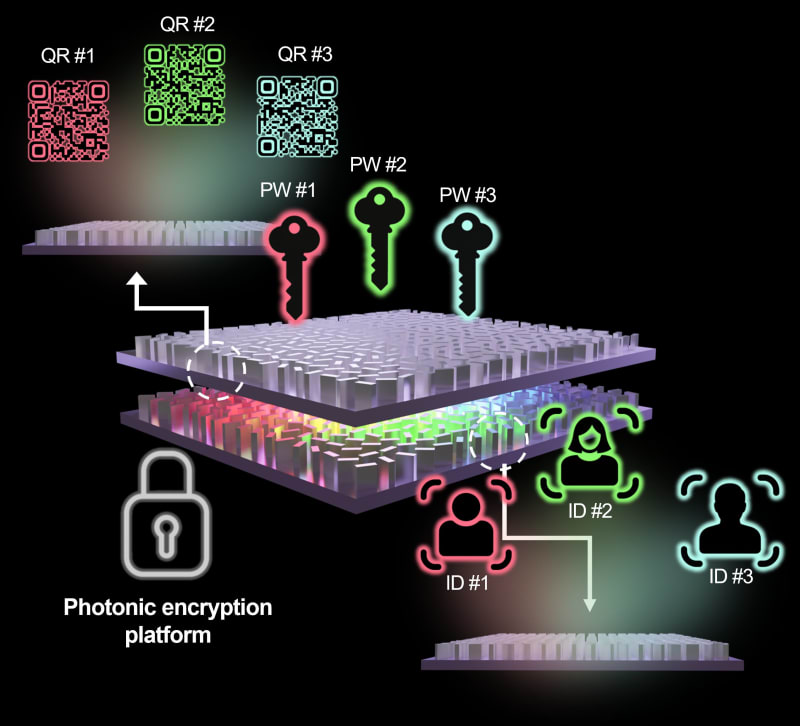
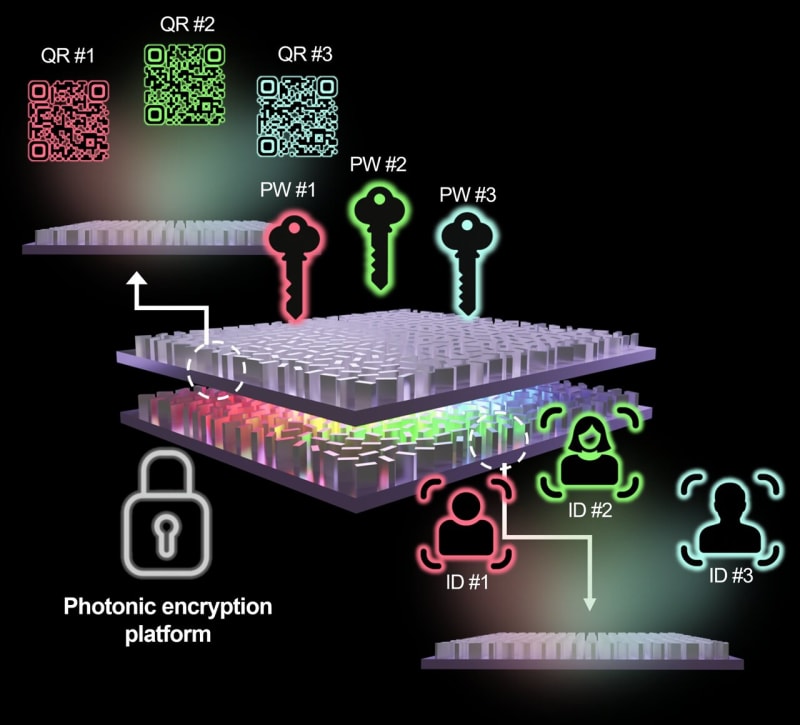
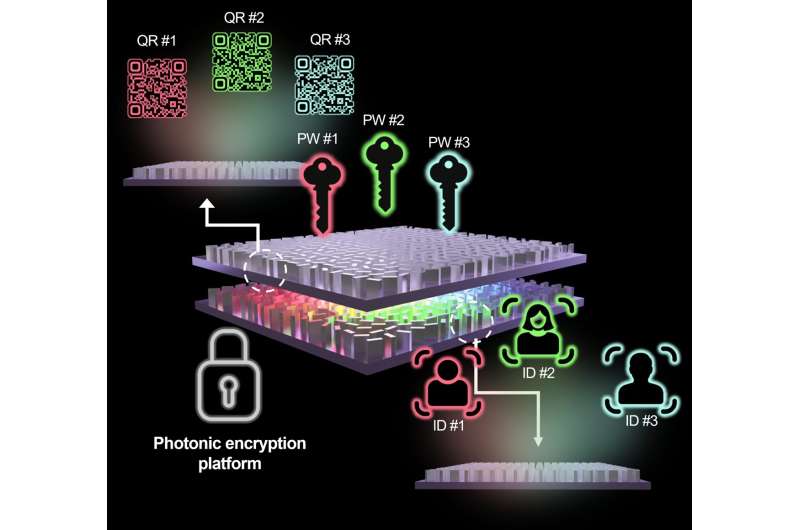
Here's how it works. The team built special devices called metasurfaces, which are thinner than a human hair and covered in microscopic structures that control light. Shine red light on one, and you might see an ID photo appear as a hologram. Switch to blue light, and a completely different image shows up.
The real magic happens when you stack multiple metasurfaces together. Position two layers at exactly the right distance apart and illuminate them with a specific color, and suddenly a hidden password appears in mid-air. Move them even slightly or change the light color, and the information vanishes.
The system uses concepts from artificial intelligence, but instead of computer chips, light itself does all the work. Each metasurface acts like a layer in a neural network, with light bouncing between them to process information without electricity.
The security potential is staggering. As you add more colors of light and more metasurface layers, the possible combinations grow exponentially. With just a few layers and wavelengths, you could create millions of unique security channels in a single device smaller than a credit card.
Why This Inspires
Digital security always has a weakness: if it's made of code, someone clever enough can eventually break it. This breakthrough sidesteps that problem entirely by moving security into the physical world.
The applications feel almost endless. Your passport could contain holograms that only appear under exact conditions. Military communications could be encrypted using properties of light that exist only for fractions of a second. Anti-counterfeiting labels could become impossible to fake because they'd require not just copying an image, but recreating precise physical conditions.
Professor Rho put it perfectly: "As digital technologies become more advanced, our results highlight that physical security can ultimately provide the strongest solution." In a world where data breaches seem inevitable, his team proved there's another way.
The technology could reach markets within a few years, starting with high-security applications like diplomatic documents and military systems. Eventually, it might protect the ID in your wallet or verify that medication bottle is genuine.
Sometimes the best solutions aren't about making things more complex, but finding entirely new ground to stand on.
More Images

Based on reporting by Phys.org - Technology
This story was written by BrightWire based on verified news reports.
Spread the positivity!
Share this good news with someone who needs it