New Leukemia Drug Combo Shows 90% Response in Trial
A three-drug combination therapy achieved nearly 90% response rates in patients with a hard-to-treat form of leukemia that had returned after standard treatments failed. The treatment worked fast and was well tolerated, offering new hope for people facing limited options.
Patients with a stubborn form of leukemia just got a powerful new treatment option that's showing remarkable results.
Researchers at Roswell Park Comprehensive Cancer Center led an international study testing a three-drug combination for people with NPM1-mutated acute myeloid leukemia (AML), a particularly challenging type to treat once it returns. The results, published in Blood, revealed something extraordinary: nearly 90% of certain patients responded to the therapy, with 70% achieving complete or near-complete remission.
The treatment combines ziftomenib, a newly approved targeted therapy, with two commonly used drugs called venetoclax and azacitidine. What makes this especially promising is how fast it works. Patients saw results in about four weeks on average, and many responses lasted for several months.
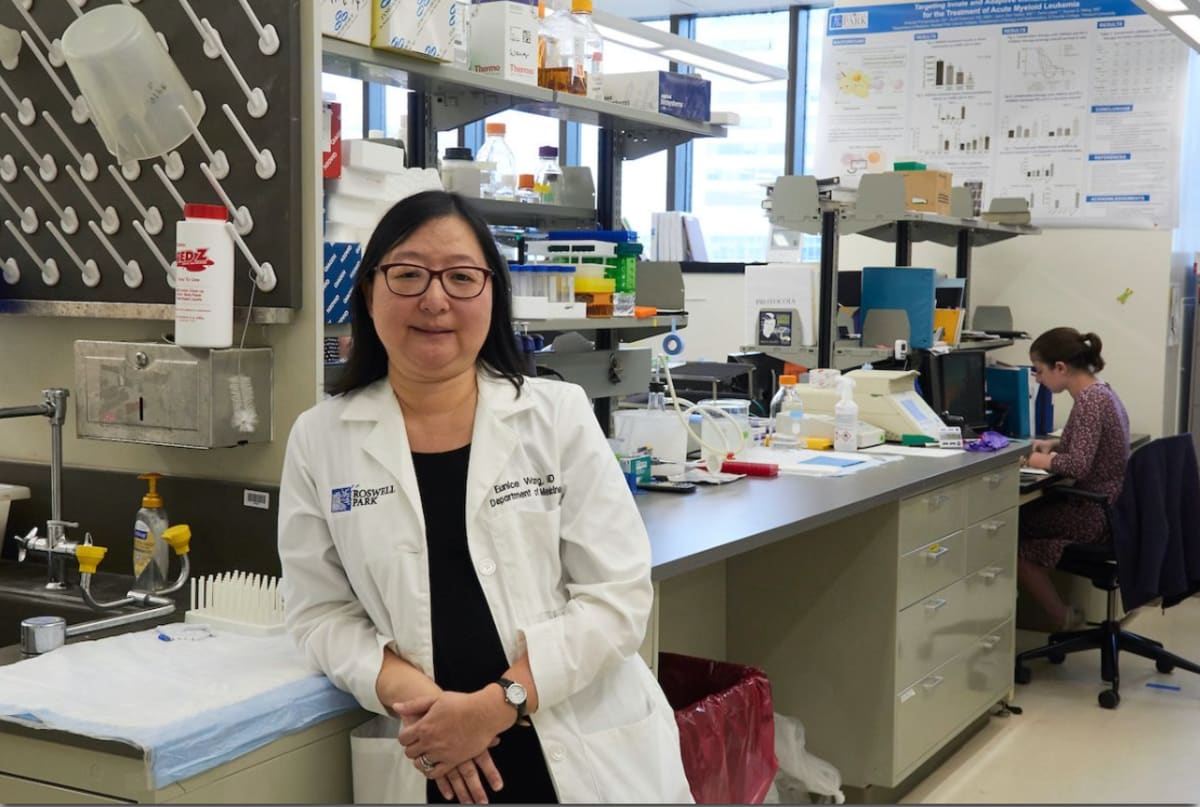
Dr. Eunice Wang, Chief of Leukemia at Roswell Park and lead author of the study, emphasized what these numbers mean for real people. "These results are highly encouraging, particularly in the context of an aggressive leukemia for which limited treatment options exist," she says. In many cases, the treatment cleared cancer cells so thoroughly they couldn't be detected even with highly sensitive testing.
Even patients who had previously tried venetoclax without success saw about a 50% response rate with this new combination. The safety profile was equally encouraging, with low rates of serious side effects that make the treatment manageable for patients already fighting a tough disease.
The findings come from the ongoing KOMET-007 clinical trial, and while ziftomenib is already FDA-approved as a single treatment, using it in combination remains investigational. Roswell Park patients were among the first in the world to access this therapy through the center's Early Phase Leukemia Clinical Trials program.
The Ripple Effect
This breakthrough doesn't just help the patients in this trial. The research team is already studying the same drug combination in newly diagnosed AML patients, with results coming this month. Each study builds on the last, creating a growing foundation of knowledge that could transform how doctors approach this aggressive cancer. For the thousands of people diagnosed with AML each year, particularly those with the NPM1 mutation, this research opens doors that were previously closed.
The speed and depth of these responses suggest we're not just managing this disease better, but potentially changing its trajectory entirely.
Based on reporting by Google News - New Treatment
This story was written by BrightWire based on verified news reports.
Spread the positivity!
Share this good news with someone who needs it