New Metal Conducts Heat 3X Better Than Copper
Scientists at UCLA discovered a metallic material that shatters century-old assumptions about heat transport, conducting thermal energy three times better than copper. This breakthrough could revolutionize everything from AI chips to data centers struggling with overheating problems.
For over 100 years, copper and silver held the crown as the best heat-conducting metals on Earth. A UCLA-led research team just shattered that record with a discovery that could transform how we cool everything from smartphones to supercomputers.
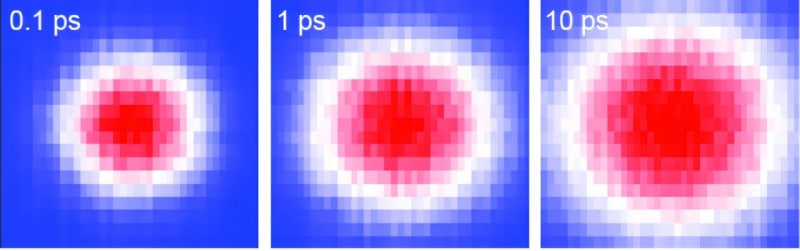
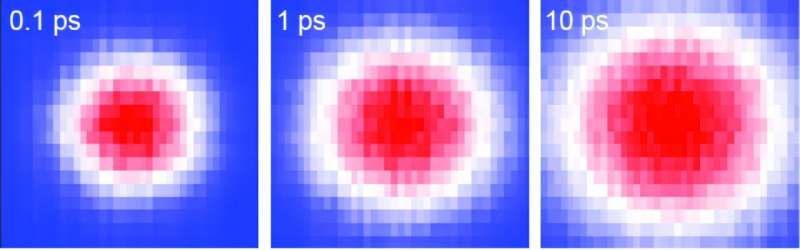
The breakthrough material is theta-phase tantalum nitride, a metallic compound that moves heat nearly three times more efficiently than copper. Published in the journal Science, the finding reveals a thermal conductivity of 1,100 watts per meter-kelvin, compared to copper's 400.
"As AI technologies advance rapidly, heat dissipation demands are pushing conventional metals like copper to their performance limits," said Yongjie Hu, the UCLA engineering professor who led the study. His team used cutting-edge techniques including synchrotron X-ray scattering and ultrafast optical spectroscopy to confirm what theoretical models predicted.
The secret lies in the material's unique atomic structure. Tantalum atoms intersperse with nitrogen atoms in a hexagonal pattern, creating extremely weak interactions between electrons and phonons, the atomic vibrations that carry heat. This allows thermal energy to flow far more freely than scientists thought possible in metals.
The timing couldn't be better. Copper currently dominates 30% of the global heat-sink market, but modern electronics are hitting its performance ceiling. AI accelerators and advanced chips generate intense localized hotspots that copper increasingly struggles to manage, limiting device performance, reliability, and energy efficiency.
The Ripple Effect
This discovery reaches far beyond keeping your laptop cool. Data centers worldwide consume enormous energy battling heat buildup, with cooling systems accounting for a significant portion of their power usage. More efficient thermal management could dramatically reduce that energy waste.
Aerospace systems operating in extreme conditions could benefit from superior heat dissipation. Emerging quantum computing platforms, which require precise temperature control, might achieve new performance levels. Even electric vehicles, where battery thermal management affects safety and range, could see improvements.
Hu's lab has form in this area. In 2018, his team pioneered the experimental discovery of boron arsenide, another material that broke thermal conductivity records for semiconductors. His group has since demonstrated real-world cooling applications, proving these aren't just laboratory curiosities but materials ready for practical use.
The research involved multiple institutions working together to verify the extraordinary claims. When you're challenging assumptions that have stood for a century, rigorous validation matters. The peer-reviewed study passed that test.
What makes this especially exciting is that it opens a new frontier in materials science. If theta-phase tantalum nitride can exceed what we thought were fundamental limits, what other materials might be waiting for discovery?
The next step involves scaling production and integrating the material into actual devices, bringing laboratory breakthroughs into factories and products that improve daily life.
More Images

Based on reporting by Phys.org - Technology
This story was written by BrightWire based on verified news reports.
Spread the positivity!
Share this good news with someone who needs it