New Mexico Footprints Rewrite Human History by 10,000 Years
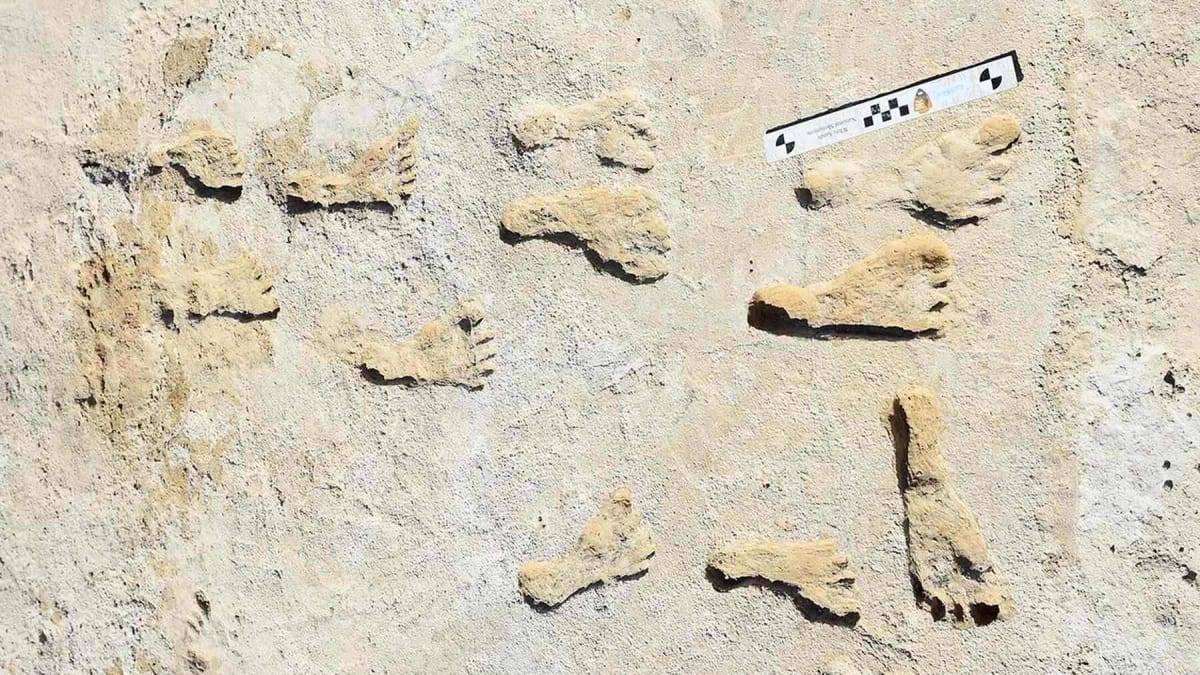
Ancient footprints discovered in New Mexico prove humans lived in North America 23,000 years ago, pushing back the timeline by a staggering 10,000 years. This discovery settles a decades-long scientific debate about when our ancestors first arrived on the continent.
Scientists just rewrote the story of how humans first arrived in North America, and the evidence was hiding in plain sight beneath New Mexico's desert sand.
A groundbreaking study published in Science Advances confirms that human footprints found near an ancient lakebed are between 21,000 and 23,000 years old. That's nearly 10,000 years earlier than experts previously believed humans set foot on the continent.
For decades, the Clovis-first theory held that humans arrived in North America around 13,000 years ago. This discovery doesn't just challenge that timeline. It completely shatters it.
The breakthrough came from studying paleolake Otera, an ancient lake that existed in what is now New Mexico. Researchers used the geological history of this prehistoric lake to date the footprints with remarkable precision.
What makes this discovery even more fascinating is its timing. These footprints were made during the Last Glacial Maximum, when massive ice sheets were thought to have blocked human migration into North America.
The footprints tell us that our ancestors found a way through or around these frozen barriers thousands of years before the ice began to melt. They were walking, living, and thriving in North America while much of the northern continent remained locked in ice.
The paleolake itself is older than the Great Lakes, which only formed about 14,000 years ago as glaciers retreated. This ancient body of water preserved the footprints like a time capsule, protecting evidence that would rewrite our understanding of human history.
Why This Inspires
This discovery reminds us that human resilience and ingenuity have always been part of our story. Our ancestors didn't wait for perfect conditions. They adapted, explored, and found ways to thrive in challenging environments.
Every footprint preserved in that ancient lakebed represents someone who took a step into the unknown. They were parents, children, explorers, and survivors who built communities and lives in a world we can barely imagine.
The fact that we're still uncovering these stories shows how much wonder remains hidden beneath our feet. Modern science has only mapped about 5,000 years of our 300,000-year human history, meaning countless discoveries still wait to be found.
This breakthrough opens doors to understanding how early humans survived ice age conditions and migrated across vast distances. It challenges us to question what else we think we know about our past.
The footprints in New Mexico prove that human history is far richer and more complex than any textbook can capture, and every new discovery brings us closer to understanding the incredible journey that brought us here.
Based on reporting by Google: archaeological discovery
This story was written by BrightWire based on verified news reports.
Spread the positivity!
Share this good news with someone who needs it