New Moon Route Cuts Space Fuel Use by 58.8 Meters/Second
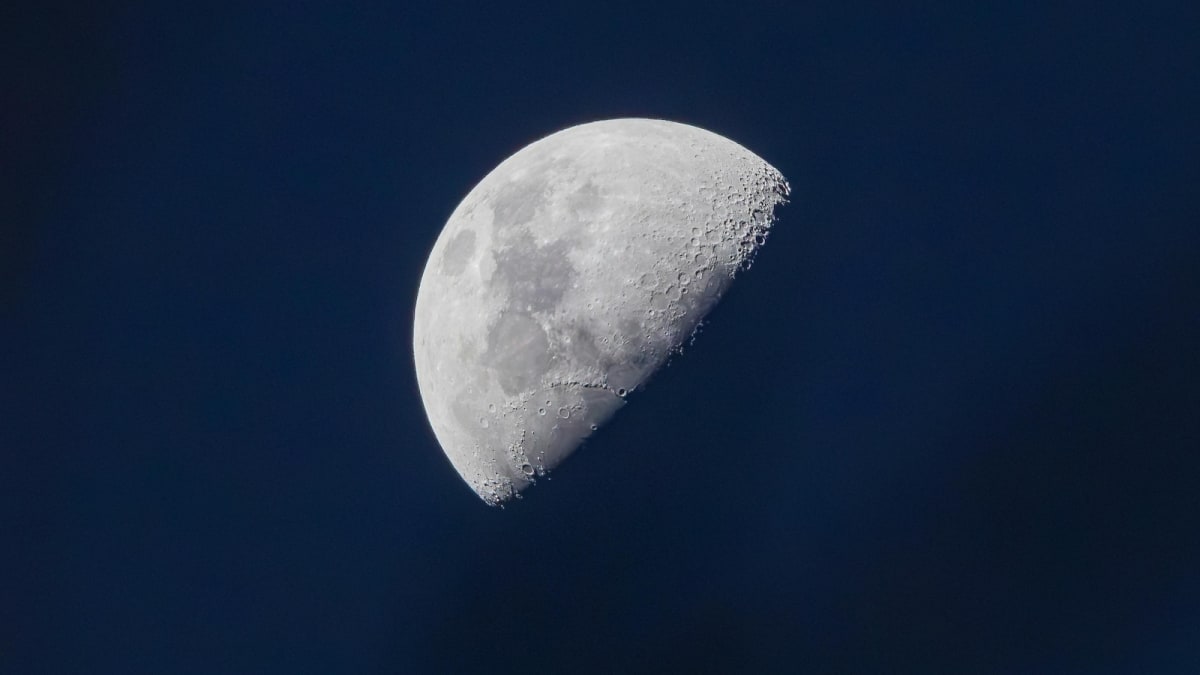
Scientists discovered a hidden path to the moon that slashes fuel costs and could save millions on future space missions. The secret? Approaching lunar orbit from the opposite side of Earth.
Space travel just got cheaper, and that means humanity's next giant leaps toward the moon might happen sooner than we thought.
An international research team used advanced computer modeling to discover a more fuel-efficient route between Earth and the moon. The breakthrough could save millions of dollars on future missions and help make space exploration more accessible.
The scientists simulated 30 million possible routes using a method called the theory of functional connections. This approach requires less computing power than traditional models, making it faster to test countless scenarios.
Their discovery challenges a basic assumption about space travel. Instead of approaching the moon's orbit from the side closest to Earth, the team found it's actually more efficient to come from the opposite side.
Study co-author Vitor Martins de Oliveira from the University of Sao Paulo explained that researchers shouldn't assume the closest route is always the easiest. Sometimes the best solutions hide in unexpected places.
The new route saves 58.80 meters per second of fuel compared to the previous most efficient path. In space travel, even small improvements translate to massive cost savings since every bit of fuel is expensive to launch from Earth.
The route works by taking better advantage of natural gravity fields between Earth and the moon. Spacecraft only burn fuel during certain mission phases, relying on gravity assists whenever possible through what scientists call the Interplanetary Transportation Network.
There's another bonus beyond fuel savings. The newly proposed route could help spacecraft maintain constant communication with Earth during lunar missions.
Oliveira noted that the Artemis 2 mission temporarily lost contact with ground control when the spacecraft moved behind the moon. The new orbital approach could prevent these blackouts entirely.
The team acknowledges their discovery might not be the final answer. Their current model only accounts for Earth and the moon's gravitational pull, but future studies could factor in the sun's gravity too, potentially revealing even better routes.
Why This Inspires
This discovery shows how creative thinking and better technology can make once-impossible dreams more achievable. Space exploration has always seemed reserved for the wealthiest nations with the biggest budgets, but fuel-efficient routes could democratize access to space.
The systematic approach the team used could apply to countless other space travel challenges. Lead author Allan Kardec de Almeida Junior from the University of Coimbra believes their method could unlock solutions across future research.
Every dollar saved on fuel is a dollar that can go toward scientific equipment, longer missions, or sending more people beyond Earth's atmosphere.
The moon is just the beginning, and now the path forward just got a little clearer.
More Images


Based on reporting by Google News - Scientists Discover
This story was written by BrightWire based on verified news reports.
Spread the positivity!
Share this good news with someone who needs it