New Nano-Drug Slashes Bone Cancer Pain by 94% in Mice
Scientists in China developed a targeted nanotherapy that reduced bone cancer tumors by 94% while relieving pain and restoring damaged bone in mice. The breakthrough treatment disrupts the dangerous communication between tumors and nerves that fuels both cancer growth and chronic pain.
Imagine a tiny drug delivery system smart enough to find bone tumors, release medicine exactly where needed, and stop the vicious cycle that makes bone cancer so painful. That's exactly what researchers in China just created, and it's already showing remarkable results in early testing.
The new treatment, called LipoNCs@pGSDMB, targets one of cancer's cruelest complications. More than 70% of patients with advanced breast and prostate cancer develop bone metastasis, where cancer spreads to bones and causes excruciating pain that often requires opioid medications.
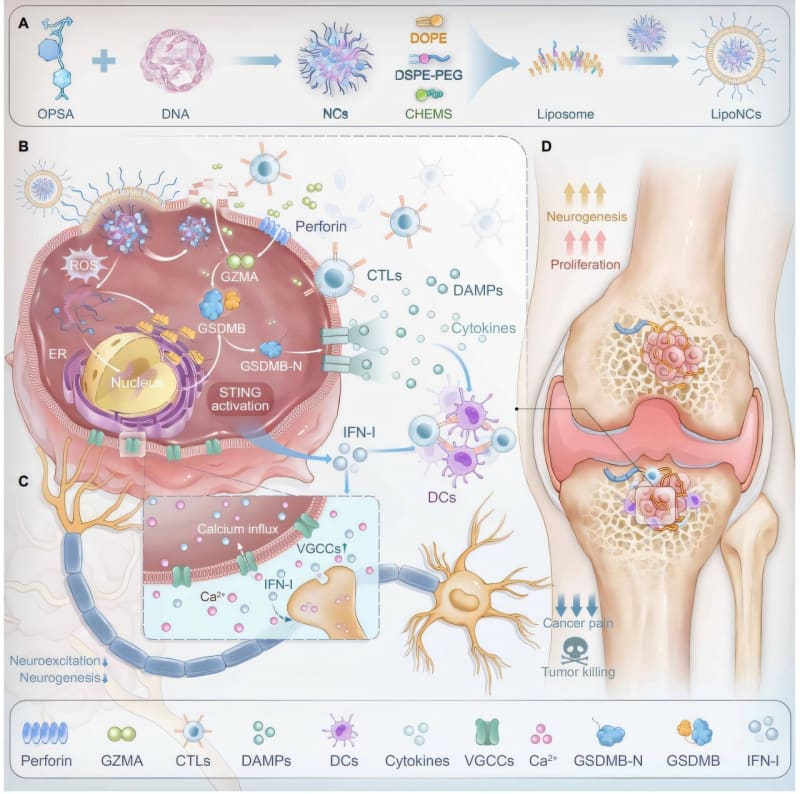
Here's what makes this different. The nano-sized drug carrier doesn't just attack tumors. It breaks up the harmful conversation between cancer cells and nerves that makes bone metastasis both painful and deadly.
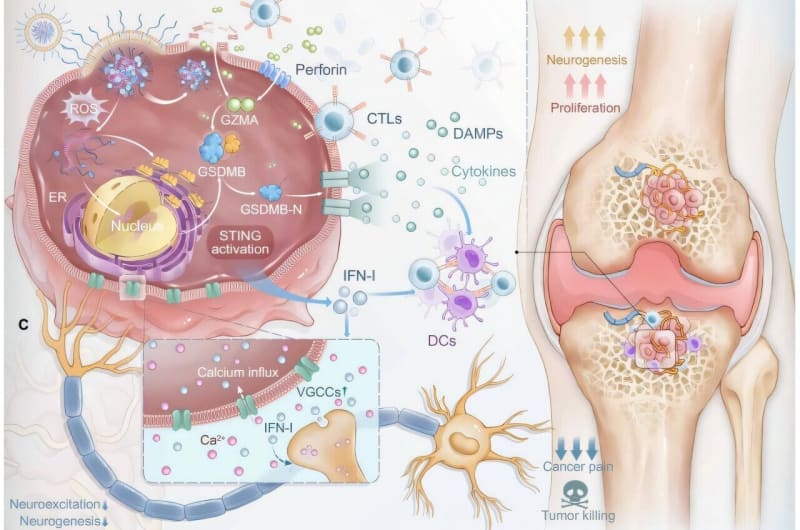
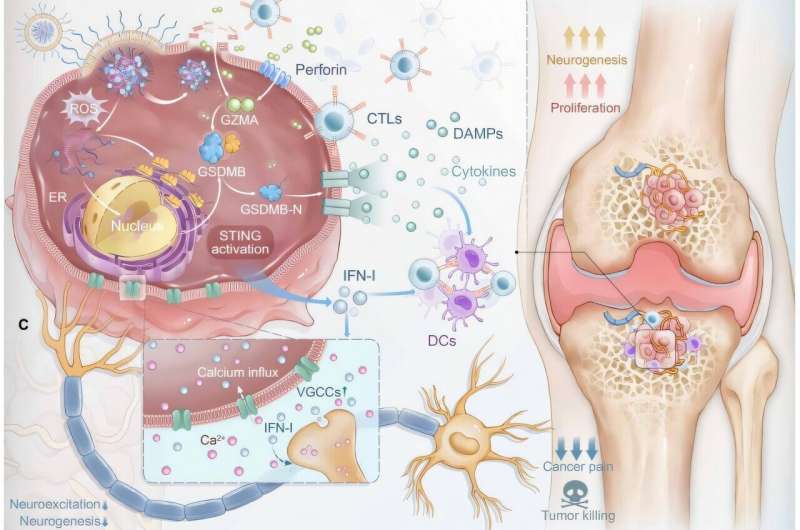
When cancer spreads to bones, tumor cells release signals that stimulate nerve growth. Those nerves make the area hypersensitive and feed pain signals back to the brain. Meanwhile, the nerves help tumors grow faster, creating a destructive loop that weakens bones and intensifies suffering.
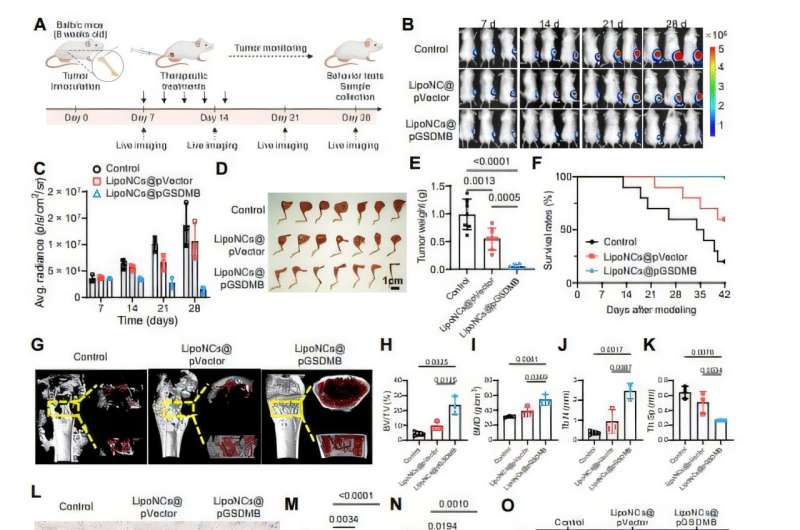
The Chinese research team published their findings in Science Advances after testing the nanotherapy in mice with bone cancer. The tiny carriers traveled straight to tumor sites and released two powerful medications directly into cancer cells.
Two weeks after a single injection, the results were stunning. Tumors shrank by 94%. Pain levels dropped significantly. Bone damage began to reverse itself.
The treatment worked three ways at once. First, it instructed cancer cells to self-destruct. Second, it activated the body's immune system to attack remaining cancer cells. Third, it restored normal calcium channels in cells, which interrupted the pain-causing signals between tumors and nerves.
The Ripple Effect
This approach could transform how doctors treat bone cancer. Current therapies focus on stopping bone destruction but often fail to address nerve pain, leaving patients dependent on addictive opioids for relief.
By tackling tumors, immunity, nerve pain, and bone health simultaneously, this nanotherapy offers something patients desperately need: effective treatment that also improves quality of life. The immune boost worked both locally at tumor sites and throughout the body, suggesting potential benefits beyond bone cancer.
The researchers believe their work opens a new category of treatment they call neuroimmunotherapy. Unlike chemotherapy that affects the whole body, these nano-carriers activate only in the oxygen-rich environment around tumors, reducing side effects.
While human trials are still ahead, the mouse study provides solid evidence that disrupting tumor-nerve communication could be the key to better, less painful cancer care.
Scientists now have a promising new tool that treats the disease while honoring what matters most to patients living with cancer.
More Images
Based on reporting by Medical Xpress
This story was written by BrightWire based on verified news reports.
Spread the positivity!
Share this good news with someone who needs it