New Nanorobot Helps Immune Cells Fight Colorectal Cancer
Scientists in China developed a tiny robot made from protein fragments that helps the immune system find and destroy colorectal cancer cells. In mice with tumors, the nanorobot worked better than standard chemotherapy and immunotherapy.
A microscopic helper could give millions of colorectal cancer patients a powerful new weapon in their fight against the disease.
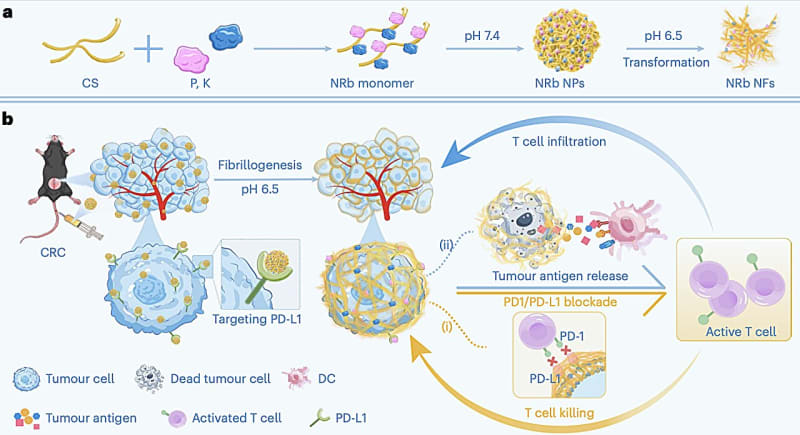
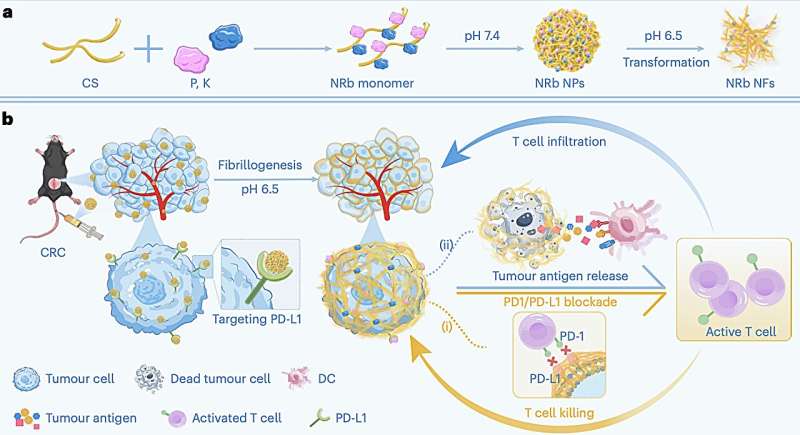
Researchers at China's Army Medical University created a nanorobot smaller than a speck of dust that makes cancer cells visible to the immune system. The robot, made from carefully arranged protein fragments called peptides, proved more effective than current treatments in early laboratory tests.
Colorectal cancer affects over 1.9 million people worldwide each year. Current immunotherapy treatments often fail because immune cells can't find tumors hiding in the body.
The new nanorobot solves this problem through a clever two-step process. First, it latches onto a protein called PD-L1 that cancer cells use as camouflage. By blocking this protein, the robot prevents tumors from hiding from immune cells.
Then the robot responds to the acidic environment around cancer cells by transforming its shape. It assembles into tiny fibers that poke holes in tumor membranes, releasing signals that call immune system soldiers called T-cells to the scene.
When tested in mice with colorectal tumors, the nanorobot stayed active in the body for over five days. It allowed more T-cells to reach the tumors and destroy cancer cells while causing less damage to healthy tissue than chemotherapy or standard immunotherapy drugs.
Why This Inspires
This breakthrough represents years of scientists working to outsmart cancer at its own game. By creating a robot that responds to the unique conditions around tumors, the team found a way to turn the body's natural defenses into precision weapons.
The nanorobot also proved biocompatible in initial safety tests, meaning it doesn't harm healthy cells while targeting cancerous ones. This targeted approach could mean fewer side effects for patients compared to treatments that damage healthy tissue along with tumors.
The research team published their findings in Nature Nanotechnology, one of the world's leading science journals. Their work joins a growing field of nanotechnology applications that could transform cancer treatment in the coming decade.
Next steps include additional laboratory studies and eventually human clinical trials. If the nanorobot proves safe and effective in people, it could offer new hope to colorectal cancer patients who don't respond to existing treatments.
For now, this tiny robot represents something much bigger: proof that creative thinking and cutting-edge science can open new doors in the fight against cancer.
More Images



Based on reporting by Phys.org
This story was written by BrightWire based on verified news reports.
Spread the positivity!
Share this good news with someone who needs it