New Orleans Plants 30,000 Trees to Guard Against Hurricanes
After Hurricane Katrina destroyed protective wetlands, volunteers have planted nearly 30,000 cypress and tupelo trees around New Orleans to anchor the sinking land and shield the city from future storms. The saplings represent two decades of determined recovery, transforming degraded marshes into thriving forests once again.
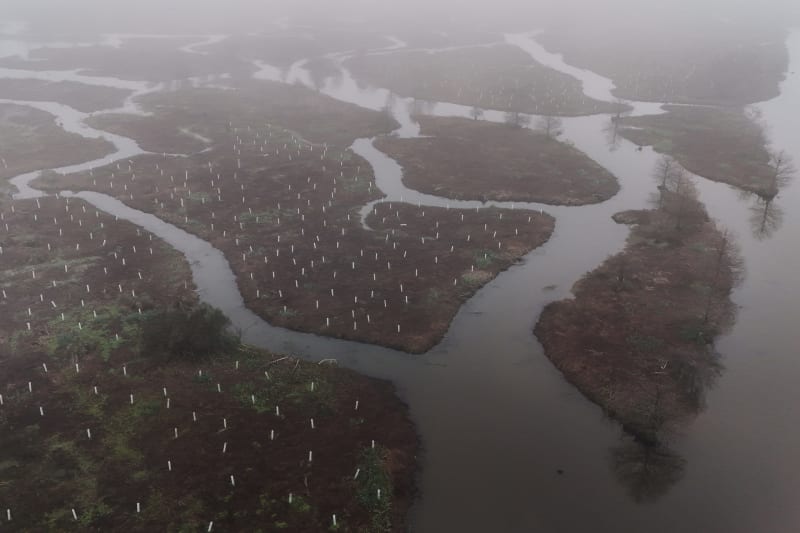
Through the morning mist behind a Lake Borgne pumping station, hundreds of white cylinders mark where hope is taking root. Inside each protective wrap, a young cypress or tupelo sapling grows stronger, part of a remarkable effort to rebuild the natural shield Hurricane Katrina destroyed.
Since 2009, volunteers have been ferrying into the wetlands by airboat with rubber boots, snacks, and determination. Their mission is restoring 30,000 trees to protect New Orleans from future storms and hold the sinking earth in place.
Before Katrina hit in 2005, wetland forests formed a natural barrier around the city. But the storm's surge killed over 1,000 people, caused more than $100 billion in damage, and poisoned protective trees with saltwater. The city stood exposed to future hurricanes, its living guardians gone.
The destruction wasn't just nature's doing. The Mississippi River Gulf Outlet Canal, built by the Army Corps of Engineers in the 1960s, became a highway for Katrina's storm surge directly into New Orleans. It allowed saltwater to flood freshwater ecosystems and kill the trees whose roots held the land together.
When officials closed the canal in 2009 and salinity levels dropped, environmental groups saw their chance. Five years ago, several organizations joined forces with federal and state funding to tackle reforestation on a scale they'd never imagined.
The Ripple Effect
The Coalition to Restore Coastal Louisiana has already planted 10,000 of their 15,000 tree goal. In areas once thought too damaged to recover, cypress trees now tower over dense thickets of native plants. These young forests create wildlife habitat and demonstrate that landscapes can heal.
For many organizers, planting trees has been a way to process grief. Ashe Burke was eight years old when Katrina hit the day after his birthday. "We had our lives ripped out from underneath us in a day," said Burke, now a wetlands restoration specialist. "But we gotta keep going on, and the sun rises in the morning."
Christina Lehew, executive director of Common Ground Relief, sees the work as resistance against despair. "We're one part of a larger movement to resist this sort of 'doomerism' mindset, and to show that recovery is possible," she said.
Rollin Black, who works with the Center for Sustainable Engagement and Development, finds hope in young volunteers joining the effort. Teaching the next generation about environmental restoration gives them reason to stay in New Orleans and protect what's being rebuilt.
The trees won't restore the vast wetlands that existed before development, but they're creating something valuable. Their roots anchor the land, their branches slow storm winds, and their presence proves that communities can rebuild what disasters take away.
Twenty years after Katrina, New Orleans is planting its future one tree at a time.
More Images




Based on reporting by Google News - Reforestation
This story was written by BrightWire based on verified news reports.
Spread the positivity!
Share this good news with someone who needs it