New Pill Doubles Survival for Pancreatic Cancer Patients
An experimental once-daily pill nearly doubled survival time for patients with advanced pancreatic cancer, offering hope for one of the deadliest forms of the disease. The breakthrough targets a mutation present in over 90% of pancreatic tumors that scientists have struggled to treat for four decades.
For the first time in decades, patients with advanced pancreatic cancer have a reason to feel genuinely hopeful.
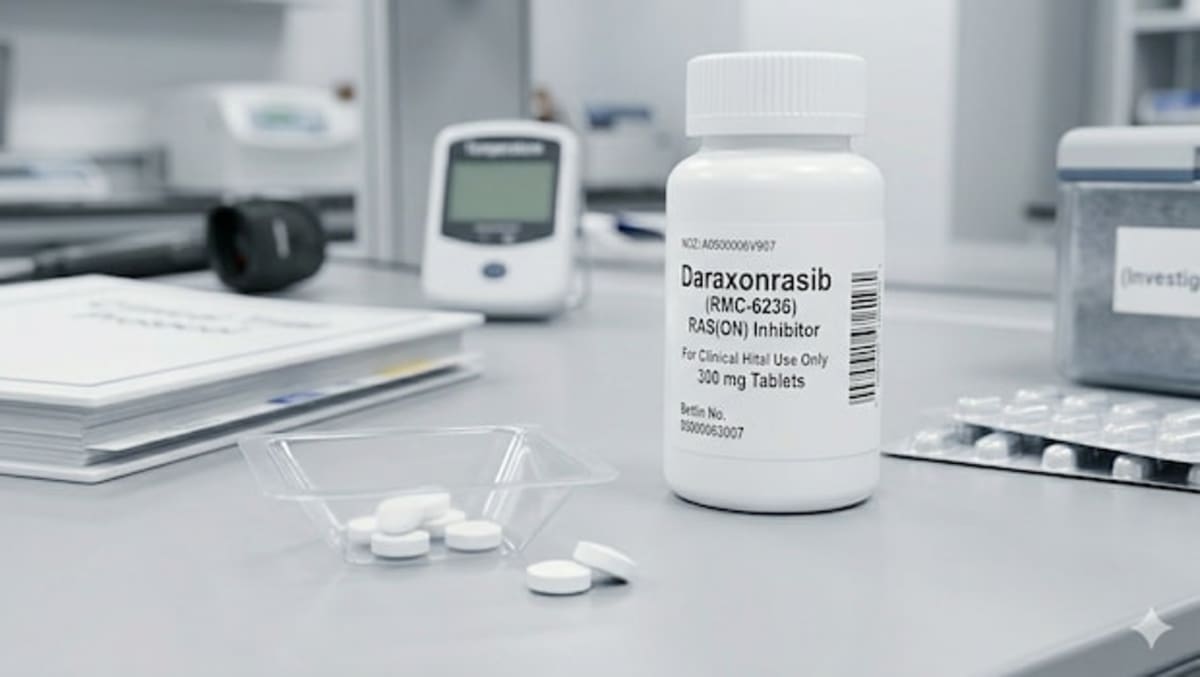
Researchers announced that an experimental pill called daraxonasib nearly doubled survival time for patients whose cancer had spread and stopped responding to chemotherapy. The results, presented at the 2026 American Society of Clinical Oncology meeting and published in the New England Journal of Medicine, earned a standing ovation from cancer experts who rarely see progress this significant.
The Phase 3 trial enrolled 500 patients with metastatic pancreatic cancer who had already tried standard treatments. Patients taking daraxonasib lived a median of 13.2 months, compared to just 6.6 months for those receiving chemotherapy.
What makes this breakthrough especially remarkable is what the drug targets. More than 90% of pancreatic cancers are driven by mutations in a gene called KRAS, which scientists have called "undruggable" for over 40 years because developing effective treatments seemed nearly impossible.
Daraxonasib belongs to a new class of medicines that finally crack this code. The once-daily pill targets the active form of RAS proteins that fuel tumor growth across multiple mutation types, not just one specific variant.
Beyond survival, patients experienced something equally valuable: better quality of life. The pill caused fewer severe side effects than chemotherapy, and fewer patients had to stop treatment because of adverse reactions. Common side effects like rash, nausea, and fatigue were mostly manageable.
The Ripple Effect
This success story reaches far beyond pancreatic cancer. RAS mutations also drive lung cancer, colorectal cancer, and other hard-to-treat malignancies, meaning this breakthrough could accelerate similar treatments for millions of patients worldwide.
For countries like India, where pancreatic cancer rates are rising due to aging populations and increasing rates of diabetes and obesity, access to more effective treatments could transform outcomes for patients who currently face grim prognoses. The disease is often diagnosed late because early symptoms mimic less serious conditions, making better treatment options even more critical.
Scientists are careful to note that daraxonasib isn't a cure, and patients may eventually develop resistance. But for families facing one of cancer's most devastating diagnoses, doubling survival time while maintaining quality of life represents genuine, meaningful progress.
After 40 years of trying to solve an "impossible" problem, scientists have finally turned hope into hard data.
More Images
Based on reporting by Google News - Health Breakthrough
This story was written by BrightWire based on verified news reports.
Spread the positivity!
Share this good news with someone who needs it

%2Fhttps%3A%2F%2Ftf-cmsv2-smithsonianmag-media.s3.amazonaws.com%2Ffiler_public%2F99%2F07%2F9907ed1f-0a19-4cb8-84d9-ac213cdf770a%2F0g6a0691.jpg)