New Prosthetic Hand Learns to Grip Eggs Without Breaking Them
Chinese researchers developed a smart prosthetic hand that uses a tiny camera and AI to automatically adjust grip strength for everyday objects. The breakthrough could help 50,000 Americans who lose hands each year perform daily tasks without thinking about force control.
Imagine trying to crack an egg with your hand, except you have to consciously calculate exactly how much pressure to apply. Too soft and nothing happens. Too hard and you've got a mess.
That's the challenge facing the 50,000 Americans who lose their hands each year. Current prosthetics require users to mentally calculate grip strength for every single object they touch, turning simple tasks like opening a water bottle or picking up a pen into exhausting mental exercises.
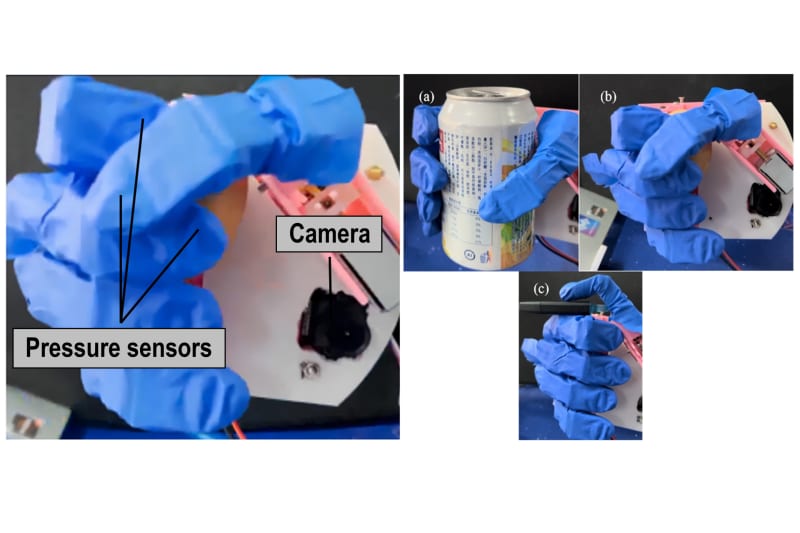
Researchers at Guilin University of Electronic Technology in China just solved this problem with an ingenious combination of cameras and machine learning. Their new prosthetic hand system watches what the user is reaching for and automatically adjusts grip strength in real time.
The team studied what disabled patients actually do each day and found that five object types make up over 90% of their interactions: pens, cups and bottles, balls, metal items like keys, and fragile objects like eggs. They measured the perfect grip strength for each category and taught their AI system to recognize these objects through a small camera mounted near the palm.
The prosthetic still uses a traditional sensor on the forearm to detect when the user wants to grab something. But instead of forcing the user to also control how hard to squeeze, the vision system handles that decision automatically.
"We want to free the user from thinking about how to control an object and allow them to focus on what they want to do, achieving a truly natural and intuitive interaction," said lead researcher Hua Li.
Why This Inspires
This technology represents a fundamental shift in how prosthetics work. Instead of asking users to master complex controls, it makes the prosthetic smart enough to handle the details.
The research team is already working on the next breakthrough: adding haptic feedback so users can actually feel what they're touching. This two-way communication would let someone know through physical sensation whether they're holding a fragile egg or a sturdy bottle.
Li's vision for the future is beautifully simple. He wants users to "effortlessly tie their shoelaces or button a shirt, confidently pick up an egg or a glass of water without consciously calculating the force, and naturally peel a piece of fruit or pass a plate to a family member."
These aren't dramatic goals. They're the everyday moments that make us human: sharing a meal, getting dressed, preparing breakfast. The researchers published their findings in Nanotechnology and Precision Engineering in January 2026, bringing that vision one major step closer to reality.
For the tens of thousands of people who will lose hands this year, this technology promises something precious: the ability to stop thinking about their prosthetic and start living with it.
More Images
Based on reporting by Phys.org - Technology
This story was written by BrightWire based on verified news reports.
Spread the positivity!
Share this good news with someone who needs it