New Solar Cells Break 30% Efficiency Barrier
Scientists just cracked a major milestone in solar energy, creating triple-layer solar panels that convert more than 30% of sunlight into electricity. This breakthrough could make solar power cheaper and more effective than ever before.
The future of solar power just got a whole lot brighter, thanks to a team of scientists who pushed past what silicon panels alone can achieve.
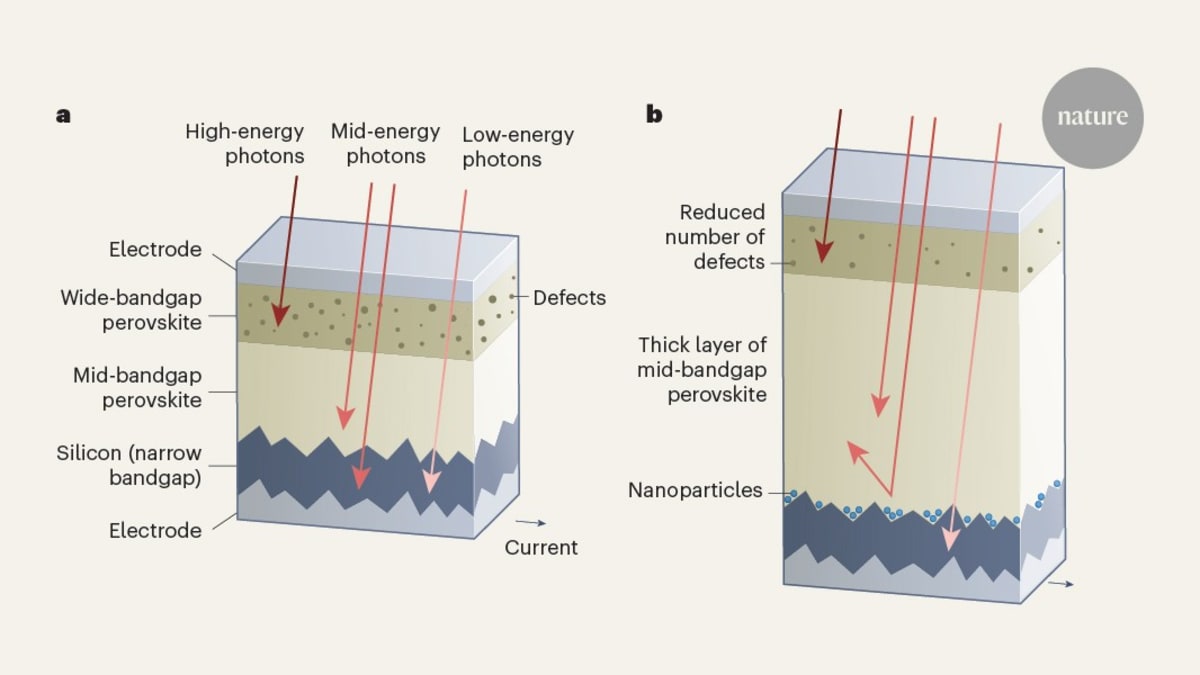
Researchers led by K. Artuk developed a new type of solar cell that stacks three layers of light-absorbing materials together, combining silicon with innovative materials called perovskites. Their device converts more than 30% of sunlight into electricity, breaking through a barrier that traditional silicon panels have been bumping up against for years.
Traditional solar panels made from silicon have been improving steadily for decades, but they're hitting their natural limit at around 29% efficiency. That means nearly three-quarters of the sun's energy still gets wasted as heat rather than captured as electricity.
The new triple-layer design solves this problem by using different materials that each capture different wavelengths of light. Silicon handles the red and infrared light, while the perovskite layers grab the blue and green wavelengths that silicon misses.
The Ripple Effect
This isn't just about squeezing a few extra percentage points from a solar panel. Higher efficiency means homeowners and businesses can generate more power from the same rooftop space, making solar energy practical for more people and places.
It also means solar farms can produce more electricity per acre of land, potentially lowering costs and reducing the environmental footprint of renewable energy installations. When solar panels generate more power, the overall cost per kilowatt hour drops, making clean energy more competitive with fossil fuels.
Perovskites have been the subject of intense research since scientists first demonstrated their potential in solar cells back in 2009. Early versions converted just 4% of sunlight into electricity, but improvements have been rapid. The challenge has been combining them effectively with silicon while maintaining stability and performance.
The new design represents years of careful engineering to manage how light and electrical charges move through the multiple layers. Each junction needs to work in harmony with the others, capturing photons without blocking or wasting the energy.
This achievement brings triple-junction solar cells closer to commercial reality, where they could transform how we power our homes, businesses, and communities with clean energy from the sun.
More Images



Based on reporting by Nature News
This story was written by BrightWire based on verified news reports.
Spread the positivity!
Share this good news with someone who needs it