New Spinal Cord Map Could Unlock Pain Relief for Millions
Scientists created the first complete cell-by-cell map of the spinal cord, revealing how chronic pain rewires the nervous system. One in three Americans will experience chronic pain in their lifetime, and this breakthrough could lead to better treatments.
Scientists just created something that didn't exist a decade ago: a complete atlas of every cell type in the spinal cord, mapped down to their exact locations. This breakthrough could transform how doctors treat the 110 million Americans living with chronic pain.
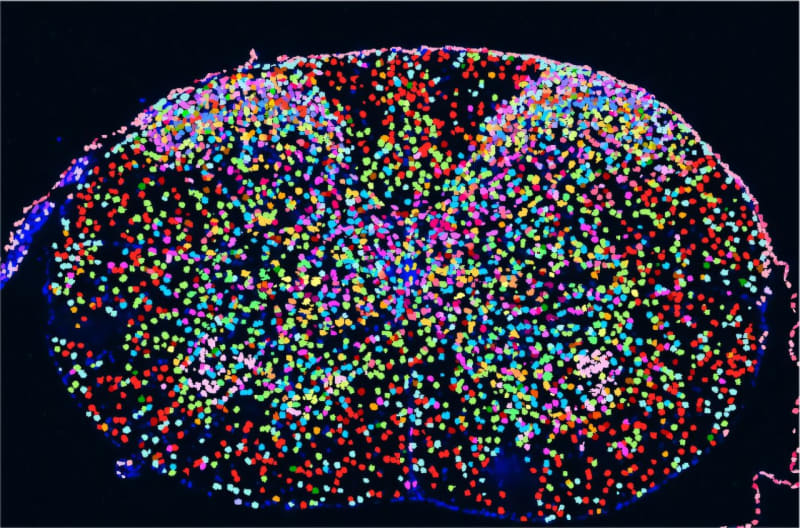
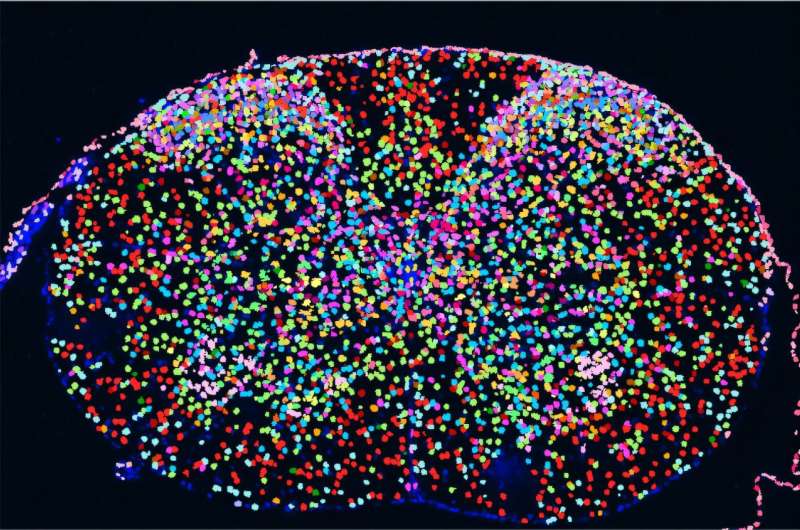
Researcher Shan Meltzer and her team at Vanderbilt University spent years building this map using cutting-edge technology that captures which genes are active in each cell while preserving its physical location. Think of it like Google Maps, but for the nervous system.
The spinal cord processes every touch, itch, and pain signal your body sends to your brain. Yet touch remains the least studied of our five senses, even though it's the first one we develop in the womb.
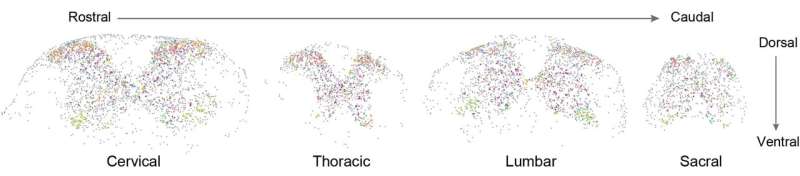
Previous studies cataloged which cell types exist in the spine, but nobody knew how they connected or organized themselves. Meltzer's team filled that gap by mapping cells across all four spinal levels, not just the easiest region to study like earlier research.
The team uncovered three surprises that could reshape pain treatment. First, different spine regions specialize in different jobs. Your neck area processes arm sensations while your lower spine manages pelvic organs, which means treatments might need customization based on where pain originates.
Second, male mice had significantly more motor neurons than females, but only in one spinal region. This suggests sex differences in pain processing might be more complex and location-specific than anyone realized.
The biggest revelation came from studying mice with nerve pain. Instead of finding one or two problem cell types, researchers discovered that chronic pain dims communication signals across multiple neuron types throughout the entire spinal circuit.
The Ripple Effect
Meltzer isn't keeping this treasure map locked away. She's making the entire atlas publicly available with an interactive website where any researcher can explore it, search for specific cells, and investigate how they communicate.
Scientists worldwide can now use this framework to build new hypotheses about how spinal circuits work and break down. It's like handing the entire research community a detailed instruction manual for one of the body's most important processing hubs.
This collaborative approach could accelerate discoveries exponentially. When researchers share foundational tools like this, breakthroughs that might take decades can happen in years.
The stakes are enormous: existing pain treatments fail to provide adequate relief for millions of people. This map gives scientists their clearest view yet of what goes wrong in chronic pain, pointing toward treatments that address the whole rewired circuit rather than isolated parts.
After years in the dark about how touch and pain actually work at the molecular level, we finally have a light switch.
More Images


Based on reporting by Medical Xpress
This story was written by BrightWire based on verified news reports.
Spread the positivity!
Share this good news with someone who needs it