New Stroke Guidelines Expand Life-Saving Treatment Access
Stroke care just took its biggest leap forward in a decade, with new guidelines expanding who can receive advanced treatments and offering the first-ever recommendations for treating strokes in children. Nearly 800,000 Americans have a stroke each year, making this update potentially life-changing for thousands of families.
Stroke patients across America now have access to more life-saving treatments, no matter where they live or how old they are.
The American Stroke Association just released groundbreaking 2026 guidelines that dramatically expand who can receive cutting-edge therapies like mechanical clot removal and clot-busting medications. The update brings a decade of medical breakthroughs into emergency rooms nationwide, standardizing care so patients get the same excellent treatment whether they're at a major hospital or a small community center.
Dr. Shyam Prabhakaran, who led the writing team at the University of Chicago Medicine, called it "the most important advances in stroke care from the last decade." The guidelines simplify imaging requirements so more hospitals can act quickly, potentially saving brain function and lives.
Perhaps most significant: these are the first-ever official recommendations for treating stroke in children. Though rare, stroke can happen to infants, kids, and teens, and doctors now have clear protocols for rapid diagnosis and treatment.
Children can show the same warning signs as adults like face drooping, arm weakness, and speech difficulty. But pediatric strokes often include sudden severe headaches with vomiting, new seizures on one side of the body, or sudden confusion.
The guidelines recommend that children ages 28 days to 18 years with disabling symptoms can receive IV clot-busting medication within 4.5 hours. Kids six and older may benefit from mechanical clot removal up to 24 hours after symptoms begin if brain scans show salvageable tissue.
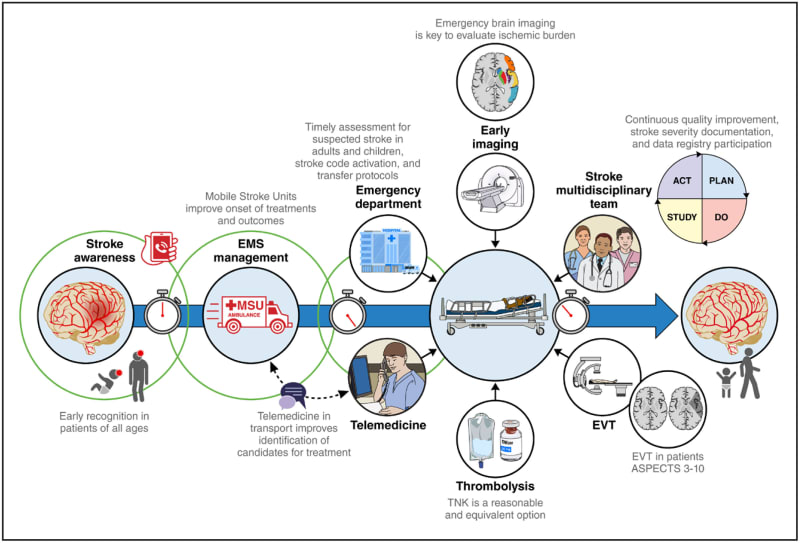
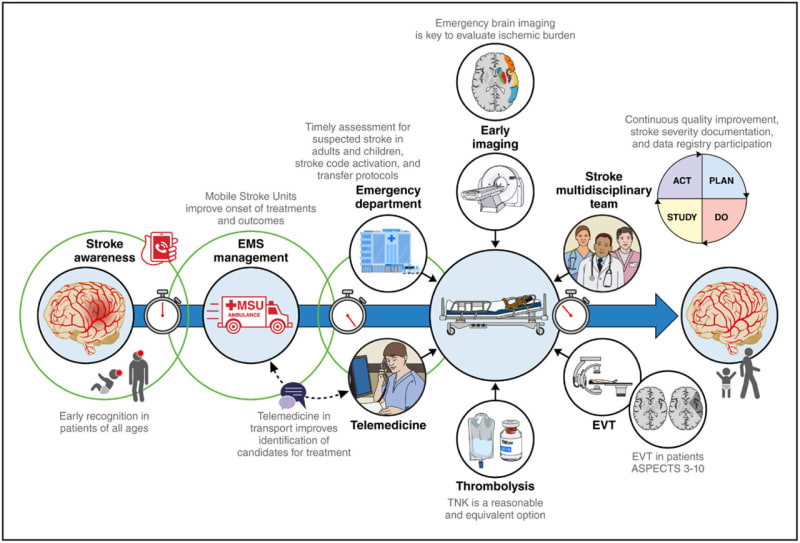
The update also emphasizes faster response systems linking 911 centers, ambulances, hospitals, and telemedicine networks. Mobile stroke units, which are ambulances equipped with CT scanners and stroke-trained teams, represent the cutting edge of rapid response.
The Ripple Effect
Every year, nearly 800,000 Americans experience a stroke, now the fourth leading cause of death nationwide. Beyond mortality, stroke remains a leading cause of serious long-term disability.
These expanded guidelines mean more people will receive advanced treatments that were previously available only at specialized centers or to select patient groups. Faster imaging, streamlined hospital workflows, and clear treatment protocols help ensure that where you live doesn't determine whether you recover.
For families with children, having official pediatric stroke guidelines fills a critical gap. Parents and emergency responders now know exactly what signs to watch for and doctors have evidence-based treatment paths instead of improvising care designed for adults.
The recommendations reinforce a powerful truth: outcomes depend not just on what treatments patients receive, but how quickly they get them. From the first 911 call to hospital discharge, coordinated care systems can prevent lifelong disability.
More lives saved, more brains protected, more families kept whole.
More Images
Based on reporting by Medical Xpress
This story was written by BrightWire based on verified news reports.
Spread the positivity!
Share this good news with someone who needs it