New Study Reveals Where Life's Building Blocks Really Came From
Scientists just debunked a century-old theory about comets seeding life on Earth, and the real answer might be closer to home than we thought. Cambridge researchers discovered that the molecules needed for life probably came from right here on our planet.
For nearly 100 years, scientists believed that comets delivered the chemical building blocks for life to Earth like giant cosmic delivery trucks. New research from the University of Cambridge just turned that romantic idea on its head, revealing something even more amazing about our planet's ability to create life.
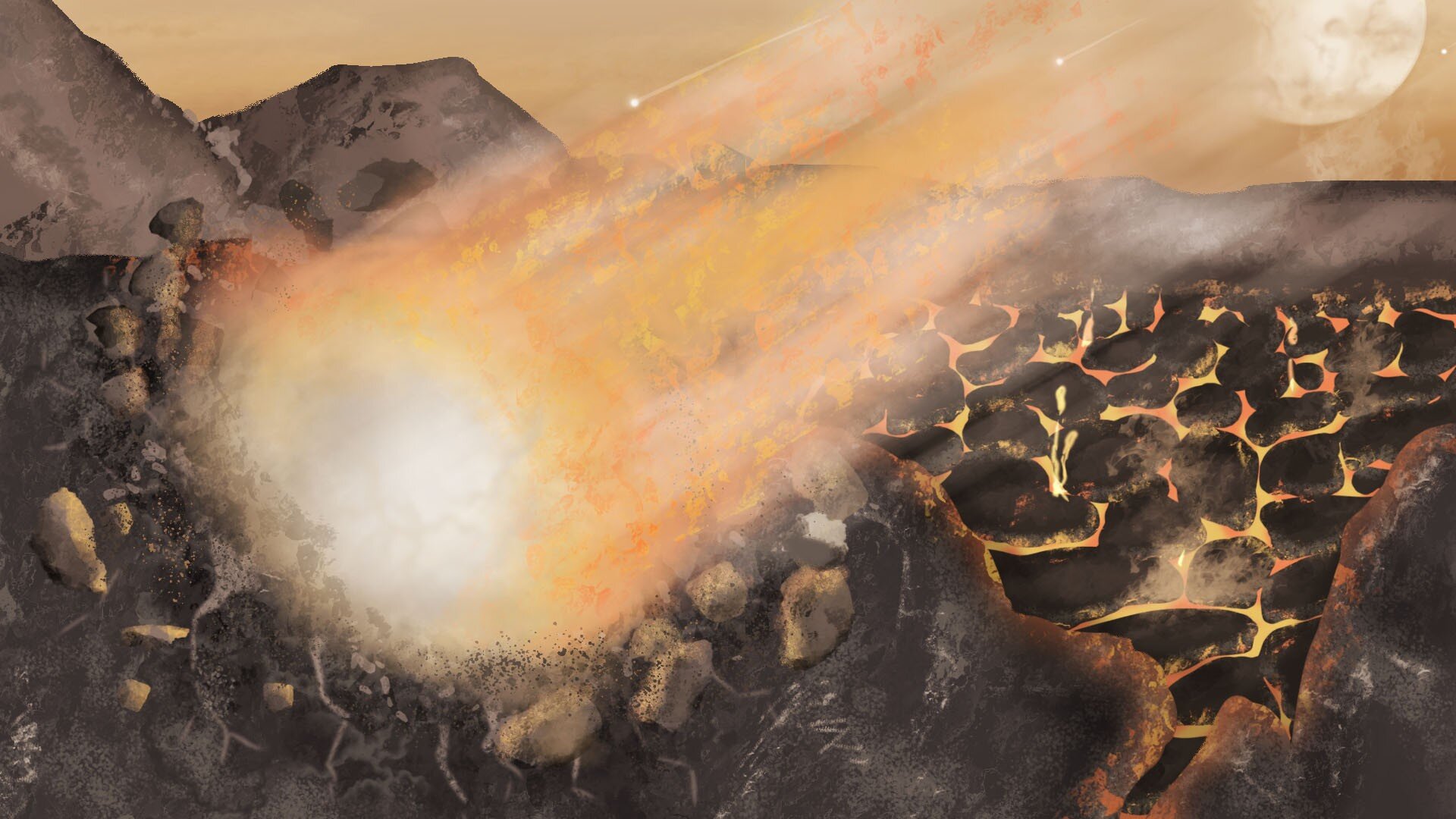
Using advanced computer modeling, Dr. Richard Anslow and his team discovered that comets travel way too fast and at too steep an angle for their fragile organic molecules to survive. They would vaporize on impact, making delivery of life's ingredients nearly impossible.
The researchers focused on hydrogen cyanide, a key prebiotic molecule commonly found on comets. Their simulations showed that even if these molecules somehow survived the violent crash through Earth's atmosphere, useful concentrations would have been extremely rare. Earth only had a handful of opportunities in its first 500 million years to receive these molecules, and each one would need to be a perfect storm of speed, angle, and timing.
"It would really have to be a one in a million occurrence," said Anslow. The molecules would need to survive impact, stay concentrated, and kick start chemistry almost immediately. Possible? Maybe. Likely? Not at all.
The Bright Side
This discovery isn't disappointing. It's actually empowering. If comets didn't bring life's ingredients, that means Earth likely created them herself through asteroid impacts or homegrown chemical processes. Our planet didn't need a cosmic helping hand. She was capable all along.
The findings could also guide our search for life beyond Earth. When next generation telescopes like the proposed Habitable Worlds Observatory come online, scientists can focus on planets that might have generated their own prebiotic chemistry rather than waiting for comet deliveries.
The researchers did find one interesting twist. Mars, with its smaller size and thinner atmosphere, might have been a slightly better candidate for comet delivery during the solar system's early days. While still unlikely, it opens fascinating questions about our neighboring planet's history.
Understanding how life began helps us appreciate just how remarkable our planet truly is.
More Images




Based on reporting by Phys.org
This story was written by BrightWire based on verified news reports.
Play Today’s BrightWire Positive Mini Crossword & Word Game
Keep your mind sharp with our free 5-minute uplifting daily crossword and positivity word puzzle.
Spread the positivity!
Share this good news with someone who needs it