New 'Supercrystal' Makes Lasers Smaller and More Efficient
Engineers at Monash University have created a revolutionary material structure that makes lasers work faster while using less energy. The breakthrough could transform everything from self-driving cars to medical imaging.
Scientists just figured out how to make lasers work smarter by teaching tiny energy particles to cooperate instead of compete.
Engineers at Monash University in Australia have developed a "supercrystal" that dramatically improves how materials amplify light. The secret isn't changing what the material is made of, but rather how it's arranged.
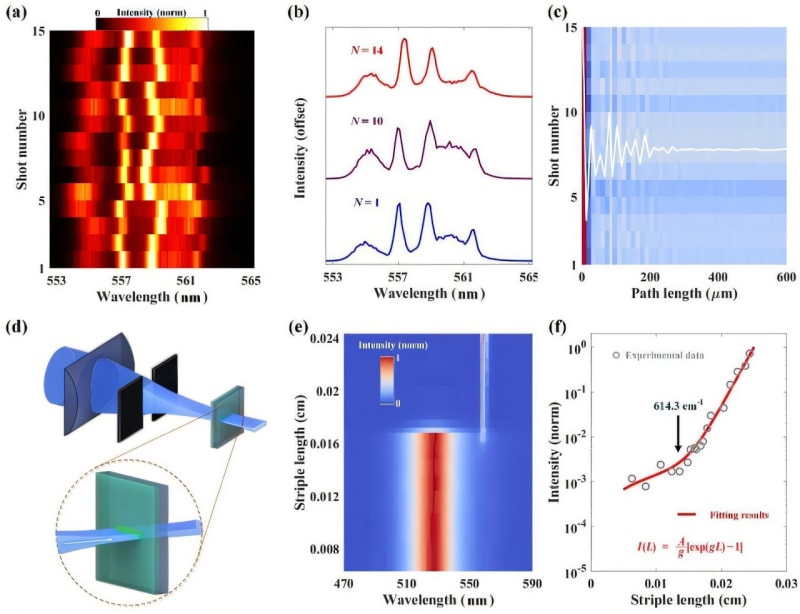
The team used perovskite, a material already popular in solar panels and LEDs, and organized its nanocrystals into an ordered structure. In this arrangement, tiny packets of energy called excitons work together as a team instead of fighting each other for resources.
Professor Jacek Jasieniak, who led the research, says the difference is like switching from solo musicians to a synchronized orchestra. "By assembling nanocrystals into an ordered supercrystal, the excitations created by light can cooperate rather than compete, which allows light to be amplified much more efficiently," he explains.
The result is a material that can make lasers smaller, faster, and less power-hungry. This matters because light-based technologies power many of the devices we rely on daily, from the sensors in autonomous vehicles to medical imaging equipment and high-speed internet.
Dr. Manoj Sharma, who conducted the experimental work, points out that previous approaches were limited by inefficient single-particle interactions that wasted energy. The supercrystal structure solves this by enabling collective interactions across the entire material.
The Ripple Effect
The breakthrough demonstrates how rethinking structure, not just chemistry, can unlock major performance gains. Perovskites are already prized because they're easy to manufacture and highly efficient, making them practical for real-world applications.
The technology could improve telecommunications networks, making data transfer faster and more reliable. Medical imaging devices could become more precise while using less power. Sensors in self-driving cars could detect obstacles more quickly and accurately.
The research, published in Laser & Photonics Reviews, also opens doors for other light-based technologies including quantum computing and advanced displays. Because perovskites are relatively inexpensive to produce, these improvements could reach consumers without massive cost increases.
The findings show how fundamental materials research translates into practical benefits that touch everyday life. Sometimes the biggest advances come not from inventing something entirely new, but from organizing what we already have in smarter ways.
More Images
Based on reporting by Phys.org
This story was written by BrightWire based on verified news reports.
Spread the positivity!
Share this good news with someone who needs it