New Telescope Sends 800,000 Alerts in One Night
The Rubin Observatory's revolutionary alert system just sent 800,000 notifications to astronomers worldwide in a single night, spotting supernovae, asteroids, and cosmic changes in real time. This is only the beginning of what may become astronomy's biggest discovery engine.
Imagine waking up to 800,000 text messages, except each one reveals something new happening in the universe.
That's exactly what happened to astronomers around the world Tuesday night when the Vera C. Rubin Observatory in Chile fired up its groundbreaking alert system for the first time. Within minutes of capturing images of the night sky, the system identified and reported everything from exploding stars to asteroids never seen before.
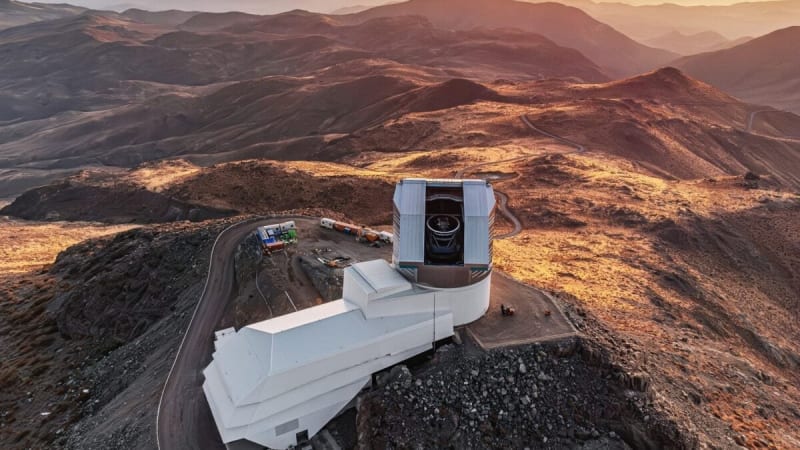
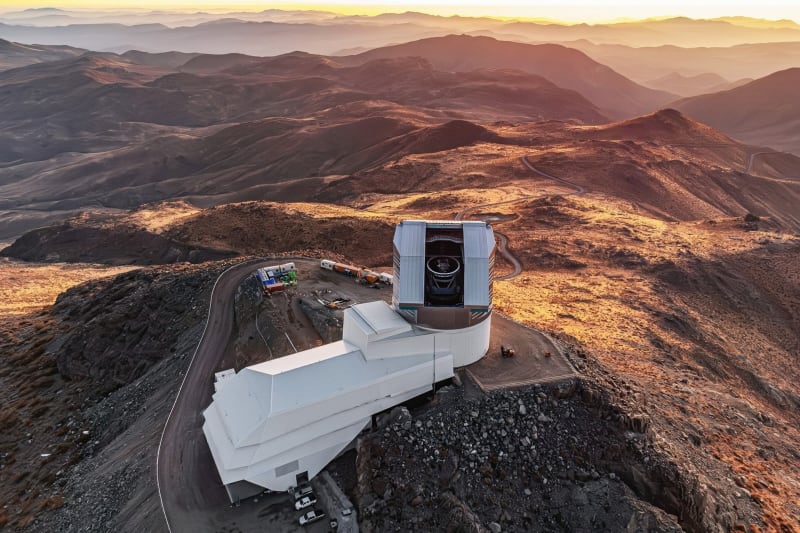
The observatory sits high in the Chilean Andes, armed with the largest digital camera ever built for astronomy and an ultra-sensitive 28-foot mirror. After nearly two decades of development, it's finally ready to change how scientists watch the cosmos unfold.
Here's what makes it special: most telescopes take a picture and scientists analyze it later, sometimes days or weeks after the fact. Rubin's Alert Production Pipeline processes 10 terabytes of images every night and notifies astronomers within two minutes of spotting something interesting. That speed gives scientists enough time to point other telescopes at the discovery for a closer look before it's too late.
The first night's haul included supernovae, variable stars that pulse with changing brightness, active galactic nuclei, and previously unknown asteroids zipping through our solar system. Each alert marks something that changed since the telescope last looked at that patch of sky, whether a new light source appeared, a star brightened or dimmed, or an object moved.
A team at the University of Washington spent a decade figuring out how to make this work. Processing that much data in real time required completely new approaches to image analysis, databases, and data management.
The Ripple Effect
This first night represents just a warm-up. The alert system currently handles 800,000 notifications per night but is designed to scale up to 7 million alerts nightly once the telescope begins its Legacy Survey of Space and Time later this year.
That 10-year survey will photograph the entire southern sky every few nights, capturing views deeper than any previous telescope. During its first year alone, Rubin is expected to observe more cosmic objects than all other optical observatories combined.
The telescope already proved its power during testing in June 2025, when it captured millions of galaxies and stars in its first public images. That test run also spotted 2,104 asteroids that nobody knew existed.
By flooding the world's astronomers with real-time discoveries, Rubin democratizes access to cosmic events as they happen. A researcher in Tokyo can receive the same alert as one in California, both getting equal opportunity to follow up on potentially groundbreaking discoveries.
The universe never stops changing, and now we finally have a telescope that can keep up.
More Images

Based on reporting by Google News - Science
This story was written by BrightWire based on verified news reports.
Spread the positivity!
Share this good news with someone who needs it