New Tool Predicts Disease Outbreaks Before They Hit
Scientists at UC San Diego created a platform that tells governments exactly where dengue and malaria will strike next and what supplies they'll need to fight it. Brazil and Peru are already using it to save lives.
When disease strikes, the difference between containment and crisis often comes down to a single question: did you see it coming?
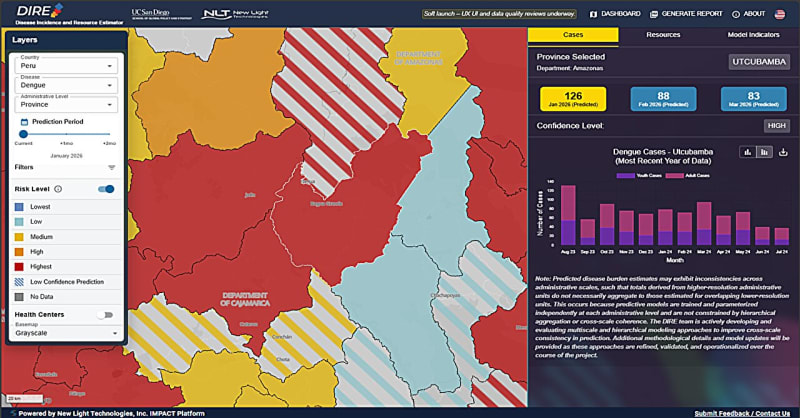
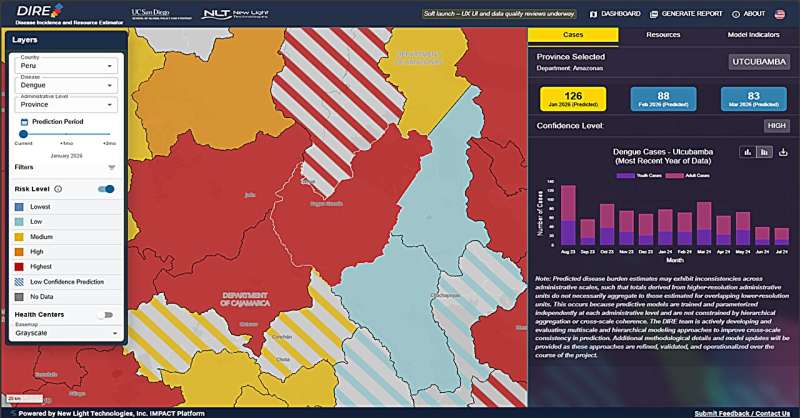
Researchers at UC San Diego just gave health officials a crystal ball. Their new platform, called DIRE, predicts where dengue and malaria outbreaks will happen and tells governments exactly what resources they'll need before the first cases arrive.
The tool works like an interactive weather map for disease. Users click on any region in Brazil or Peru to see predicted case numbers for the next three months, along with a shopping list: how many vaccine doses, how many fumigation kits, and what everything will cost.
"It not only tells you how many cases of the disease are coming," said Gordon McCord, the project's lead researcher at UC San Diego. "There's a model underneath it that's telling you how many resources would be needed in that place next month."
The timing couldn't be better. Peru reported 39,000 dengue cases in early 2025 alone, with children and pregnant women bearing the brunt. Climate change is expanding mosquito habitats into new areas, and deforestation is bringing more people into contact with transmission zones.
DIRE takes machine learning models that were sitting in academic journals and transforms them into something public health officials can actually use. The platform shows both predictions and uncertainty levels, helping decision makers weigh risks realistically.
But the team didn't just build it and hope people would come. They sat down with health officials in Peru's CDC, Brazil's dengue program, and UNICEF offices from the start, showing them draft after draft until they got it right.
The platform also generates downloadable PDF reports tailored for local leaders who need clear, place specific snapshots of what's headed their way.
The Ripple Effect
The impact extends beyond individual countries preparing for outbreaks. DIRE represents a new model for how academic research can serve real world needs, transforming complex forecasting into practical action.
UC San Diego developed the tool in partnership with UNICEF and New Light Technologies, with input from NOAA, the Government of Peru, and health organizations across multiple continents. That global collaboration means the platform is built to scale.
While DIRE currently focuses on dengue and malaria in two countries, the framework can expand to other diseases and regions. The team designed it with growth in mind, creating a template for how prediction tools can help health systems worldwide move from reactive to proactive.
For communities facing mosquito borne diseases, this shift from scrambling after outbreaks to planning ahead could mean the difference between manageable and overwhelming. When you know what's coming, you can stock the right medicine, deploy the right people, and reach vulnerable populations before they get sick.
The future of public health might not be about fighting diseases faster but seeing them coming sooner.
More Images

Based on reporting by Medical Xpress
This story was written by BrightWire based on verified news reports.
Spread the positivity!
Share this good news with someone who needs it