New Webb Telescope Images Reveal Saturn's Hidden Secrets
NASA's James Webb Space Telescope and Hubble just captured stunning new views of Saturn that reveal atmospheric mysteries scientists have never seen before. Working together, the two telescopes are uncovering secrets of the ringed planet that have been hidden for centuries.
Saturn just showed us something amazing, and it's rewriting what we know about our solar system's most beautiful planet.
NASA and ESA released breathtaking new images taken by the James Webb Space Telescope and Hubble just 14 weeks apart, capturing Saturn as it transitions from northern summer into its 2025 equinox. The timing couldn't be better for science.
Here's what makes this so exciting: Hubble sees Saturn in visible light, showing delicate color variations across the planet's surface. Meanwhile, Webb peers into the infrared, detecting clouds and chemical compounds hidden at different depths in Saturn's swirling atmosphere. Together, they're giving scientists the clearest picture yet of what's happening on this mysterious gas giant.
The images reveal a feature scientists call the "ribbon wave," a persistent jet stream snaking through Saturn's northern hemisphere. This atmospheric pattern was completely invisible until now, influenced by powerful waves deep beneath the cloud layer.
Even more remarkable, the images show remnants of Saturn's Great Spring Storm from 2011 to 2012, still visible as a small spot in the northern hemisphere. Several new storms speckle the southern hemisphere, each one a natural laboratory for studying extreme weather conditions unlike anything on Earth.
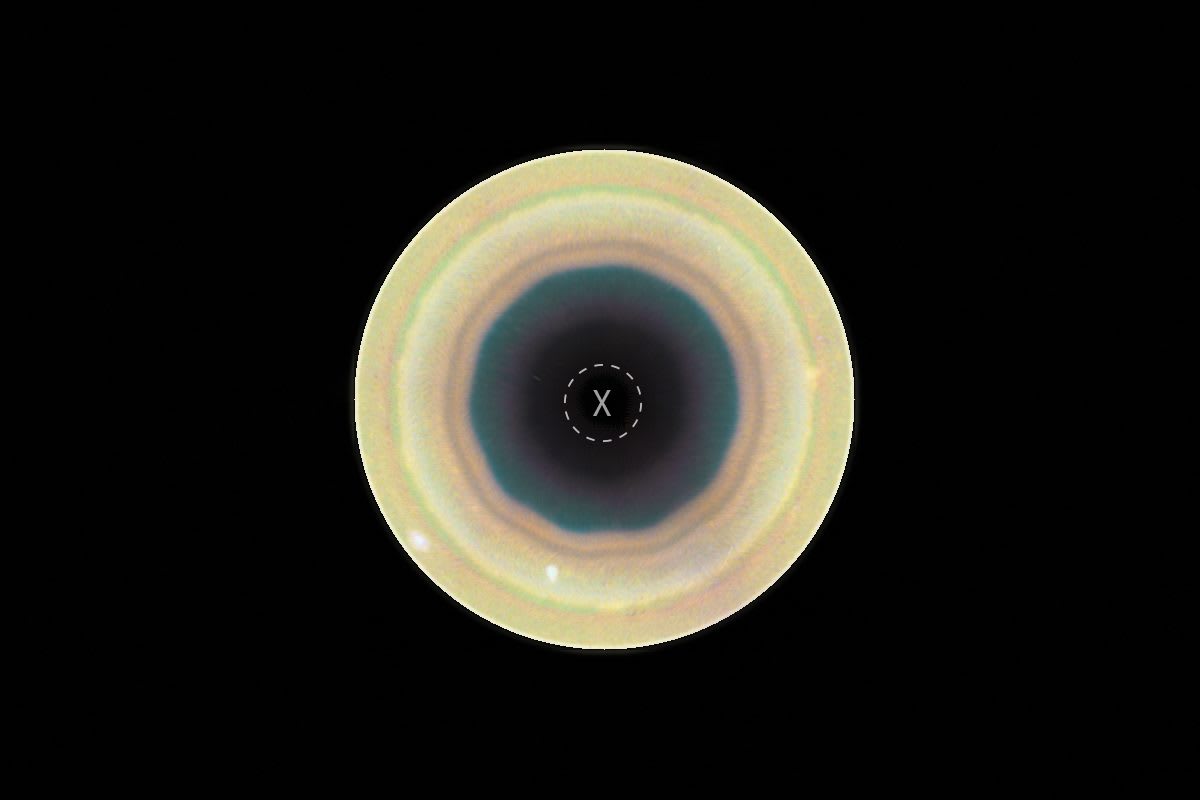
Saturn's famous hexagonal jet stream, first discovered by Voyager in 1981, appears faintly in both sets of images. Scientists say these may be the last high resolution views we'll see until the 2040s, when the north pole enters 15 years of winter darkness.
The rings themselves tell their own story. In Webb's infrared view, they shine brilliantly white thanks to highly reflective water ice. The F ring appears sharp and thin, while Hubble shows it with a softer glow, revealing subtle structural details that help scientists understand how these ancient rings formed and evolved.
Why This Inspires
From Galileo's confused first glimpse in 1610 to today's crystal clear images from space, our ability to explore distant worlds keeps getting better. What seemed impossible just decades ago is now routine, with two powerful telescopes working together to reveal mysteries hidden for billions of years.
These discoveries show that even our most familiar celestial neighbors still have secrets to share. Saturn has been watched by humans for centuries, yet it continues to surprise us with new atmospheric patterns, storms, and behaviors we've never witnessed before.
The collaboration between Hubble and Webb proves that combining different perspectives creates deeper understanding. Each telescope sees what the other cannot, and together they're painting the most complete picture of Saturn we've ever had.
Saturn's mysteries are finally coming into focus, one stunning image at a time.
More Images




Based on reporting by Google: James Webb telescope
This story was written by BrightWire based on verified news reports.
Spread the positivity!
Share this good news with someone who needs it