New Zealand Court Case Challenges Tree Offset Climate Plans
A groundbreaking lawsuit in New Zealand questions whether governments can rely heavily on tree planting instead of cutting emissions to meet climate goals. The decision could reshape how countries worldwide approach their climate commitments.
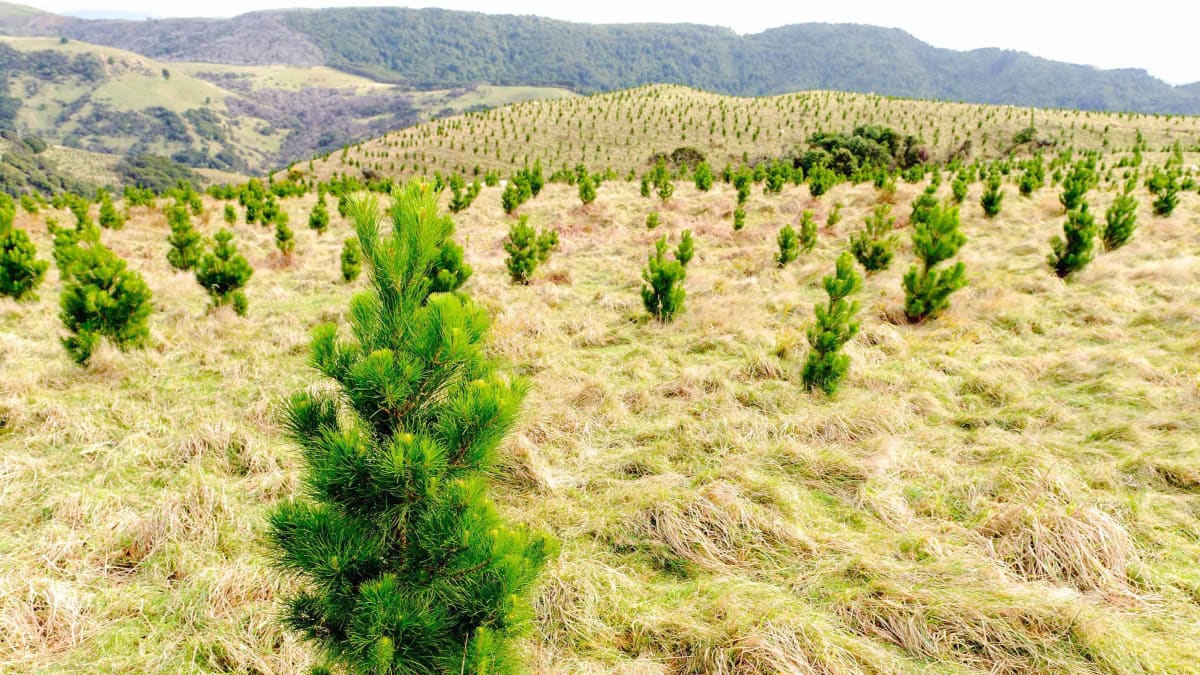
New Zealand's High Court just heard one of the world's first cases challenging a government's plan to meet climate goals primarily through tree planting rather than actual emission cuts.
Climate advocacy groups Lawyers for Climate Action and Environmental Law Initiative brought the case to Wellington's High Court in March 2025. They argue that Climate Minister Simon Watts published a climate plan in December 2024 that relies too heavily on pine forest offsets instead of requiring industries to reduce their emissions.
The legal challenge centers on a simple but powerful claim. The minister's advisors warned that New Zealand's chances of meeting its carbon reduction targets were barely better than a coin flip, yet the plan moved forward anyway. Under New Zealand law, the minister must have high confidence that climate targets will be met.
"We are concerned that the minister's approach of 'least cost, net-based' is inconsistent with the best available science and lets industry off the hook by buying credits from planting trees instead of reducing their emissions," says Eliza Prestidge-Oldfield from the Environmental Law Initiative.
The case also challenges the minister's decision to cut more than 35 climate policies and actions from the previous plan without proper consultation. This represents a significant retreat from New Zealand's earlier climate commitments.
The Ripple Effect
This lawsuit could create waves far beyond New Zealand's shores. The case draws on both the Paris Agreement and a 2025 International Court of Justice advisory opinion arguing that governments have a legal obligation to limit their use of tree offsets in climate strategies.
Finland faced a similar challenge earlier in 2025 when Greenpeace Finland and environmental groups appealed the government's climate plans. The Finnish forestry sector actually became a net carbon emitter in 2023, undermining its role in the country's net zero strategy.
Research from Sun Yat-sen University shows the global stakes. When sustainable land constraints and biodiversity protections are properly considered, tree planting can only offset a small fraction of fossil fuel emissions compared to what many countries are promising.
"The potential for tree planting to store carbon is absolutely enormous, but it needs to be done with care," explains Professor Zhangcai Qin, who led the study. "At the moment, some countries are committing much more than they should."
Trees face real vulnerabilities as carbon storage solutions. Unlike geological storage, forests can burn, die from disease, or be cleared. The pine trees central to New Zealand's plan aren't even native to the country, raising additional biodiversity concerns.
Lucy Maxwell from the Climate Litigation Network notes that as the world overshoots the 1.5°C warming target, carbon removal will become even more critical. Courts around the world will need to scrutinize whether government climate plans are feasible and honest about what tree planting can realistically accomplish.
The New Zealand court's decision is expected later in 2025, and climate advocates worldwide are watching closely to see if judges will hold governments accountable for over-promising on tree offsets while under-delivering on emission cuts.
Based on reporting by Google News - Emissions Reduction
This story was written by BrightWire based on verified news reports.
Spread the positivity!
Share this good news with someone who needs it