New Zealand Creates Pathway for Paralympic Rowers
Rowing New Zealand just launched a groundbreaking plan to help para athletes go from local clubs to Paralympic podiums. The clear roadmap gives coaches and athletes the tools they need to compete on the world stage.
Rowing New Zealand just published a game-changing plan to transform para rowing from grassroots participation to Paralympic medals.
The detailed pathway document, led by Domestic Pathway Lead Will Maling, creates a clear roadmap for para athletes at every stage of development. It outlines exactly what athletes need to achieve at each level, from their first time in a boat through to elite competition.
Maling brought the idea back after working with successful para rowers in Australia. "Having worked with successful para rowers in Australia, I felt if Australia could be successful, then we certainly can as well," he explains. He saw an opportunity to bring that structured approach to New Zealand, where the country already has a proud tradition in para sport.
The plan breaks down the full journey into clear stages, detailing training environments, performance targets, and support structures at each level. It gives clubs and coaches the framework to support para athletes effectively, addressing the unique challenges they face.
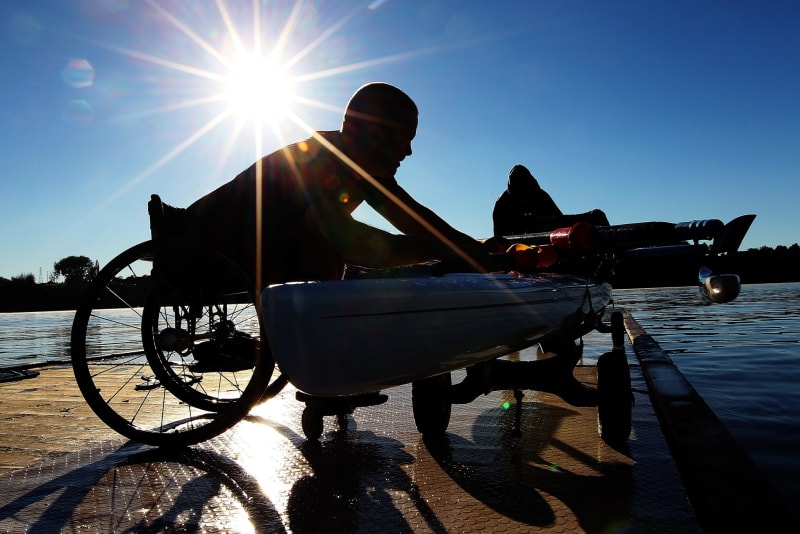
Coach Dylan Swain from Cambridge Rowing Club jumped at the chance to work with para rowers Naomi Carter and Pita Shelford. His daughter has single-sided deafness and his uncle was a Special Olympian, giving him a personal connection to accessibility. "It's forced me to rethink not only how I coach, but how we set up the boats," he says about working with Pita, who rows without a prosthetic leg.
Why This Inspires
This pathway does more than create structure. It sends a powerful message that para athletes deserve the same clear route to excellence that non-disabled rowers have always had.
Dylan sees the document as essential for having ambitious conversations with his athletes. "If para rowers want to target the LA28 Paralympic Games, Brisbane 2032, and beyond, these are the steps to follow," he says.
The plan acknowledges real challenges like limited resources and specialized equipment shortages. But Maling sees innovation as New Zealand's secret weapon, built on coaches and athletes who achieve things differently rather than forcing everyone into rigid systems.
Over the past year, the Para/Adaptive Committee and Sport Development Team have already increased participation and strengthened coaching capability at the club level. Regions and clubs are connecting to create clearer options for para rowers, and the classifier pathway is taking shape.
The long-term goal is full integration, where para rowing becomes woven into everything Rowing New Zealand does. Success will bring more funding, more athletes, and more chances to shine on the world stage.
Based on reporting by Google News - New Zealand Success
This story was written by BrightWire based on verified news reports.
Spread the positivity!
Share this good news with someone who needs it