New Zealand's Kākāpō Population Soars Toward 300
The world's heaviest parrot is having its biggest baby boom in decades, thanks to a rare berry feast that sent the critically endangered birds into a mating frenzy. With 240 eggs laid this season, New Zealand's beloved Kākāpō could soon hit 300 birds for the first time since near-extinction.
New Zealand's forests are exploding with fluffy green chicks, and it's all thanks to berries.
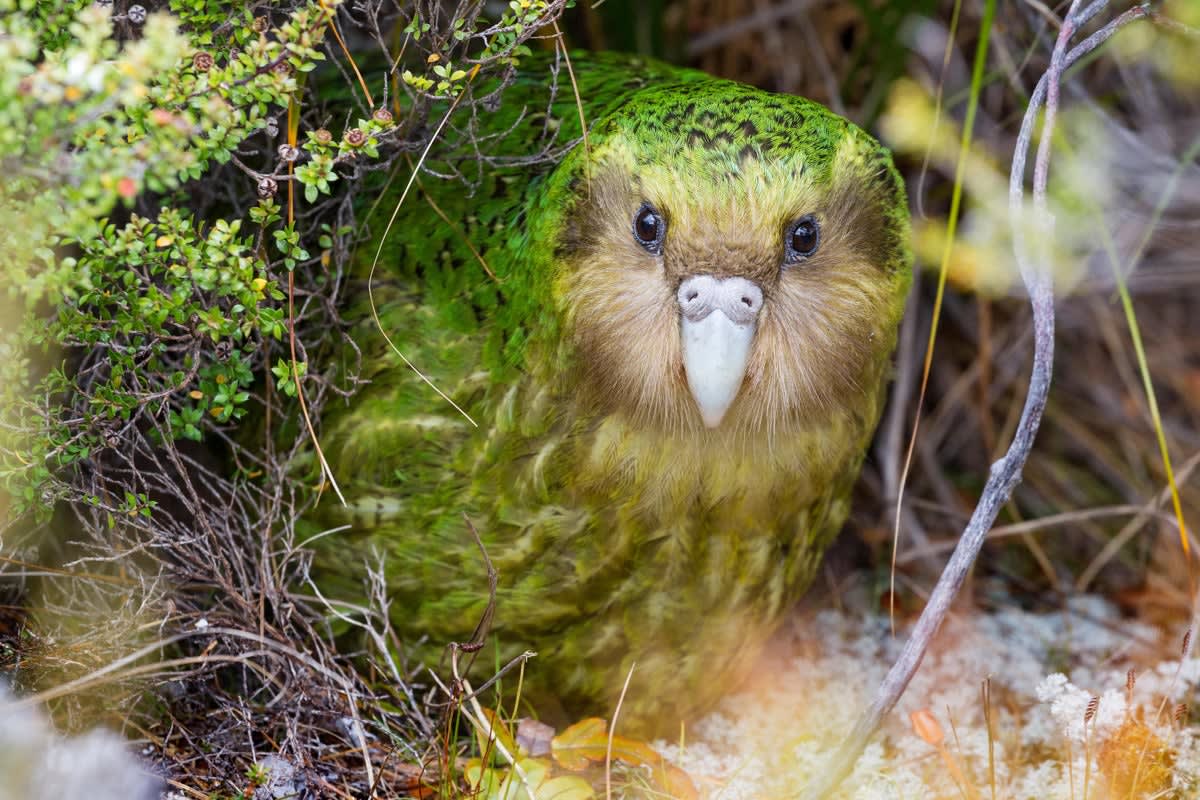
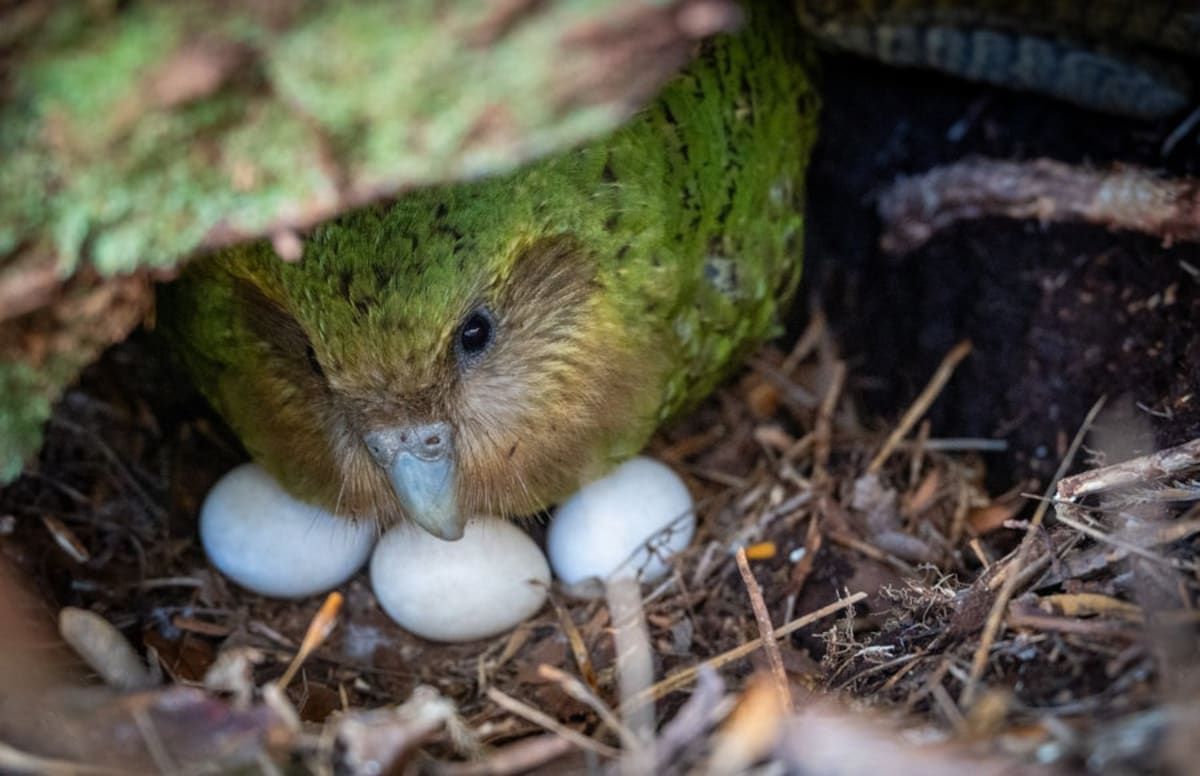
The Kākāpō, a lime-green parrot that weighs as much as a house cat and can't fly, is experiencing its most successful breeding season in decades. Only 236 of these peculiar birds existed at the start of 2026, but a massive bloom of rimu berries has triggered a mating surge that could push their population to 300 by year's end.
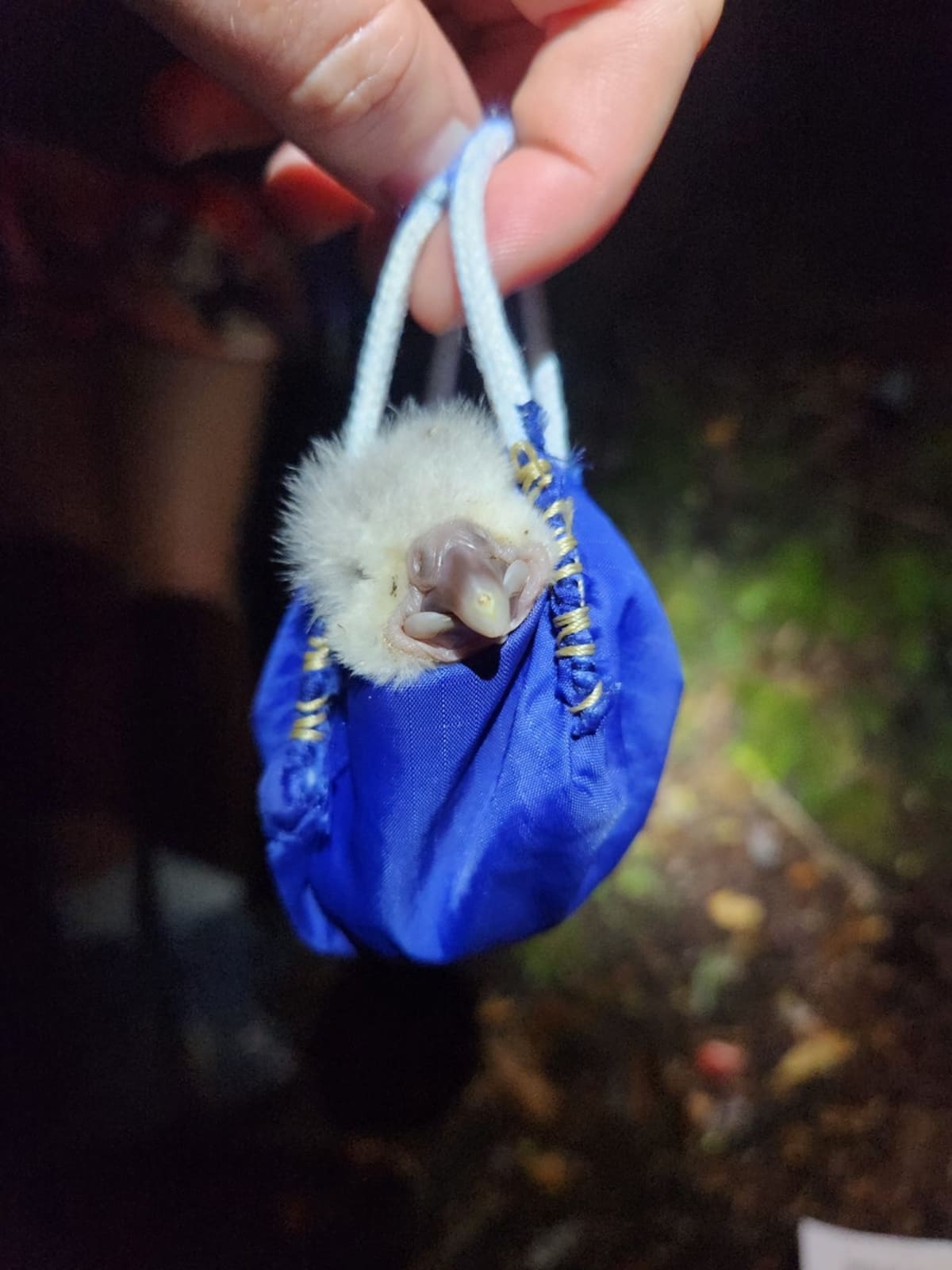
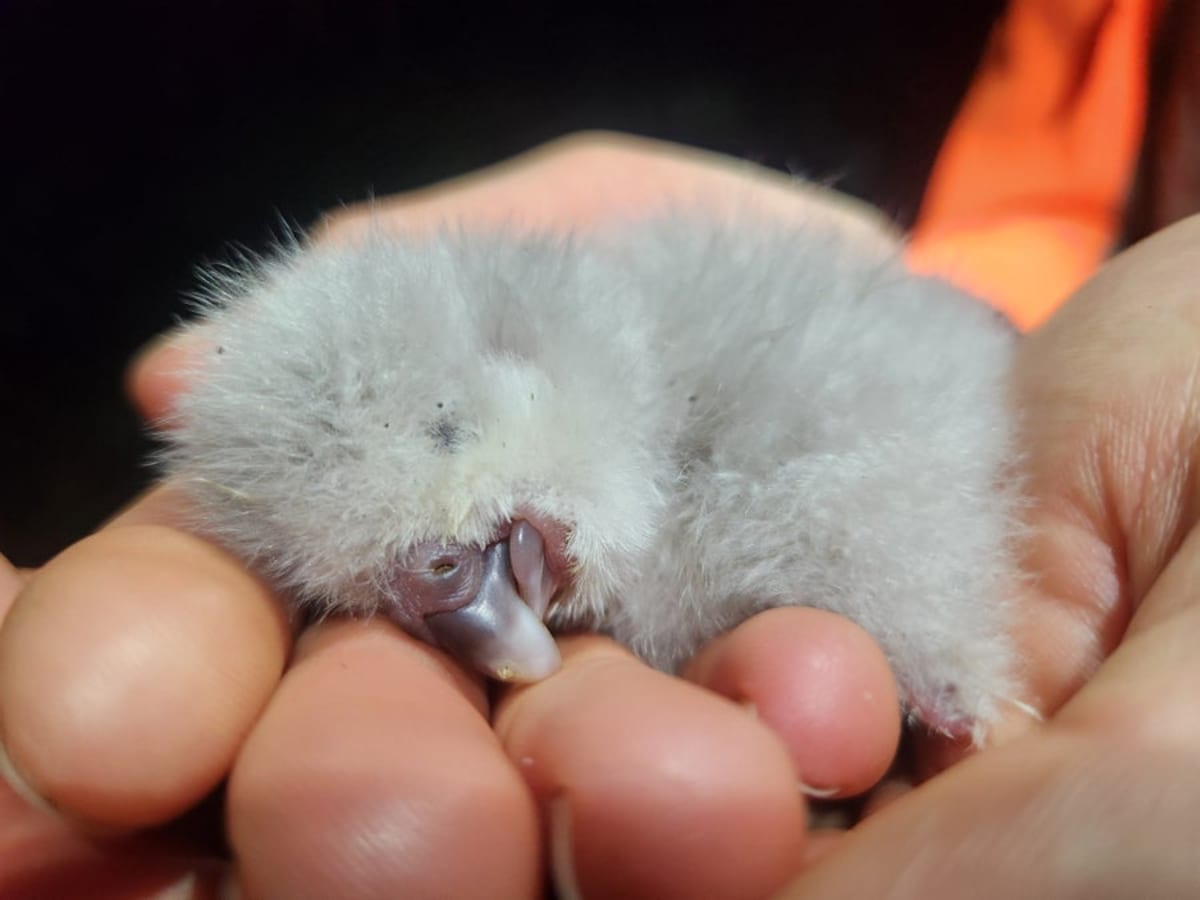
Nearly every female Kākāpō of breeding age has nested this year, producing 240 eggs. As of early March, 26 chicks have already hatched and survived, with more on the way.
The berry connection isn't random. Kākāpō rely almost entirely on rimu berries to fuel reproduction, and the towering conifer trees only produce bumper crops every two to four years. When the berries arrive, male Kākāpō stomp out earthen bowls with their stumpy feet and boom out courtship songs so low-pitched you feel them in your chest rather than hear them.
Andrew Digby, science adviser for New Zealand's Kākāpō conservation team, says the birds are odd in every way. They're nocturnal, smell strongly of fruit, and as one writer described, "fly like a brick." Some individuals live for 90 years or more.
The Ripple Effect
The comeback story wouldn't be possible without decades of dedication. In 1995, only 51 Kākāpō remained after invasive predators like cats and stoats nearly wiped them out. The birds were so fragrant that even humans could track them by scent.
The Ngāi Tahu tribe provided sanctuary on three predator-free islands, acting as kaitiaki (caretakers) of what they call a taonga species, a treasure. Tāne Davis has represented the tribe in Kākāpō conservation for 20 years and says they're now working to restore larger islands by removing invasive predators.
The breeding program has created dynasties of supermoms. Nora, a matriarch who has participated in 13 breeding cycles since 1981, is set to become both a mom and great-great-grandmother this season. Another superstar, 24-year-old Rakiura, has raised nine of her own chicks and fostered many more, and you can watch her on a nest cam right now.
Every night, Kākāpō mothers climb 100 feet into rimu canopies using beak and talon to harvest about a pound of berries per chick. It's exhausting work, but these birds have been doing it successfully for over 40 years in some cases.
The 2026 season marks a new chapter. At the Ngāi Tahu's request, some chicks born this year won't even be named, a symbolic shift toward letting them reclaim their wild lives without human interference.
From 51 birds to potentially 300 in three decades proves that patient, community-led conservation can bring species back from the brink.
More Images
Based on reporting by Scientific American
This story was written by BrightWire based on verified news reports.
Spread the positivity!
Share this good news with someone who needs it