Newborn Babies Can Predict Musical Rhythm, Study Finds
Scientists discovered that babies just hours old can detect and anticipate rhythmic patterns in music, revealing an innate human ability. The groundbreaking research suggests rhythm is hardwired into our biology, while melody develops through learning.
Your newborn baby might be tapping along to the beat before they can even hold their head up.
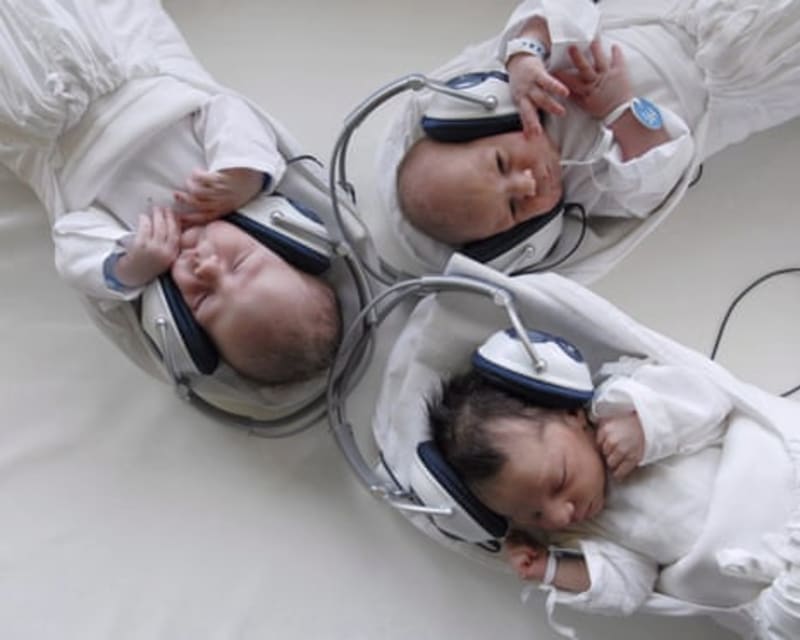
Researchers at the Italian Institute of Technology discovered that babies just hours old can track and predict rhythmic patterns in music. Using brain monitoring technology on 49 sleeping newborns, scientists found that tiny brains light up when they detect surprises in musical rhythm.
Dr. Roberta Bianco and her team played original Bach compositions to the infants, along with shuffled versions where notes were randomly rearranged. The babies' brains responded to unexpected rhythmic changes in the real music, but showed no reaction to melodic surprises or to the randomized pieces.
This discovery reveals something remarkable about human nature. While melody appears to be learned after birth and varies wildly across cultures, rhythm seems to be part of our biological toolkit from day one.
The reason might surprise you. Before birth, babies spend months surrounded by regular rhythms: their mother's steady heartbeat and the repeated motion of her walking. These constant patterns may teach the developing brain about timing and predictability long before the first lullaby.
Interestingly, the research aligns with studies on macaque monkeys, which also show greater sensitivity to rhythm than melody. This suggests our rhythmic abilities evolved from ancient auditory systems we share with other primates, while our appreciation for melody is uniquely human.
Why This Inspires
This discovery does more than reveal a cute fact about babies. It shows that humans come into the world ready to connect through one of our most universal forms of expression: rhythm.
Professor Usha Goswami from the University of Cambridge noted that the findings support her own research showing that language learning begins with speech rhythm, not pitch. Understanding rhythm may be the foundation for how babies eventually learn to communicate.
The research opens exciting possibilities for studying how prenatal experiences shape infant development. While sounds are muffled in the womb and melodies get distorted, rhythmic structure comes through clearly, potentially preparing babies for the patterned world they'll enter.
From a mother's heartbeat to a drumbeat in a song, rhythm connects us all. Now we know that connection begins even earlier than we thought, wired into the newest members of our human family.
More Images



Based on reporting by Google News - Researchers Find
This story was written by BrightWire based on verified news reports.
Spread the positivity!
Share this good news with someone who needs it