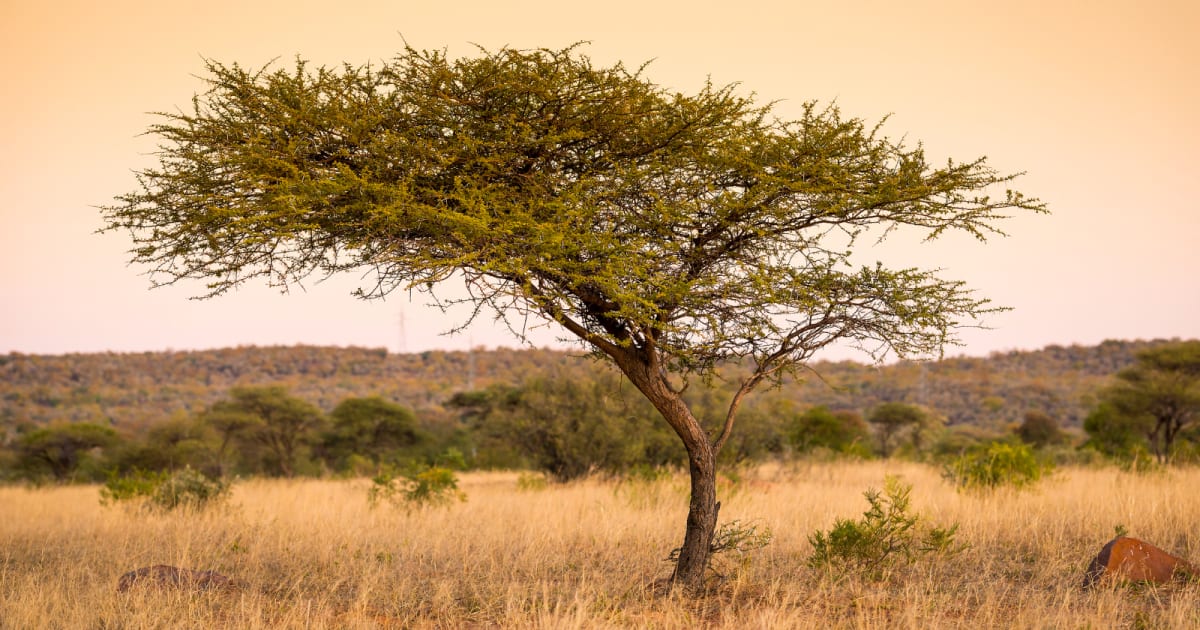
Niger Farmers Regrew 200 Million Trees Without Planting One
Africa's Great Green Wall kept dying until a desperate agronomist realized the Sahel wasn't a desert needing trees. It was a suppressed forest with hundreds of millions of root systems already waiting underground.
Tony Rinaudo was ready to quit. After years of watching planted tree seedlings die in Niger's brutal heat, the young Australian agronomist stopped by what looked like worthless scrub in the early 1980s and had a realization that would transform an entire region.
Those weren't bushes. They were trees, or what was left of them: living stumps and root systems from the old forest, still alive underground, trying endlessly to resprout.
"The solution was literally at our feet," Rinaudo later said. The Sahel wasn't missing trees. It was a forest being cut back faster than it could grow.
The technique he helped develop is almost too simple to believe. Farmers select the strongest shoots rising from existing stumps, protect them from livestock and cutting, and prune the rest. No planting, no nursery, no trucking water across the desert.
The decades-old root systems already know how to survive there. They just needed a chance.
But the real breakthrough wasn't botanical. It was legal and economic.
Colonial-era French laws had made trees state property, even on private farmland. Cut one for firewood and risk jail. Farmers responded rationally: they cleared every tree they could.
As tenure reforms shifted ownership to the farmers themselves, the incentive flipped completely. A tree you own gives shade, fodder, firewood, fruit, wind protection and better soil. Suddenly protection became self-interest.
The method, called Farmer Managed Natural Regeneration, spread the way real solutions do in rural Africa: farmer to farmer, field by field, mostly invisible to aid agencies and international programs.
When researchers finally surveyed Niger in the 2000s using satellite images, they were stunned. Roughly 5 million hectares had been re-greened. Some 200 million trees had been protected and regrown across the country's south, making it one of the largest environmental transformations in Africa.
Not a single seedling had been planted.
The Ripple Effect
Tree cover on that land rose ten to twenty-fold. Harvests doubled in some places. Women who once spent two and a half hours collecting firewood now needed just thirty minutes.
The Great Green Wall initiative, launched in 2007 to stretch 8,000 kilometers across Africa from Senegal to Djibouti, absorbed the lesson. The campaign now promotes a mosaic of restored landscapes rather than a literal tree wall, with Niger's method at the center.
Niger formally recognized the technique as a national restoration method in 2020. Rinaudo earned the Right Livelihood Award, often called the alternative Nobel Prize, and a new nickname: the forest maker.
The continental project remains far behind its ambitious targets, slowed by funding gaps and the Sahel's ongoing conflicts. But the part that works keeps working, spreading across all 11 countries in the initiative.
Every planted seedling starts life as a stranger with the wrong roots and wrong timing. A protected stump is a local with a forty-year head start, already adapted to the harshest conditions on Earth.
The most effective reforestation on the planet turned out to involve no reforestation at all, just the radical step of noticing the land was already trying and getting out of its way.
Based on reporting by Google News - Reforestation
This story was written by BrightWire based on verified news reports.
Spread the positivity!
Share this good news with someone who needs it