Nigeria Medical School Tackles Misdiagnosis Crisis
The University of Lagos College of Medicine is launching a groundbreaking conference to reduce deadly diagnostic errors that plague Nigeria's healthcare system. The June event will connect researchers, doctors, and tech experts to make sure patients get accurate diagnoses from day one.
Too many Nigerians are dying because doctors don't have the tools or training to diagnose their illnesses correctly. Now, one of the country's top medical schools is stepping up to change that.
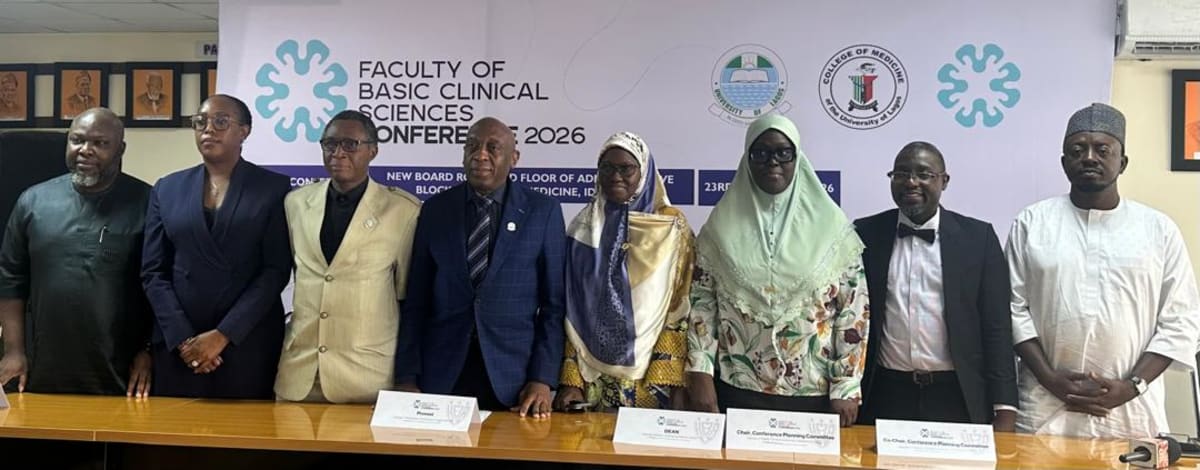
The College of Medicine at the University of Lagos announced this week it will host Nigeria's first Clinical Sciences Conference focused on precision medicine. The three-day event in June aims to fix a problem that's been hiding in plain sight: patients labeled with malaria or typhoid without proper testing, leading to wrong treatments, wasted money, and preventable deaths.
"We want to make sure diagnoses are accurate and precise," said Prof. Fatima Abdulkareem, Dean of the newly created Faculty of Basic Clinical Sciences. "Too many febrile illnesses are simply labelled malaria or typhoid without proper confirmation. This leads to delayed treatment, increased cost and poor outcomes."
The gaps in Nigeria's diagnostic system stem from limited access to advanced testing equipment and weak connections between laboratory scientists and doctors treating patients. When doctors rely on guesswork instead of confirmed test results, the consequences can be fatal.
The conference will bring together researchers, clinicians, industry partners, and policymakers from June 23 to 25 at the College's Idi-Araba campus. Sessions will explore how artificial intelligence and machine learning can improve diagnostic accuracy and help doctors make better treatment decisions.
Prof. Ademola Oremosu, the College's Provost, sees the new Faculty of Basic Clinical Sciences as a bridge between laboratory discoveries and real patient care. "This faculty is the interface between what we know about the patient in the laboratory and how clinicians apply that knowledge in treatment," he explained.
The Ripple Effect spreads beyond Nigeria's borders. Conference organizers are inviting alumni working worldwide to share expertise and build global partnerships. Oremosu noted a surprising trend: Nigerian health professionals abroad are expressing interest in returning home despite challenges, drawn by opportunities to make meaningful impact.
The conference theme, "Precision in Practice: Integrating Diagnostics, Therapeutics and Clinical Insights for Patient-Centered Care," reflects the urgent need to get healthcare right the first time. When patients receive accurate diagnoses quickly, they avoid unnecessary treatments, spend less money, and recover faster.
Prof. Titilope Adeyemo, Conference Chairman, emphasized the event's practical focus. "This is more than a scientific meeting. It is a convergence of academia, industry and policy," she said.
Industry partners are joining the effort to translate research into tools doctors can actually use. The goal isn't just better science but stronger healthcare systems that save lives every day.
One medical school's conference might seem small, but it's sparking a movement to put precision at the heart of Nigerian healthcare.
Based on reporting by Vanguard Nigeria
This story was written by BrightWire based on verified news reports.
Spread the positivity!
Share this good news with someone who needs it