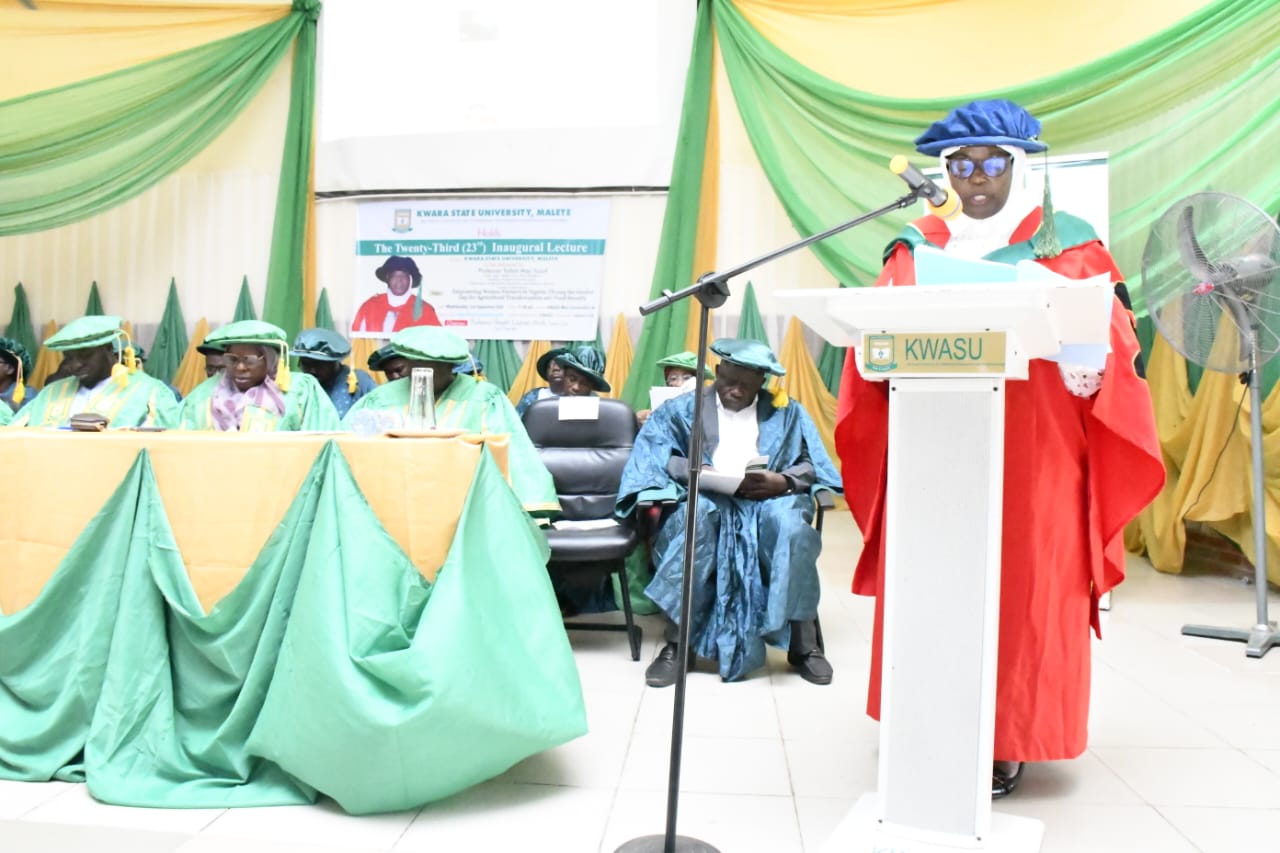
Nigeria Professor Maps Path to Empower Women Farmers
A groundbreaking lecture backed by 30 years of research reveals how closing agriculture's gender gap could transform Nigeria's food security. Professor Taibat Yusuf shares proven solutions to unlock the potential of millions of women farmers.
After three decades of working directly with women farmers across Nigeria, Professor Taibat Yusuf knows exactly what's holding them back and how to fix it.
The agricultural economics professor at Kwara State University delivered a powerful lecture this month outlining concrete steps to empower women farmers. Her message is clear: removing barriers for women isn't just about fairness, it's essential for feeding the nation.
Right now, discriminatory land ownership practices prevent women farmers from accessing credit and agricultural resources. Without land titles, banks won't give them loans, even when they're the ones doing the farming.
Professor Yusuf called for inheritance law reforms guaranteeing women's rights to own and inherit land regardless of marital status. She also advocated for microcredit schemes that don't require land as collateral, recognizing that many capable farmers simply can't meet traditional lending requirements.
Her research points to practical solutions already working in other communities. Mobile platforms can deliver agricultural advice in local languages, reaching women who can't attend in-person training. Digital financial services can connect rural women to banking without requiring long trips to distant cities.
The professor also highlighted how basic infrastructure investments create ripple effects. Clean water supplies, reliable electricity, and childcare support reduce the hours women spend on domestic tasks, freeing time for farming and business development.
Agricultural extension services need more female agents and flexible training schedules that work around women's responsibilities. Labour-saving technologies designed for women's operational needs can multiply productivity without requiring massive capital investments.
The Ripple Effect
When women farmers gain equal access to resources, entire communities benefit. Research consistently shows that women invest their agricultural income directly into nutrition, education, and healthcare for their families.
Professor Yusuf emphasized that agricultural policies must connect with broader poverty reduction strategies. With an estimated 140 million Nigerians living below the poverty line, isolated interventions won't solve the challenge.
She recommended gender impact assessments for all agricultural programs and greater representation of women on policy committees and farmers' unions. Dedicated budget lines for gender-responsive investments would ensure commitments translate into action.
The professor also advocated for contract farming programs that provide women with reliable markets, inputs, and financing through public-private partnerships. Improved post-harvest storage and cold-chain facilities would help women farmers capture more value from their produce.
Her vision includes promoting moringa cultivation for eco-friendly bio-organic fertilizer production, creating both environmental and economic benefits. Cooperative production networks could help women pool resources and strengthen their bargaining power.
Nigeria's agricultural transformation depends on unlocking the potential of women who already feed their families and communities every day.
More Images


Based on reporting by Premium Times Nigeria
This story was written by BrightWire based on verified news reports.
Play Today’s BrightWire Positive Mini Crossword & Word Game
Keep your mind sharp with our free 5-minute uplifting daily crossword and positivity word puzzle.
Spread the positivity!
Share this good news with someone who needs it


