Nigerian Developer's AI Tool Now Used by Silicon Valley
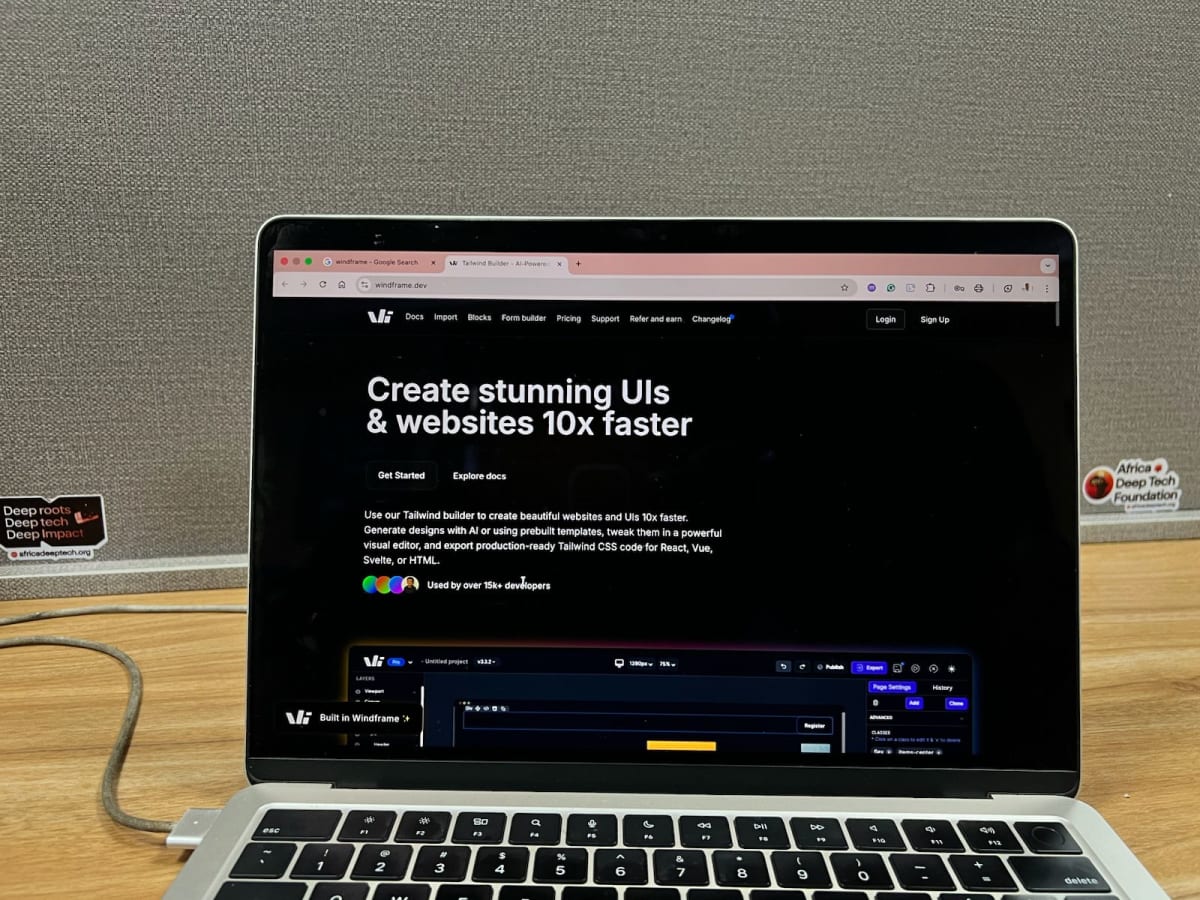
A Nigerian software developer turned his frustration with website building into Windframe, an AI tool that now counts engineers at one of Silicon Valley's top firms among its 16,000 users. Sampson Ovuoba built the platform to let developers design visually and generate production-ready code in minutes.
When Sampson Ovuoba looked at how websites were built, something felt off. The process was too code-heavy for something that should feel creative and visual.
"UI shouldn't be too code-heavy," says the Nigerian developer. "It is a visual thing, not logic."
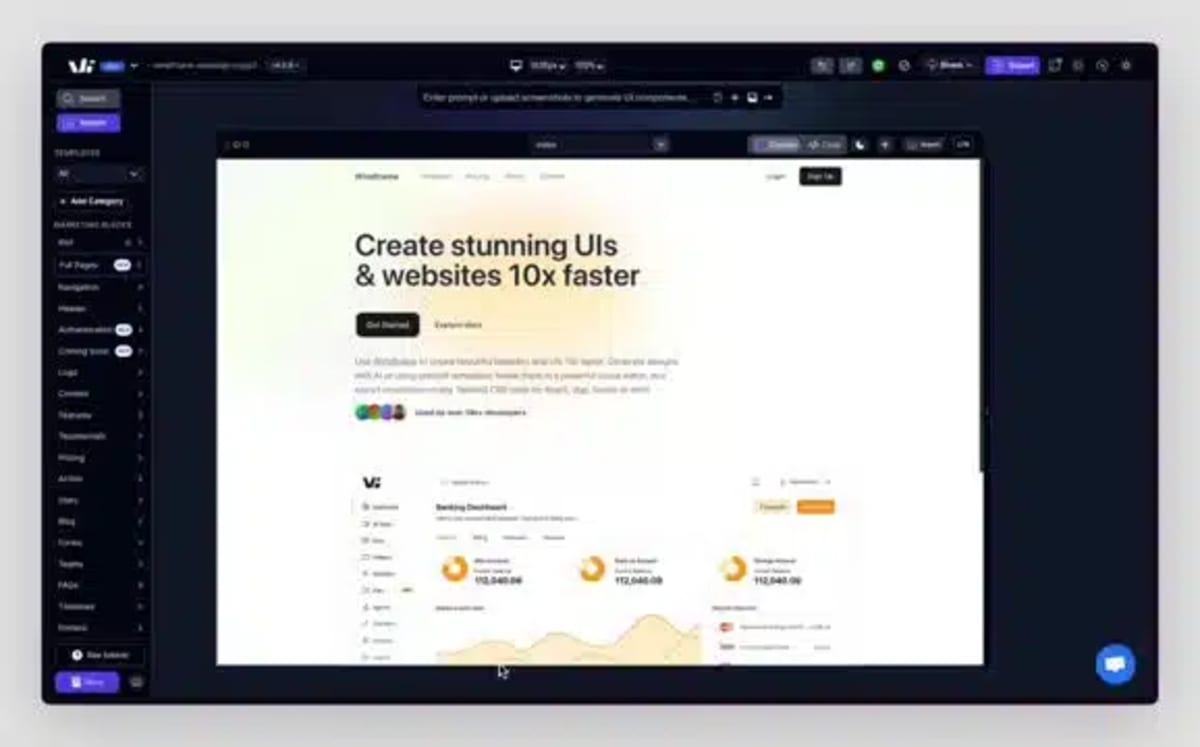
That belief led him to build Windframe in 2021. The tool lets developers design what they want visually, then automatically generates clean, production-ready code.
It took Ovuoba and a friend seven months to create the first version. This was a year before ChatGPT made AI mainstream, so the initial focus was on templates and a custom rendering engine that could handle different types of code.
The launch exceeded expectations. Within two days, Windframe had 100 users after being shared on Product Hunt and Reddit.
Getting a paying customer on day one told Ovuoba something important. His personal frustration was a problem other developers desperately wanted solved.
By 2023, he added AI capabilities using OpenAI's newly available APIs. Now users can type simple text prompts and watch them transform into fully structured, responsive UI layouts in minutes.
Today, Windframe has grown to 16,000 users. A developer at Andreessen Horowitz, one of Silicon Valley's most prestigious venture capital firms, called it a strong prototyping tool that translates designs into code better than industry standard Figma.
The Ripple Effect
Ovuoba's journey shows how solving your own problem can create tools that help thousands. He spent most of his career as a freelance developer, which paid well but lacked the satisfaction of building something lasting.
His first startup attempt came at age 13 when he tried building a platform for schools to upload results online. It never launched due to institutional politics, but the experience taught him valuable lessons about building products people actually want.
Windframe operates on a freemium model with paid plans starting at $25 monthly for individuals and $150 for teams. With conversion rates typical for software tools, the platform could be generating $20,000 to $40,000 in monthly recurring revenue.
The real win isn't just the revenue. It's that a developer working from Nigeria built a tool good enough for engineers at Silicon Valley's elite firms to use daily.
Ovuoba proved that great solutions can come from anywhere when you focus on solving real problems instead of chasing trends.
More Images

Based on reporting by Techpoint Africa
This story was written by BrightWire based on verified news reports.
Spread the positivity!
Share this good news with someone who needs it