Nigerian Weavers Keep Ancient Fabric Craft Alive by Hand
In Iseyin, Nigeria, artisans are preserving the centuries-old tradition of handweaving aso-oke fabric as global demand soars. Young people, including former nightclub singers and mathematicians, are flocking to learn the craft that's now gracing international runways.
The rhythmic click-clack of wooden looms fills the dusty streets of Iseyin, a small town in southwestern Nigeria where an ancient craft is experiencing a remarkable renaissance.
Aso-oke, a vibrant handwoven fabric indigenous to the Yoruba people, has surged in popularity both at home and abroad. The thick, multicolored cloth now appears everywhere from London fashion runways to accessories worn by Meghan Markle during her 2024 Nigeria visit.
What makes this resurgence extraordinary is who's keeping it alive. Waliu Fransisco, 34, left his career as a Lagos nightclub singer ten years ago to master the traditional weaving technique. "Now I earn a decent living from weaving aso-oke and I'm satisfied," he says from behind his loom.
He's not alone in his career pivot. Isiaq Yahaya, a 45-year-old mathematician, has also joined the ranks of Iseyin's weavers, working alongside middle-aged craftsmen who inherited the tradition from their forefathers.
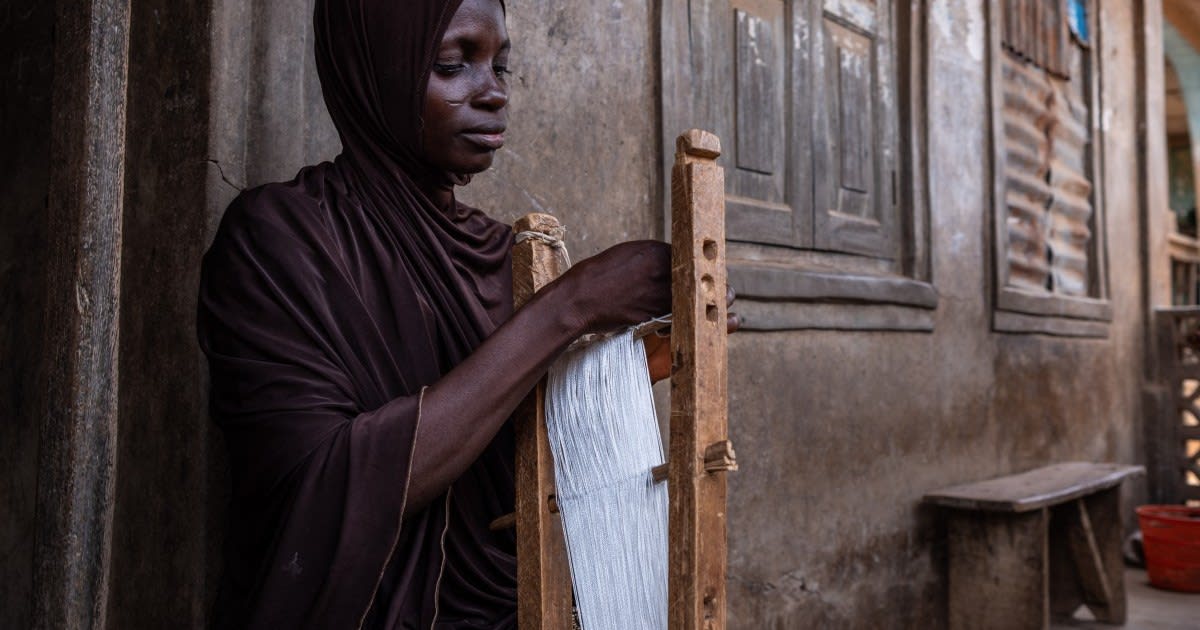
The craft itself remains defiantly handmade. Weavers spend hours arranging colorful threads on wooden looms to create narrow, tightly patterned strips that are later sewn together into wider cloths.
"If you use a machine to weave aso-oke, it won't come out as nice as if it was handwoven," explains 35-year-old weaver Kareem Adeola while creating a yellow-and-olive piece. "People have tried it before, and it did not work."
The Ripple Effect
The impact extends far beyond Iseyin's dusty workshops. Once reserved exclusively for Nigeria's wealthy elite at special occasions, aso-oke has democratized into everyday fashion while simultaneously elevating to haute couture status.
Young artisans are collaborating with graphic designers to create innovative patterns that honor tradition while pushing creative boundaries. University graduates are choosing to learn weaving rather than pursue corporate careers, drawn by both cultural pride and viable income.
The fabric's global recognition has turned Iseyin into an economic hub. Located roughly 200 kilometers from Lagos, the town has become a destination for young people seeking to master a craft that connects them to their heritage while building sustainable livelihoods.
Lagos-based designer Ayomitide Okungbaye, whose aso-oke pieces have exhibited in London, celebrates the international exposure. "There is nothing wrong with your culture being worn by other people," the 31-year-old creative director says, though she notes the importance of proper attribution and respect.
The weavers themselves embrace the physical demands of their craft as essential to authenticity. Despite health risks from prolonged sitting and repetitive motion, they insist the painstaking handwork defines what makes aso-oke special.
Their dedication is preserving not just a fabric, but a living cultural legacy that's finding new relevance in modern fashion while staying rooted in centuries-old tradition.
Based on reporting by Al Jazeera English
This story was written by BrightWire based on verified news reports.
Spread the positivity!
Share this good news with someone who needs it