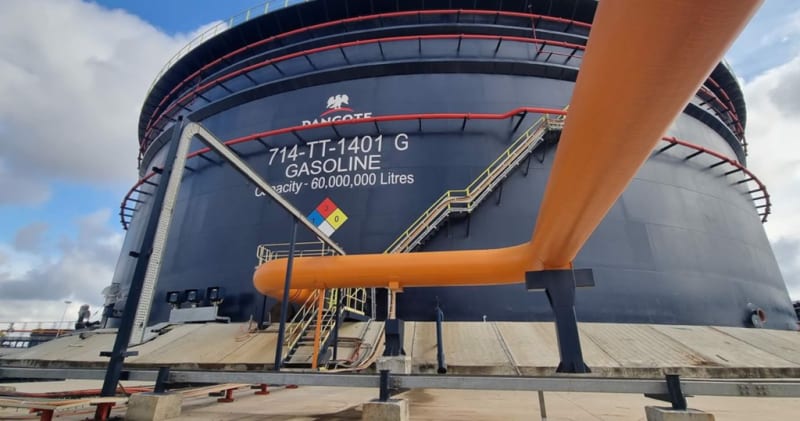
Nigeria's Dangote Refinery Cuts Fuel Imports by 64%
Nigeria's new $20 billion Dangote Refinery is dramatically reducing the country's dependence on imported fuel, supplying 64% more petrol in December while imports dropped nearly 20%. The shift marks a major win for Africa's largest economy in its push toward energy independence.
Nigeria just took a giant leap toward fueling itself. The country's massive Dangote Refinery more than doubled its petrol output in just one month, signaling a turning point for a nation that has long relied on expensive fuel imports despite being Africa's largest oil producer.
In December 2025, the refinery pumped out 32 million liters of petrol daily, up 64% from November's 19.5 million liters. At the same time, Nigeria's fuel imports fell by nearly 10 million liters per day, dropping to 42.2 million liters as the homegrown facility picked up the slack.
The $20 billion refinery, which opened in 2024, now supplies all of Nigeria's domestically produced petrol and is running at 63% capacity. That's remarkable progress for a facility still in its early stages, and it's already reshaping the country's energy landscape.
The timing couldn't be better. Nigeria has spent decades importing fuel despite sitting on massive oil reserves, a costly paradox that drained foreign currency and kept prices high for ordinary citizens. Now, for the first time in generations, Nigerian oil is being refined at home on a meaningful scale.
While Nigeria's three government-owned refineries remained closed throughout December, the Dangote facility is proving that domestic production can work. The country still imports more fuel than it produces, but the gap is closing fast.
The Ripple Effect
This shift means more than just numbers on a regulatory report. When a country can refine its own resources, it gains control over supply chains, keeps more money circulating locally, and creates thousands of jobs in construction, operations, and support services.
For Nigerian families and businesses, increased domestic production could eventually mean more stable fuel prices and fewer shortages. Transportation costs affect everything from food prices to school fees, so a reliable local fuel supply touches every part of daily life.
The refinery's success is also inspiring confidence across West Africa. Other nations watching Nigeria's progress may invest in similar facilities, reducing the region's collective dependence on imported refined products.
As Dangote Refinery continues ramping up, Nigeria is writing a new chapter in its energy story, one where its own resources finally fuel its own growth.
Based on reporting by Vanguard Nigeria
This story was written by BrightWire based on verified news reports.
Spread the positivity! 🌟
Share this good news with someone who needs it