Night Sky Navigation Gets Easier This May
Star-hopping, the technique of navigating the night sky without apps, becomes easier in May when the Big Dipper sits high overhead. Astronomers are encouraging people to put down their phones and learn to navigate the stars naturally, building a mental map that lasts a lifetime.
Two friends stood beneath a brilliant night sky, excitedly pointing at the Southern Cross constellation. But instead of looking up, both stared down at a glowing phone screen while the actual stars shimmered just beyond their gaze.
That moment captured what astronomers say is a growing problem. Apps can help us locate stars, but relying on them prevents us from developing the one skill that truly connects us to the night sky: learning to navigate it naturally.
Star-hopping is simpler than it sounds. Instead of trying to recognize everything at once, you start with something obvious and trace imaginary lines to find something less familiar. Over time, you build a mental map that stays with you forever.
May offers perfect conditions for beginners. The moon is fading toward last quarter this week, creating darker skies that reveal fainter stars. The Big Dipper sits high overhead after dark, making it the ideal starting point for finding everything else.
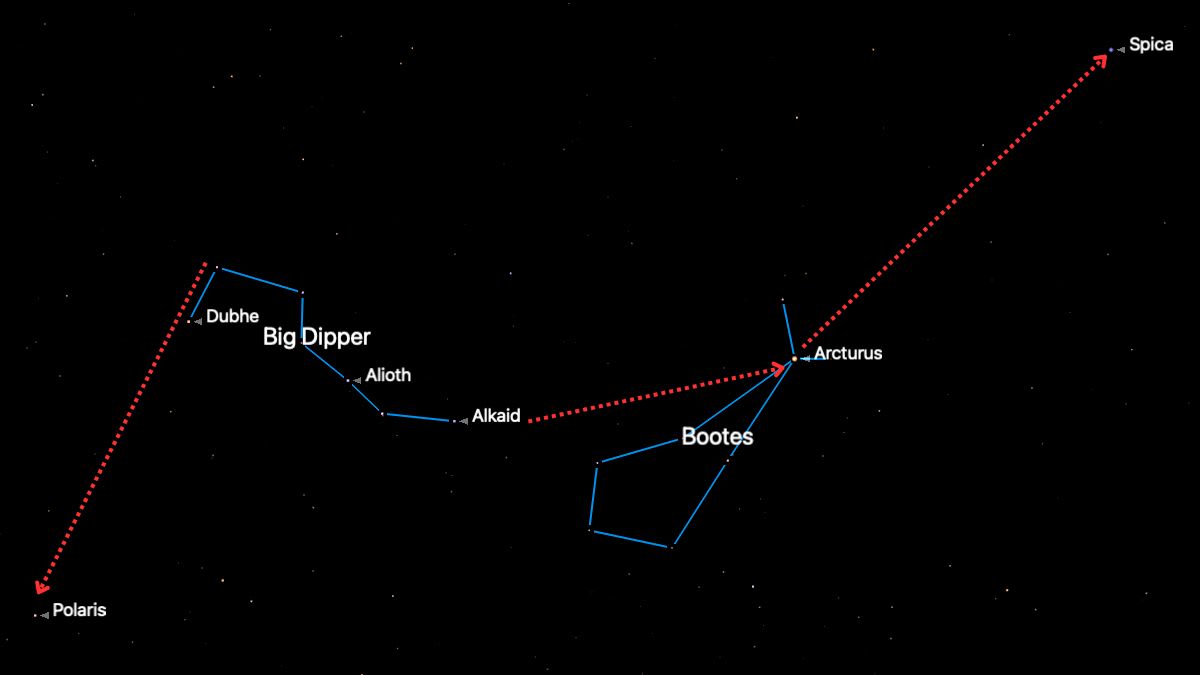
The technique uses something astronomers call the Pointer Stars. Draw an imaginary line through the two stars at the edge of the Big Dipper's bowl, extend it about five times their distance apart, and you'll land on Polaris, the North Star. Once you've found Polaris, you've located true north.
From there, the sky opens up. Follow the curve of the Big Dipper's handle in a smooth arc and you'll arrive at Arcturus, one of the brightest stars in the spring sky. Continue that line as a spike and you'll hit Spica, completing one of the easiest navigational moves in stargazing.
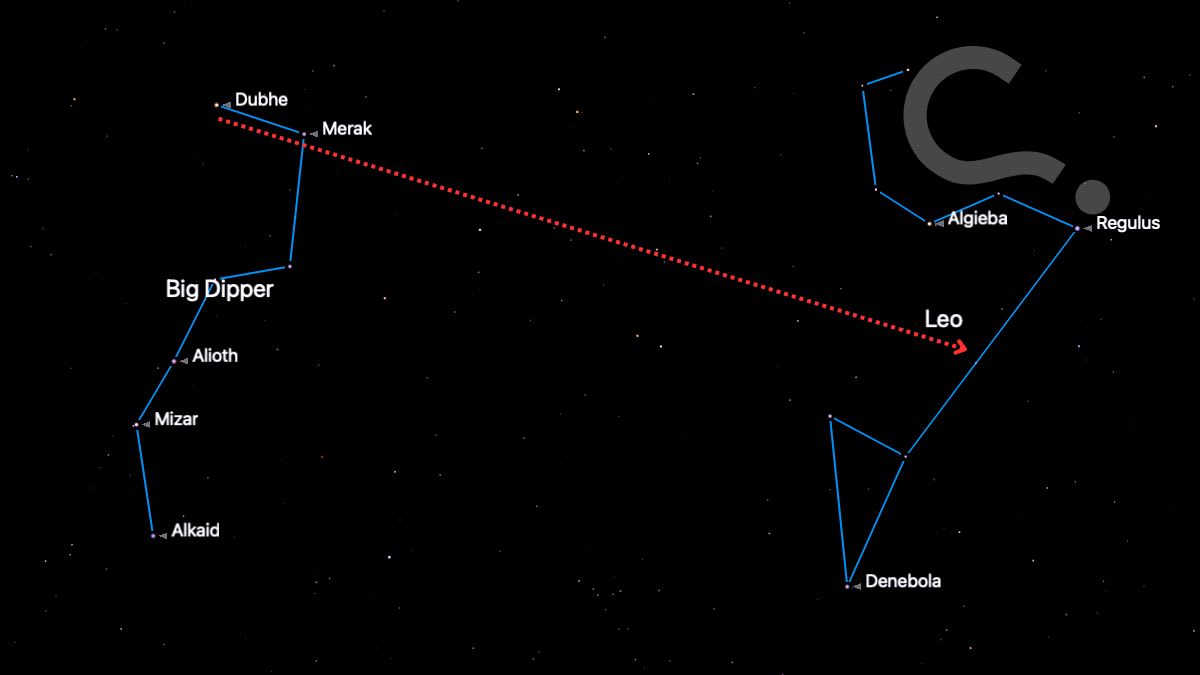
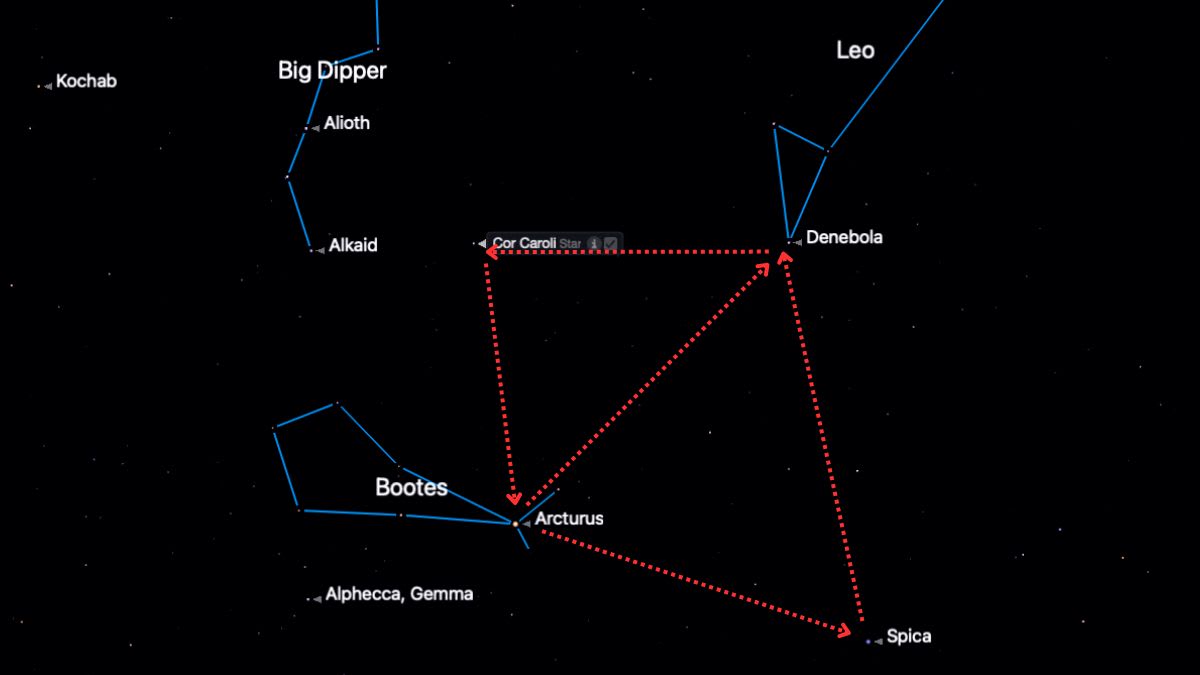
The same Big Dipper bowl that points to Polaris also guides you south to Leo. Look for Regulus, the bright star marking the lion's heart, then trace the distinctive backward question mark called the Sickle. Connect Arcturus, Spica, and Regulus, and you've created the Spring Triangle, an unofficial pattern that anchors the entire southern sky.
Why This Inspires
There's something profound about navigating the night sky with just your eyes and memory. Apps serve a purpose when you're stuck, but the goal isn't to avoid technology entirely. It's about not becoming dependent on it.
The night sky reveals itself slowly to those who take the time to learn it. Practice one star-hop, repeat it until it feels instinctive, then move to the next. Short, focused sessions build familiarity faster than marathon stargazing attempts.
Astronomers recommend starting this week while the moon stays dim and the Big Dipper rides high. Master the path from the Big Dipper to Polaris, or try the arc to Arcturus and spike to Spica. Each successful star-hop adds another connection to your mental map.
The stars have guided humans for thousands of years, and they'll still be there when apps stop working or phones die. Learning to navigate them naturally means carrying the cosmos with you wherever you go.
More Images

Based on reporting by Space.com
This story was written by BrightWire based on verified news reports.
Spread the positivity!
Share this good news with someone who needs it