Nobel Winner: Democracy Grows When Workers Prosper
MIT economist Daron Acemoglu's new book reveals how rebuilding working-class prosperity could strengthen democracy worldwide. His research shows that when manufacturing thrived and created good jobs, democratic participation flourished alongside it.
A Nobel Prize-winning economist has a hopeful prescription for democracy's future: bring workers back into the fold through shared prosperity.
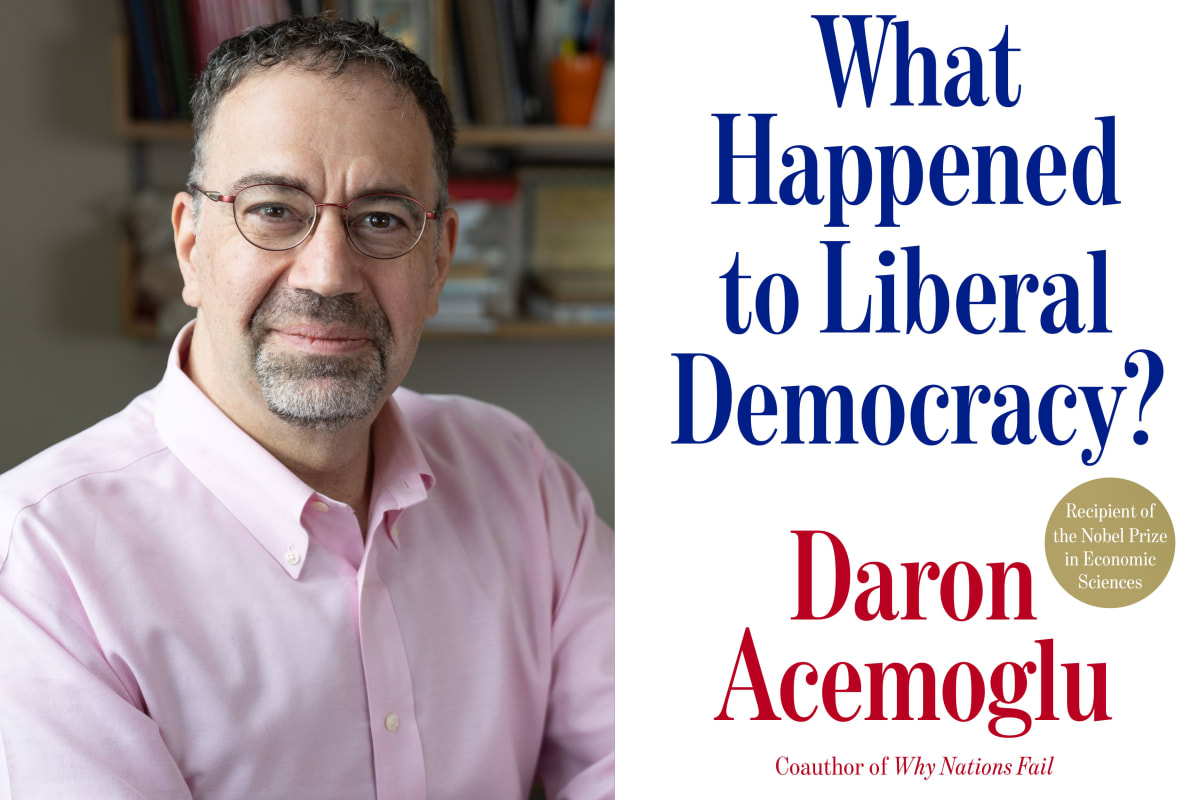
Daron Acemoglu, an MIT Institute Professor who won the 2024 Nobel Prize in Economics, just released "What Happened to Liberal Democracy?" The book maps out how countries can rebuild the broad coalitions that make self-governance work.
His core insight comes from decades of research. When America's manufacturing sector thrived through the mid-20th century, creating stable middle-class jobs, democratic participation expanded right alongside it. Workers fought for rights, communities organized, and more people had a stake in how society ran.
But starting around 1980, that equation shifted. As manufacturing jobs moved offshore and income inequality grew, working-class communities became disconnected from democratic institutions. "You really need to have the working classes in your coalition for it to make any sense," Acemoglu says.
The solution isn't complicated in theory, though it requires commitment in practice. Acemoglu calls for rebuilding "working-class liberalism" centered on shared prosperity, good jobs, and strong public services. The goal is creating the largest possible coalition supporting self-governance and the rule of law.
His optimism stems from evidence. Along with colleagues Simon Johnson and James Robinson, Acemoglu demonstrated in landmark studies that stable democratic institutions actually help economies grow. It's a virtuous cycle: democracy creates conditions for prosperity, which then strengthens democracy itself.
The Bright Side
Democracy has one superpower that authoritarian systems lack: flexibility. Acemoglu argues that self-governance allows societies to experiment, adapt, and tackle complex challenges without imposing rigid top-down solutions.
"Democracy is the only way we can make progress in society," he explains. Rather than seeking perfect answers to messy problems, democratic societies can adjust course as they learn what works.
This matters especially now. From climate change to technological disruption, the world faces challenges no single leader or ideology can solve alone. Democracy's tolerance for plural perspectives and trial-and-error becomes an asset, not a weakness.
The path forward requires recognizing that democratic institutions don't run on autopilot. They need active participation and, critically, they need to deliver material benefits that give people reason to engage. When workers prosper, they invest in the system.
Countries that prioritize shared prosperity and bring working communities into decision-making can strengthen democracy for generations to come.
Based on reporting by MIT News
This story was written by BrightWire based on verified news reports.
Spread the positivity!
Share this good news with someone who needs it